Use of BPA must be limited, say scientists
A group of 60 scientists backed by environmental, health and women's organisations from around the world have called for action to reduce exposure to a chemical in plastics found in everyday products.
In a letter to a European food watchdog which is currently reviewing the safety of bisphenol A (BPA), the group says that "many scientific studies are now calling into question the safety of BPA" and that only a minority of controversial academic papers have backed its safety.
BPA is a mass-produced chemical used to make plastic harder. It is found in baby bottles, most food and drink cans – including tins of infant formula milk – plastic food containers, and the casings of mobile phones, and other electronic goods.
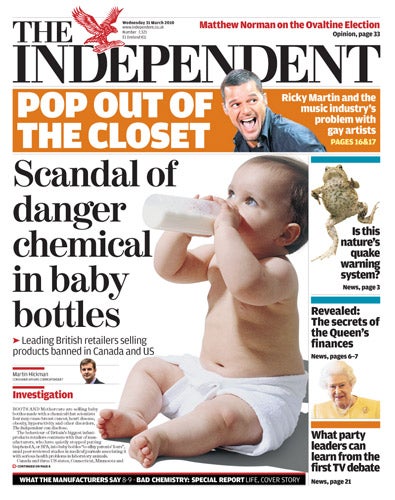
The Independent disclosed in April that retailers such as Mothercare were continuing to stock polycarbonate baby bottles containing BPA even after most manufacturers had phased it out.
While there is no consensus among scientists about its impact on human health, dozens of independent scientists around the world are convinced that there is a strong case for limiting human exposure.
In January the US Food and Drug Administration (FDA) reversed years of opposition to action, saying that it had "some concern"on the basis of results from studies using novel approaches about BPA's effects on the brain, behaviour, and prostate gland in unborn children, infants, and young children.
Following the FDA's move, France, Germany, Denmark and Sweden have taken precautionary action to limit the use of BPA. However, some academics such as Richard Sharpe, an expert in reproduction at the Medical Research Council, believe that the concern is unfounded and is diverting millions of pounds of funding from more deserving areas of research.
The UK Food Standards Agency also believes that BPA is safe, but is awaiting the results of expert opinion from the European Food Safety Authority (Efsa) next month. Its publication has been repeatedly pushed back, giving hope to campaigners who had originally feared, on the basis of Efsa's criteria for selecting academic papers, that it would back industry-funded studies declaring the chemical safe.
The new letter, co-ordinated by the charity Breast Cancer UK, is signed by 40 organisations and 19 academics, including 14 professors. They include two US academics who have led the research effort – Professor Frederick vom Saal of Missouri-Columbia University and Professor Ana Soto of Tufts medical school in Chicago.
The letter welcomed Efsa's decision to review "hundreds of studies in its analysis of the most recent scientific literature", pointing out that its previous risk assessments in 2006 and 2008 had given extra weight to industry-funded studies at the expense of Government and independently-funded papers.
Efsa, they complained, had "only relied on a small number of studies rather than the much larger number that the Food and Drug Administration recently recognised as valid and of high utility in its risk assessment of BPA, and which led the FDA to express concern about the health hazards posed by BPA."
New research, such as that conducted by Yale University into breast cancer, indicated that BPA was a real and present danger to health, they said.
They added: "It is therefore our opinion that any objective and comprehensive review of the scientific literature will lead to the conclusion that action is necessary to reduce the levels of BPA exposure, particularly in groups at highest risk, namely young infants and pregnant mothers."
Andrew Watterson, professor of environmental health at the University of Stirling and a signatory to the letter, said: "It's worrying, considering the weight of the scientific evidence, that strong action to reduce human exposure is yet to be taken. Hundreds of academic studies have explicitly raised the risks of developmental harm to foetuses and young children from exposure to BPA and this should dictate a strong precautionary policy response from European regulators."
Join our commenting forum
Join thought-provoking conversations, follow other Independent readers and see their replies
Comments
Bookmark popover
Removed from bookmarks