A dead man, a crucial question: should police have shot Mark Duggan?
Cahal Milmo and Rob Hastings reconstruct the fateful events of Thursday evening that sparked three days of rioting
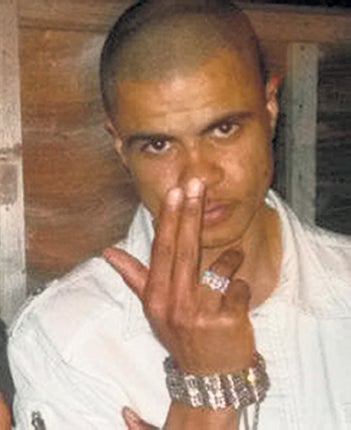
Fragments of a bullet modified to maximise its destructive power were last night being analysed to cast crucial light on what happened at around 6.15pm last Thursday when police marksmen surrounded the minicab carrying Mark Duggan alongside a north London reservoir and shot him dead.
As clashes broke out for the third night running in the worst rioting seen in the capital for decades, scientists were analysing the remains of ammunition found in the radio of an armed officer involved in the arrest operation in Tottenham Hale to answer the key question of whether the 29-year-old opened fire on his pursuers moments before he died.
Investigators yesterday refused to confirm reports that initial results from the tests by the National Ballistics Intelligence Service suggested that the bullet fragments were from police-issue ammunition, meaning they could not have been from a weapon fired by Mr Duggan and casting doubt on claims that he was killed in an exchange of gunfire. According to reports last night, the suspected gang member was carrying a starter pistol modified to fire live bullets.
The Independent understands that the shrapnel being analysed was from a hollow-point or dumdum bullet found in the handset of a sharpshooter from Scotland Yard's elite CO19 firearms unit, whose officers use this type of ammunition.
Similar ammunition, favoured for its devastating effects, is also circulating among criminal gangs and has been seized in raids against underworld quartermasters in recent years.
Initial reports after the shooting five days ago suggested that the officer had been saved by the bullet striking his radio and it had been fired from the handgun later recovered from the taxi carrying Mr Duggan, who was then fatally wounded by another marksman.
But it was suggested yesterday that the 29-year-old was instead killed by one of two rounds fired by a CO19 officer who feared the target was about to open fire. Investigators are trying to establish whether it was the second of these two bullets were struck the police team member's radio.
Evidence that the father-of-four did not brandish a firearm and that a CO19 officer came close to killing one of his colleagues will only worsen the tensions that have brought violence and looting to the streets.
As the Yard last night admitted there had been a failure to answer the concerns of Mr Duggan's family about the manner of his death, the Independent Police Complaints Commission (IPCC) said it expected to release definitive test results today to establish whether the bullet fragments came from a police MP5 sub-machinegun or another weapon.
Rachel Cerfontyne, the IPCC commissioner who is leading the investigation into the shooting, said: "In the course of our contact I know that the family – and indeed the community, still have many unanswered questions. We would anticipate being in a position to share verified results within the next 24 hours."
Investigators are focusing their attention on a 90-minute period during which Mr Duggan phoned his partner, Semone Wilson, to ask her to cook dinner before getting into his taxi for a trip across north London. During the journey he noticed he was being followed in unmarked cars by officers from Operation Trident, the Yard's long-running crackdown on gun crime in the black community. In a text to Ms Wilson from his BlackBerry, he wrote: "The Feds are following me."
Mr Duggan, who carried a distinctive tattoo on his neck, was a regular user of taxis. A manager for one firm said he would use its services two or three times a week to travel to Walthamstow and Edmonton. The Trident officers, backed up by a CO19 detachment, were conducting a "pre-planned" operation to arrest Mr Duggan, who went by the street name "Starrish Mark" – a name which supposedly links him to another north London criminal group with links to Jamaican Yardies.
Mr Duggan's relatives feel they were let down by a lack of communication from the Metropolitan Police in the hours after his death. Deputy Assistant Commissioner Steve Kavanagh, the Yard officer in charge of policing the riots, said: "I want to apologise to the Duggan family. I think that both the Metropolitan police and the IPCC could have managed their concerns far more effectively."
Bookmark popover
Removed from bookmarks