Cocaine Britain: 25 per cent rise in the last year
Alarmed doctors call for new 'zero tolerance' approach to deal with epidemic in hospitals
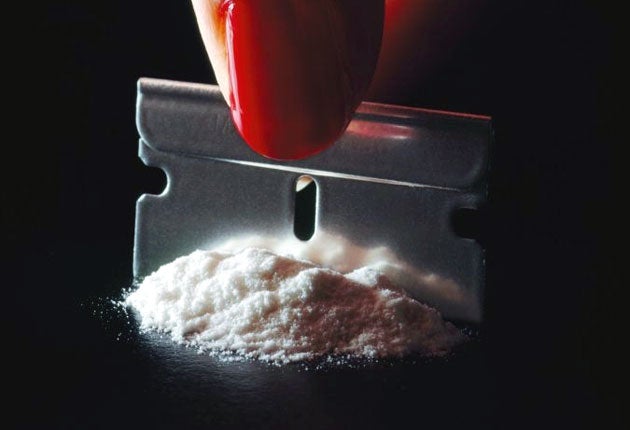
The number of cocaine users in Britain has risen by 25 per cent in a year to almost one million, official figures revealed yesterday, prompting calls for the Government to rethink its anti-drugs strategy. About one in 10 people admits having tried the drug – three times as many as 15 years ago. Figures from the British Crime Survey also suggest that about 439,000 cocaine users are in their late teens or early 20s.
The number of children treated in hospital for overdosing on Class A drugs has more than tripled in a decade, says the NHS, with 60 under-18s admitted for acute cocaine poisoning this year, compared with 16 in 1999. According to the College of Emergency Medicine, the admission to hospital of young adults with heart problems caused by cocaine abuse has become almost routine since 2004.
Writing for today's Independent, John Heyworth, the CEM president and a consultant in Southampton, says cocaine has become ubiquitous and "something must be done". He urges the Department of Health to consider taking a "zero tolerance" approach to the drug in an attempt to combat the rising number of young addicts with heart problems. Yesterday's figures confirm for the first time the long-term increase in Class A drug use since Labour came to power. "There was a slight underlying upward trend which is now significant over the long term," the report concedes, just a month after Britain was labelled "Europe's cocaine capital" by the UN.
This year, the number of people who admitted they had taken cocaine in the previous 12 months rose by 25 per cent, while the proportion of 16- to 24-year-olds experimenting with the drug was up from 5.1 per cent to 6.6 per cent. The proportion of young people taking the powerful anaesthetic ketamine more than doubled from 0.9 per cent in 2007-08 to 1.9 per cent this year. However, cannabis use has fallen since such data was first collected in 1996, from 9.5 per cent of the population to 7.9 per cent.
Last night, ministers were blamed for ignoring expert advice about which drugs to target, and choosing to clamp down on softer drugs such as cannabis rather than Class A substances such as cocaine. The new Home Secretary, Alan Johnson, will come under pressure to revise his department's approach.
Martin Barnes, the chief executive of the advice charity DrugScope, said cocaine use among the whole population was "marked and worrying". The price of the drug has also fallen, which has made it more popular. "It is of significant concern, particularly the rise in use among younger people," added Mr Barnes. "Cocaine use is now at its highest level among adults since 1996, with one in eight 16- to 24-year-olds reporting [they have] used the drug.
"Cocaine is a harmful drug with numerous physical and mental health implications and it is vital that public health messages about the effects of cocaine use remain clear and sustained. Prolonged or regular use can lead to heart problems. The risks are increased when the drug is used with alcohol."
Chris Huhne, the Liberal Democrat home affairs spokesman, said: "These alarming figures show the Government has failed to tackle the supply and use of the worst drugs like cocaine, particularly among young people.
"The Government should give top priority to seizing Class A drugs and cracking down on dealers. By ignoring the experts of the Advisory Council on the Misuse of Drugs on which drugs matter most, ministers have helped reduce the importance of tackling the most harmful substances."
Alan Campbell, a Home Office minister, pointed out that drug use in general remained "historically low" but said he shared the concern about the rising use of cocaine. "We are not complacent," he said. "We are taking comprehensive action to tackle cocaine use, from increased enforcement to reduce the supply, along with effective treatment, education and early intervention for those most at risk.
"Police and their partner agencies are seizing record numbers of drugs and cocaine purity is recorded at an all-time low. When people think they are taking cocaine, in some instances the actual purity is as low as 4 per cent."
Chris Grayling, the shadow Home Secretary, said: "Hardly a day goes by without yet another depressing set of statistics about the scale of Britain's social problems.
"Drug addiction causes family breakdown, is linked to a substantial proportion of crime and causes long-term damage to people's health. We have to turn this round."
Bookmark popover
Removed from bookmarks