How Met's recruits lost their jobs before they'd started
'Get some life experience and come back in 2011' says budget-hit force
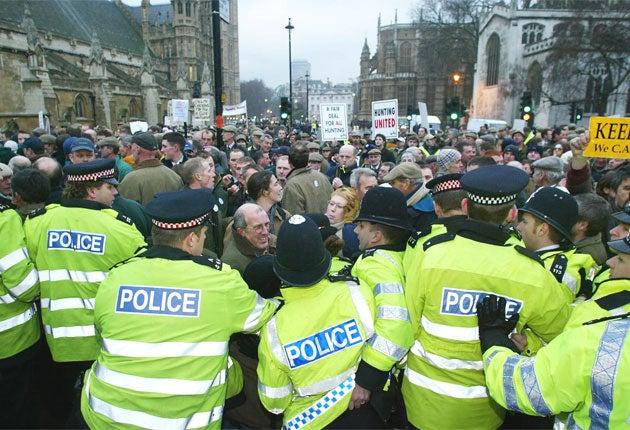
Thousands of police recruits who were promised jobs more than a year ago have been told that, due to budget cuts, the positions earmarked for them are no longer available.
The Independent has learnt that about 2,000 would-be officers were recruited by the Metropolitan Police during a drive in January 2009 and told they would start their training in spring last year.
Now, despite passing exams and interviews, the successful candidates have received letters informing them that they will not be offered a start date until 2011 at the earliest – almost two years later than they were led to believe.
The situation is one that is mirrored in police forces across England and Wales. Many forces have found that positions they thought would require filling have simply not materialised. One theory is that, due to the recession, not as many officers are leaving the force as expected.
But the fact that many recruits who are ready to start have been deferred for up to two years has been seized upon by critics who say that this is the first sign of budget cuts affecting police numbers, something that forces and the Government have been keen to avoid.
Liberal Democrat home affairs spokesman Chris Huhne said: "It is indicative of budget strains that forces have to turn away potential officers who have already passed their tests. It is both unfair to the people who answered police recruitment drives and a worrying sign of what might happen to police numbers in the coming years. That is why the Liberal Democrats are the only party who are committed to putting more police on the streets."
The Metropolitan Police embarked on a campaign to recruit 1,600 officers in January 2009. After the first stage in the process, which involves role-playing exercises, interviews and exams, 2,000 of the 8,000 people who had applied were successful.
They were due to start the full-time training in spring 2009 pending a fitness test and criminal records check. But now they have been told their start dates have been deferred and, in a letter sent to each candidate, told to gain "life experience" while they wait for a position to become available. It means that the Met, the UK's biggest force with about 33,000 officers, has more people on their waiting list than some small forces have on their books.
A spokeswoman for the force said: "We have around 2,000 candidates in the system waiting for a start date. This is due to a number of very successful recruitment campaigns last year, coupled with far fewer officers leaving than expected, largely due to the current economic position. This has left us with more candidates than vacancies, which is not what we predicted."
In Gloucestershire, nearly 100 candidates who were successful at the first stage of the 2009 recruitment process have since been told that their applications have been deferred until 2011. The candidates were told they could either wait or have their application transferred to other forces, such as the Met.
West Midlands Police have 240 candidates who have passed all the stages of the recruitment process but are still without jobs and more than 500 who have passed the first stage and have yet to be offered a position.
Cleveland Police has told 102 successful recruits that they will now not be allocated jobs for between 12 and 18 months, while in Leicestershire 51 recruits have been told that they will not be allowed to start training for at least a year. Cumbria has 59 recruits on a waiting list, and the force says it has told the successful applicants that they will start their training "within 12 months". Greater Manchester Police and Hartfordshire currently have a recruitment freeze.
Metin Enver, a spokesman for the Police Federation, which represents officers across Britain, said the figures were "regrettable, but not at all surprising".
He said: "We have been saying for some time that the recession would impact upon police officer numbers and this is the start of it. It is very worrying because people pay their taxes and expect police officers to be on their streets. Saving should be made elsewherebecause with something like the Olympics coming up this is the last thing people will want to see.
"But it is about money, and the police service will lose out on quality candidates if people are told there is a 12 or 18 month wait before they are taken on. The embarrassing thing is that these are people who have started the process and have been accepted, and then the goalposts have been moved."
Badge of pride: The selection process
* The first step, Day One, is the initial selection process to which all applicants are invited but only about one in four pass. It involves a variety of role-playing exercises. An actor assumes the part of a member of the public and presents the recruit with a complaint. There is then an interview during which they are asked four questions, which usually involve explaining why they want to join the police service and what makes them suitable for the role. Next, recruits have to write two "proposals" to defuse an imaginary situation. One example is that of a shopping centre experiencing a rise in pickpockets. The candidate's job is to explain to his or her line manager how they would plan to tackle the problem. Finally there are exams in basic English and maths, the pass mark for which is 60 per cent.
* If recruits are successful at each stage, they progress to Day Two, a fitness and medical exam, which usually takes place a few months after Day One. The fitness test involves weight training and a bleep test – running between two points 15 metres apart in time to tape-recorded bleeps, the time between which decreases with each run.
* Finally, if a candidate passes both Day One and Day Two, they are subject to security and background checks and references before they can start their officer training.
Bookmark popover
Removed from bookmarks