Illegal downloaders 'spend the most on music', says poll

Crackdown on music piracy could further harm ailing industry
On Facebook
From the blogs

John Terry: How Sarah Palin got it right

It's been a notable week for the loss of titles: first Fred Goodwin, formerly a knight of the realm,...

The bitter taste of sugar prohibition

On Thursday, high-profile science journal Nature published a commentary by three academics, which ar...

The fight over the Port Said football narrative has already begun

It is a year to the day since the infamous camel charge during the Egyptian uprising. That day, Ultr...

Don’t be distracted by Goodwin’s dishonour

The purpose is to divert public attention from the fact that ministers have failed to do anything ab...

Suggested Topics

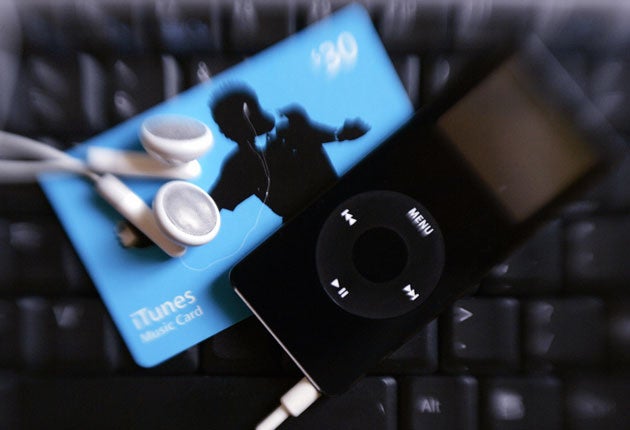
People who illegally download music from the internet also spend more money on music than anyone else, according to a new study. The survey, published today, found that those who admit illegally downloading music spent an average of £77 a year on music – £33 more than those who claim that they never download music dishonestly.

The findings suggest that plans by the Secretary of State for Business, Peter Mandelson, to crack down on illegal downloaders by threatening to cut their internet connections with a "three strikes and you're out" rule could harm the music industry by punishing its core customers.

An estimated seven million UK users download files illegally every year. The record industry's trade association, the British Phonographic Industry (BPI), believes this copyright infringement will cost the industry £200m this year.

The poll, which surveyed 1,000 16- to 50-year-olds with internet access, found that one in 10 people admit to downloading music illegally.

"The latest approach from the Government will not help prop up an ailing music industry. Politicians and music companies need to recognise that the nature of music consumption has changed, and consumers are demanding lower prices and easier access," said Peter Bradwell, from the think-tank Demos, which commissioned the new poll conducted by Ipsos Mori.

However, music industry figures insist the figures offer a skewed picture. The poll suggested the Government's plan to disconnect illegal downloaders if they ignore official warning letters could deter people from internet piracy, with 61 per cent of illegal downloaders surveyed admitting they would be put off downloading music illegally by the threat of having their internet service cut off for a month.

"The people who file-share are the ones who are interested in music," said Mark Mulligan of Forrester Research. "They use file-sharing as a discovery mechanism. We have a generation of young people who don't have any concept of music as a paid-for commodity," he continued. "You need to have it at a price point you won't notice."

The Digital Economy Bill, which will become law next April, sets out new measures to crack down on internet piracy. But these have generated criticism from internet service providers, who say they will be difficult to enforce.

Artists are also divided over the issue, with Lily Allen and James Blunt recently supporting the Government's stance, while the Latin pop star Shakira argues that illegal file sharing brings her closer to her fans.

This year Virgin Media and Universal Music plan to launch the first music subscription service allowing customers to download and keep unlimited tracks from Universal's catalogue for a fee of around £15.

Day In a Page

The Super Bowl: The greatest show on turf

The Super Bowl: The greatest show on turf

Forget the game – it's about so much more than that
The $18bn family feud that is a real-life Australian soap opera

The $18bn family feud

A messy court case has shed light on Australia's richest and most secretive family
What happens when an uncontacted tribe meets 'civilisation'?

What happens when an uncontacted tribe meets 'civilisation'?

Margarita Mbywangy's tribe was nearly wiped out when the modern world came calling
Britain’s first benefit refugees

Britain’s first benefit refugees

Single mothers reliant on the state are among the first and biggest victims of the Government’s welfare reforms
Science behind the big freeze: is climate change bringing the Arctic to Europe?

Science behind the big freeze

A loss of sea ice could be a cause of the bitter winds that have swept across the UK in the past week, weather experts say
Divine duck: Mark Hix cooks with the most succulent of birds

Divine duck: Mark Hix cooks with the most succulent of birds

It's the perfect ingredient with which to create these warming winter dishes.
On the waterfront: Frank Meadow Sutcliffe's Whitby

On the waterfront: Frank Meadow Sutcliffe's Whitby

In the photographer's day, Whitby was a place of Bram Stoker stories, gambolling urchins and an endlessly photogenic sea.
Burma back on the map: Tourism returns to South-east Asia’s forbidden land

Travel: Burma is back on the map

South-east Asia’s forbidden land has plenty to entice visitors – and with the travel boycott at an end, they are sure to arrive in numbers.
Spiritual travel for atheists: Do pilgrimages have a place in modern society?

Do pilgrimages have a place in modern society?

Their ideals should be applied to journeys today too, says Alain de Botton.
48 Hours: Mainz

48 Hours in Mainz

This German city where the Rhine and Main meet is gearing up for carnival season.
The artist vandalising advertising with poetry

Poetic vandalism

Q&A with Scottish artist Robert Montgomery whose new show opened in London today
Bonus backlash: PM urged to block rail chief's payout

Bonus backlash

PM urged to block rail chief's payout
Universities set to lose £5.6bn as overseas applications plummet

Universities set to lose £5.6bn...

... as overseas applications plummet
From here to obscurity: the young star who found that fame is fickle

From here to obscurity

The young star who found that fame is fickle
The 'ghost bike' revolt: families demand action on cyclist deaths

The 'ghost bike' revolt

Families demand action on cyclist deaths