Locked up indefinitely: The prisoners who have committed no crime
Hundreds of failed immigrants are held in UK detention centres for years. The inmates of one are now on hunger strike
Hundreds of migrants are being held in "prison in all but name" for years without any idea of when they will be released. Home Office figures obtained by The Independent on Sunday show that 225 people had been held in immigration detention for more than a year in 2009 – and 45 for more than two years.
Campaigners say their civil liberties are being ignored as they are trapped in limbo; unable either to return home or be granted freedom in this country. These "prisoners" can be held for many reasons: from their destination being too unsafe to problems with their papers, a dispute over their nationality or an asylum appeal. But instead of being released on bail, they are kept under lock and key with no legal limit on how long they can be held.
The mental toll of such indeterminate detention is shown in the amount of self-harming incidents among those held. In 2009, 215 people needed medical treatment for self-inflicted injuries, a rise of 20 per cent on 2008, according to Home Office statistics.
Women at Yarl's Wood detention centre are in the second week of a hunger strike over their prolonged time behind bars. Leila, an Iranian woman who has been in the centre for 20 months and 15 days, was last week put in an isolation cell after taking part in the hunger strikes and other protests. "I want to kill myself, I cannot live here," she sobbed on the phone this weekend from her cell.
Detainees say some women were held outside without winter clothing for hours by guards during the protests. They also reported that the protesters were denied food, water or medical treatment for a prolonged period, despite one woman having an asthma attack and another sustaining an injury as a result of use of force by guards.
Four "ringleaders" have been moved to prison, but women in the centre confirmed last night that around 50 were still on hunger strike. So far they have endured 10 days without food.
The former chief inspector of prisons Lord Ramsbotham yesterday described the Home Office's handling of detainees as a "catalogue of failure". He said: "In exactly the same way that we agreed 42 days was not acceptable for terrorist suspects, there have got to be deadlines put down for people who are immigration detainees.
"Of course there are countries to which we're not happy to return people, so I don't see the point of keeping them in custody. You've got a catalogue of failure, and there's a need for a total overhaul of the system."
The cost of detaining each immigrant is estimated at more than £1,000 a week, and the practice of such prolonged imprisonment without trial violates human rights law, campaigners say. The numbers kept in detention for indeterminate periods has soared over the past decade. In 1996 just 2 per cent were held for more than a year; now the proportion is 8 per cent.
The UK is one of only seven European countries that have not set a limit on how long they lock up failed immigrants. France has a limit of 32 days, Italy and Spain have a limit of 40 days and Ireland has a limit of 56 days.
Andrew Dismore, a Labour MP and the chairman of the Joint Committee on Human Rights, said: "The purpose of immigration detention is to hold people pending removal: It can't be used as some form of imprisonment without trial. They're prisons by another name. You need a clear removal strategy. There's not much point in locking people up if you can't remove them; it's a drain on the taxpayer."
Jerome Phelps, of the London Detainee Support Group, said: "Why is it not acceptable to detain terrorist suspects for 42 days when asylum-seekers can be held for two years or more? We regularly hear from detainees that they are shocked to be detained indefinitely in a country that they thought respected human rights. They are the forgotten people of the UK."
Asylum-seekers living outside detention also face hardship following cuts to their support, which now stands at £5 a day. While the Home Office is considering whether to raise this year's support above the poverty line, a report by Refugee Action shows that half of asylum-seeking parents cannot afford enough food for their children – and all are unable to buy them the clothes they need.
David Wood, strategic director for criminality and detention at the UK Border Agency, said last night: "People in detention are there because both the UKBA and the courts deem them to have no legal right to be here. If detention is deemed necessary, we always aim to keep it to the minimum period possible. Detainees can voluntarily leave the UK at any point, and are free to apply for bail to an independent immigration judge."
Life as a detainee: 'It felt just like being in Iran. My spirit was broken'
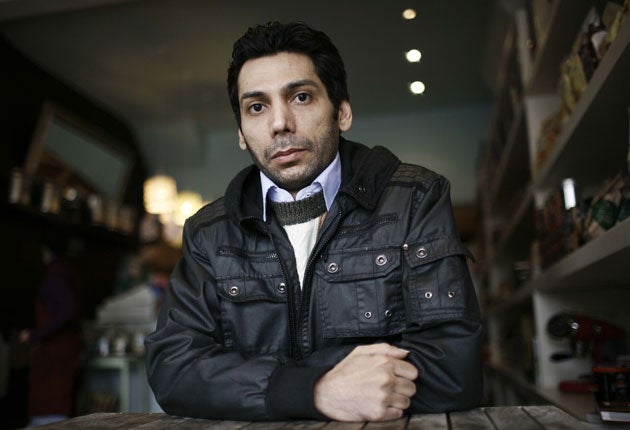
Ali Kheradnejad was held in Harmondsworth detention centre from August to November last year after he fled Iran and claimed asylum in the UK. The 31-year-old had been involved in demonstrations in Iran in July and he still has marks on his head from where he was beaten in prison. He fled to Britain where he was put straight into detention.
"They treated me like a criminal. It felt just like being in Iran; I was being imprisoned for doing nothing wrong. My first claim was dismissed because I didn't have enough evidence, but I went on hunger strike and managed to get an independent doctor from Medical Justice to look at my scars. There was also evidence of my political activities on the internet. The Home Office were not fair, they didn't believe anything. My spirits were destroyed and I prayed all the time. They need to review the procedures, because you can't lock people away for such a long time for no reason."
Bookmark popover
Removed from bookmarks