New HD CCTV puts human rights at risk
Watchdog warns: Big Brother Britain has arrived unnoticed
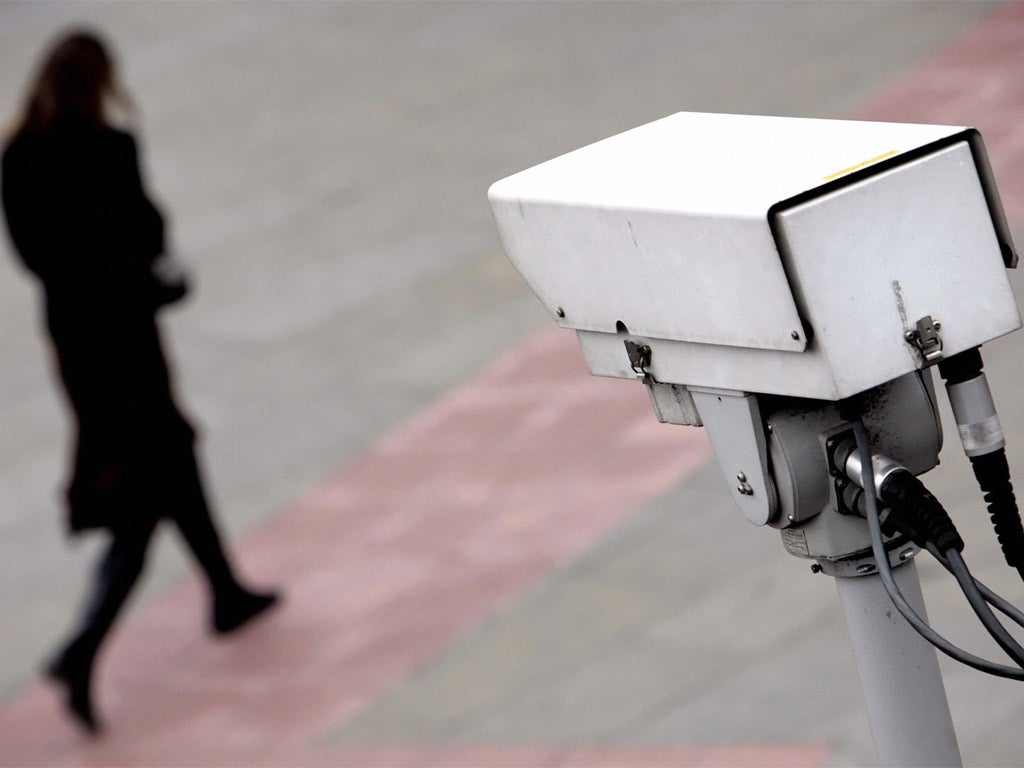
CCTV systems capable of identifying and tracking a person's face from half a mile away are turning Britain into a Big Brother society, the UK's first surveillance commissioner has warned.
New high-definition cameras are being rolled out across UK cities without public consultation into the intrusion they pose, Andrew Rennison told The Independent.
The increasing sophistication of surveillance technology is becoming so serious that Britain may be in breach of its own human rights laws, he said. There are already thought to be around 1.85 million CCTV cameras in the UK.
In a stark message to police forces and the Government, Mr Rennison predicted there will be a justifiable public outcry if facial recognition systems and HD cameras are allowed to proliferate on high streets, public transport and at entertainment venues. "The technology has overtaken our ability to regulate it," he said.
"I'm convinced that if we don't regulate it properly – ie, the technological ability to use millions of images we capture – there will be a huge public backlash. It is the Big Brother scenario playing out large. It's the ability to pick out your face in a crowd from a camera which is probably half a mile away."
Mr Rennison was named as the country's first Surveillance Commissioner by the Home Office last month, having held the role on an interim basis since 2009. The former police officer said that disproportionate and invasive monitoring was of great concern as HD cameras are "popping up all over the place".
"The rapid advancement of digital technology means that 16-megapixel HD cameras are now very affordable, so people are buying a camera with a huge optical and digital zoom power.
"A tiny camera in a dome with a 360-degree view can capture your face in the crowd, and there are now the algorithms that run in the background. I've seen the test reviews that show there's a high success rate of picking out your face against a database of known faces."
Research into automatic facial recognition being carried out by the Home Office has reached a 90 per cent success rate, he said, and it was "improving by the day".
He said cameras are "storing all the images they record … and the capability is there to run your image against a database of wanted people."
The anti-surveillance campaign group Big Brother Watch recently found that at least 51,600 CCTV cameras are being used by 428 local authorities – and that 100,000 are in use in schools, with as many as 200 using them inside toilets and changing rooms. More than a million cameras have also been installed on private land.
Mr Rennison is currently only responsible for technology employed in state-owned public places, covering less than 5 per cent of the cameras in the country.
But the Government intends to widen his remit to include schools and hospitals eventually, as well as shopping centres, whose cameras are private yet have effectively become "tools of the state", according to Mr Rennison.
Mr Rennison – who is overseeing the introduction of the first official code of conduct for CCTV use and will report back to Parliament in April – added that the explosion of powerful surveillance technology could be in breach of Article 8 of the Human Rights Act, which seeks to protect "private and family life".
"I'd like the lawyers to help work our way through that and decide whether we remain Article 8 compliant in this country," he said. "I don't want the state to carry on and start pushing the boundaries. Let's have a debate – if the public support it, then fine. If the public don't support it, and we need to increase the regulation, then that's what we need to do."
Mr Rennison said most people have no idea how advanced the technology has become and of its power to intrude in their lives.
While automatic number-plate recognition systems are now used by every police force in the country remotely to track suspect vehicles' movements, systems to identify people reminiscent of science fiction films are also becoming available.
"The biometric technology … has to be regulated to forensic standards – facial recognition, facial comparison, gait analysis – because that is a whole new area in forensic science."
Case study: Mass surveillance scheme foiled by local resistance
An ill-fated plan by the West Midlands police to place several hundred CCTV cameras in part of Birmingham was scrapped in 2010 after a backlash from the local community which complained that the scheme was targeting the mainly Muslim local population.
Police insisted that the cameras were designed to cut local crime and told a community meeting that they provided an "exciting opportunity to track drug dealers selling crack, cocaine and heroin to your children".
But the community leaders reacted angrily when it emerged that £3m funding came from a pot to combat terrorism. The case was highlighted by Andrew Rennison, the surveillance commissioner, as an example of where the system had not worked. Officials involved in the scheme accepted that they should have been more open about the source of funding for the cameras.
The furore over the cameras, which were installed without consultation, prompted a rapid about-turn by the force which initially put bags over the cameras to put them out of use.
The force confirmed yesterday that the cameras – which were also used to recognise car number plates – were later deployed to other forces for use in the run-up to the Olympic Games.
The case added to concerns about the effectiveness of CCTV cameras in detecting crime. A Freedom of Information request by The Daily Telegraph found in 2009 that the Metropolitan Police's own research suggested that 1,000 CCTV cameras solved less than one crime per year.
The findings led to demands by the campaigning group Big Brother Watch for police forces and other public authorities to publish crime statistics showing the effectiveness of CCTV cameras and a reassessment of their role.
A report by Big Brother Watch this year found that there were at least 51,600 CCTV cameras controlled by more than 400 local authorities, costing hundreds of millions of pounds. It said Birmingham spent the most – £14m – on cameras with Westminster just behind with nearly £12m. It also found that five authorities had a total of more than 1,000 CCTV cameras.
Paul Peachey
Bookmark popover
Removed from bookmarks