Nurse fights murder conviction

Case to be reviewed after medical experts cast doubt on prosecution evidence
News in pictures
News in pictures
On Facebook
From the blogs

Roy Hodgson for England: A club of one

To argue against Harry Redknapp for England is akin to arguing in favour of bankers bonuses. While s...

Time for a reality check on the Sri Lankan civil war

Sri Lanka, much like Britain, has side-lined accountability long enough.

Children Of Alcoholics week: One million children may just be the tip of the iceberg

Children Of Alcoholics week starts today. So, what are the aims for Nacoa during this important week...

Review of Being Human: ‘Being Human 1955’

Following on from an episode tinged with tragedy, this week lifted the mood with something lighter.

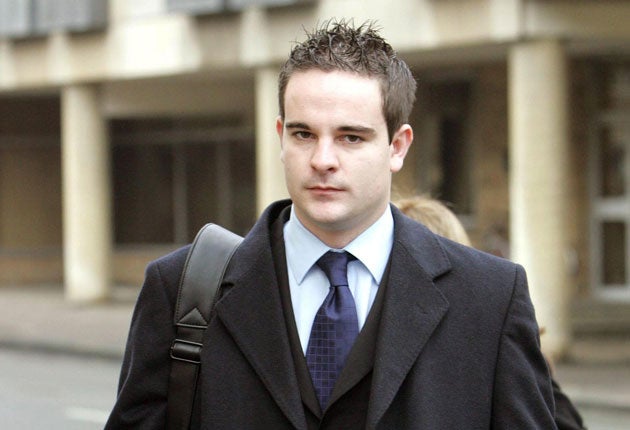
A nurse jailed for 30 years for murdering two patients and seriously harming 15 others was convicted of crimes that never took place, new evidence suggests. Benjamin Geen, 29, was found guilty in 2006 of injecting patients with drugs that stopped their breathing in order to satisfy a "lust for excitement" when reviving them. Two men, David Onley, 75, and Anthony Bateman, 66, died.

Lawyers will tomorrow begin fresh efforts to have the conviction overturned. They say Geen, a former Territorial Army lieutenant from Banbury, Oxfordshire, is the victim of a "witch-hunt" in a health service desperate to prevent anything that might echo the case of Harold Shipman, the GP thought to have killed at least 200 of his patients.

Geen was given 17 life sentences after Oxford Crown Court heard that accident & emergency staff at Horton General Hospital suspected he was involved in a spate of respiratory arrests. The prosecution claimed the pattern of 18 cases identified from patient records was so unusual it had to be the work of "a maniac on the loose", and only Geen was on duty in every case. Painkillers and sedatives were said to be the most likely cause.

However, new evidence to be submitted to the Criminal Cases Review Commission this week calls into question the safety of Geen's conviction. A new report by Professor Jane Hutton, a leading medical statistician, found the prosecution had no grounds to say the "pattern" of illness at the hospital was rare or evidence of a murderer on the loose. "The evidence given... was of no value in supporting a conclusion that there was an unusual pattern, nor a conclusion that any unusual pattern was not a chance event," she concluded.

Michael Powers QC, Geen's barrister said: "There has been a major miscarriage of justice. There's a climate that adverse events have got to be explained. We're very anxious to avoid disasters. But there will be times when people are wrongly convicted," he added. Geen's appeal was rejected last November, but lawyers will this week submit a new case to the commission: it can send it back to the Appeal Court if it believes it to be unsafe.

The prosecution case rested in part on Geen's alleged use of muscle-relaxant drugs to stop patients breathing. But Dr Mark Heath, professor of clinical anaesthesiology at New York's Columbia University, found the victims' symptoms inconsistent with the effects of such drugs. "In none of the charts I reviewed does it appear to me the administration of a muscle relaxant is a likely cause," he said.

Central to Geen's case to overturn his conviction is a judgment in December by judges who upheld the conviction of a Newcastle nurse found guilty of murdering four patients with insulin injections, but who ruled that an unusual pattern of illnesses was, on its own, evidentially worthless.

Day In a Page

Picture preview: Lucian Freud drawings

Lucian Freud drawings

Picture preview
Silent revolution at the Baftas as the French take top awards

Silent revolution at the Baftas

The Artist wins in seven categories, with Meryl Streep the other big success story
Whitney Houston: The diva who had – and lost – it all

The diva who had – and lost – it all

Nick Hasted charts the highs and lows of Whitney Houston's life
How Picasso won over (some of) the British

How Picasso won over (some of) the British

Winston Churchill and Evelyn Waugh hated his work, but Picasso provided inspiration for a whole generation of UK artists
Topshop: A Decade Of Design

Topshop: A Decade Of Design

When London Fashion Week starts on Friday, Topshop will celebrate 10 years backing its brightest young stars
John Prescott: 'My wife thought I'd just retire, but I'm not a slippers man'

'My wife thought I'd just retire, but I'm not a slippers man'

At 73, John Prescott isn't mellowing. In fact he's taking a shot at becoming a police commissioner
Jim Gamble: We are losing the race to protect our young

Jim Gamble: We are losing the race to protect our young

Technology and the children who use it won't wait for slow-moving child-protection services and police to catch up
Sarah Sands: A friend is not the one you turn to, but the person who turns to you

Sarah Sands on friendship

A friend is not the one you turn to, but the person who turns to you
Andy Burnham: 'It's a genie out of the bottle moment'

Andy Burnham interview

'It's a genie out of the bottle moment'
Leveson: What we've learnt so far

Leveson: What we've learnt so far

Ingenious hacks, shifty editors and attacks of Sudden Memory Loss Syndrome – Matthew Bell assesses the state of play at the Royal Courts of Justice
Modern lovers: The 'sexual body warriors' and pioneers transforming 21st-century relationships

Modern lovers: The 'sexual body warriors'

Sarah Morrison meets the people redefining love in the 21st century.
'I was angry, so angry': How heartbreak, betrayal and Su Pollard helped Estelle find pop success

Estelle: 'I was angry, so angry'

The singer talks about heartache, betrayal and bouncing back.
Choc tactics: Bill Granger's Valentine's recipes for chocoholics

Bill Granger's Valentine's recipes for chocoholics

Should it be white, milk or plain? Can you make a melt-in-the-mouth pudding without using any?
Male, pale & stale: Could more women on the board help Mothercare – and other ailing firms?

Male, pale & stale

Could more women on the board help Mothercare – and other ailing firms?
Upstairs, downstairs, 2012-style

Upstairs, downstairs, 2012-style

There are now more domestic workers in Britain than in Edwardian times