'Police targeting people for their DNA'
Watchdog says quest for data undermines presumption of innocence
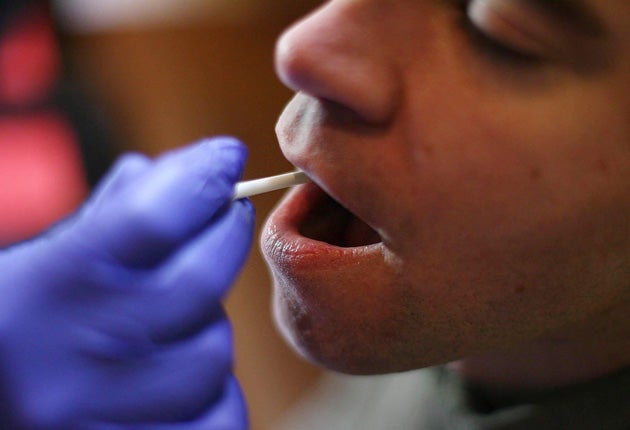
Police forces have been arresting people simply to add them to the controversial DNA database as a result of lax rules that have developed with almost no public scrutiny, the Government's independent DNA watchdog warns today.
The Human Genetics Commission (HGC) also says there is little evidence that the national DNA database, the largest of its kind in the world, is of any use in solving crimes. In its two-year report examining the database, published today, it concludes that allowing police to add anyone arrested to the DNA database damages the assumption of innocence.
The report received testimony from one senior police source, a retired chief superintendent, who said it was "the norm" for officers to arrest someone to obtain their DNA profile.
"It is apparently understood by serving police officers that one of the reasons, if not the reason, for the change in practice is so that the DNA of the offender can be obtained," said the source, whose identity has been kept secret. "It matters not whether the arrest leads to no action, a caution or a charge, because the DNA is kept anyway."
The HGC calls for a debate on the rules on taking DNA samples and adding them to the database, which currently holds the data of around 5 million people. It adds that an independent body is needed to oversee the database. The commission also recommends that all police officers be added to the database to foster trust with the communities they serve.
It notes that there is "very little concrete evidence" as to how useful the database is in investigating crime, adding that the database is having a "disproportionate effect" on some groups. Young black men are "highly over-represented", it says, with more than three-quarters of those aged 18-35 on the database.
Professor Jonathan Montgomery, the chairman of the HGC, said "function creep" of the database had been allowed to take place almost unchecked, as it evolved from a database of offenders to a database of suspects with hardly any legal foundation or scrutiny.
"It's now routine to take DNA samples on arrest," he said. "Large numbers of people on the DNA database will be there not because they have been convicted but because they've been arrested. There was some evidence that... occasionally people are arrested to retain the DNA information, even though they might not have been arrested in other circumstances. We have to strike a balance between identifying offenders and protecting privacy, including that of innocent people," he said.
The Government has announced new proposals to remove those not convicted of a crime from the database after six years. But there are no plans to alter powers on when police can add suspects to it.
The human rights group Liberty said the analysis highlighted the dangers in the regime of retaining DNA. "Not only are we stockpiling the most sensitive information of innocents who have never been charged let alone convicted, we are also creating a perverse incentive to arrest people solely to get their details on the database," said Isabella Sankey, its policy director.
A Home Office spokeswoman said: "DNA samples are taken on arrest for recordable offences carrying a prison sentence. The Government is clear that this is the right threshold for taking and retaining DNA. We know that the DNA database is a vital crime-fighting tool, identifying 410,589 crime scenes between 1998 and March 2009 with a DNA match and a possible lead on the possible identity of the offender."
On the record: How others do it
*France destroys DNA samples once a suspect has been acquitted. Only those convicted of a serious offence remain on the database.
*In Germany, DNA samples are destroyed once a profile has been obtained and checked. Only those convicted remain on a database.
*The approach in the US differs between different states, though federal rules dictate that police can collect DNA samples on arrest.
*In Scotland, the majority of DNA profiles are destroyed if the suspect is not charged with any offence.
Bookmark popover
Removed from bookmarks