Rate of deaths in custody is higher than officials admit
Independent investigation shows cases are left off the list if the deceased was not formally arrested
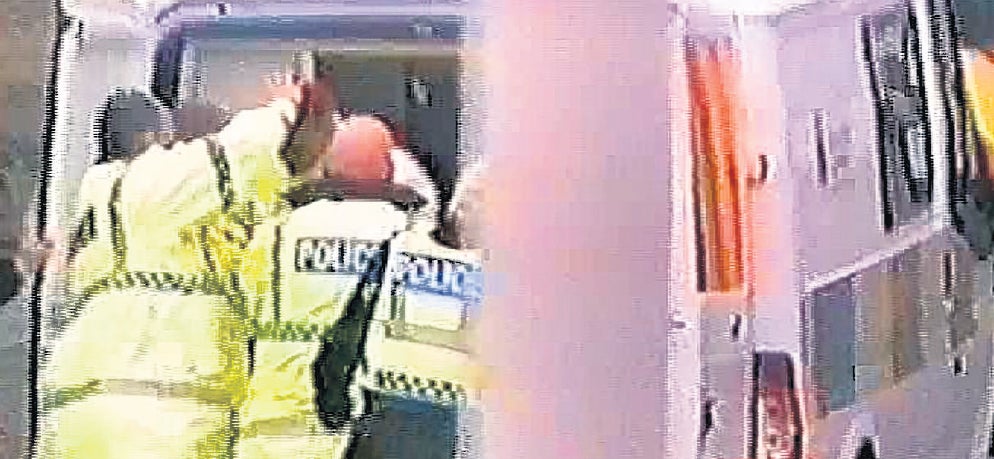
The number of people who have died after being forcibly restrained in police custody is higher than officially stated, an investigation by The Bureau of Investigative Journalism and The Independent reveals today.
Click here to see 'Prone restraint - what it feels like' graphic
The investigation has identified a number of cases not included in the official tally of 16 "restraint-related" deaths in the decade to 2009 – including a landmark case that changed the way that officers carry out arrests. Some cases were omitted because the person had not been officially arrested or detained.
The omission raises questions about the statistics used by the Independent Police Complaints Commission (IPCC) to inform the debate over the use of restraint by police in the sensitive area of deaths in custody, campaigners said yesterday.
The cases emerged after a series of applications made under Freedom of Information legislation requesting the names of the people in the 16 restraint-related deaths identified by the IPCC.
Analysis of the figures reveals the omission of eight high-profile cases from the list, including that of Roger Sylvester, who died after being handcuffed and held down by up to six officers for 20 minutes. The case led to changes about how police arrested suspects and detained the mentally ill.
Keith Vaz, MP, chairman of the Home Affairs Select Committee, said: "It is a matter of concern ... What we will have to do is have a proper, thorough inquiry into this matter."
The Sylvester case led to a review of techniques by the Metropolitan Police that resulted in changes in training. Any force used by police must be "lawful, proportionate and necessary", according to guidelines by the Association of Chief Police Officers.
Deborah Coles, the chief executive of Inquest, which takes up cases of deaths in custody, said it was "absolutely astonishing" that some of the cases were not described as "restraint-related" deaths. "I think there are some very serious concerns about the IPCC and I don't think it's fulfilling its purpose as a robust independent watchdog for the public and indeed bereaved families to have confidence in," she said.
The IPCC's research found that 333 people died in police custody between 1998-99 and 2008-9, including 86 who died after being restrained. That figure included 16 of the most controversial cases which were classed as restraint-related.
However, only those who have been formally arrested or detained are included in the figures. The IPCC lists people who have died following "police contact" but cannot say how many are restraint-related. It is planning a further study later this year. The organisation said: "How we collate data has no impact on the way in which we investigate a death. It ignores the fact that we independently investigate and all our investigations are heard before a Coroner, a jury, the family of the deceased and the public. To assert that the IPCC is not fulfilling its purpose as a sufficiently robust independent watchdog is a complete misunderstanding of what the IPCC does."
The cases include the death of Simon Bosworth in July 2008, who collapsed while being restrained in his garden. He was not included on the list because he had not been arrested or detained under mental health legislation.
The IPCC said: "The IPCC is robust in its attempts to provide accurate statistics where police have restrained an individual. We are accountable to Parliament for the statistics we collate unlike pressure groups and charities that have less defined criteria. The data that the IPCC provides is completely transparent and is published on the website.
"Three of the names you cite are included in this category and would therefore not appear in our deaths in custody study but would appear in our overall figures for deaths following police contact."
A documentary on deaths in police custody will be aired tonight at 8pm by BBC Radio 4's File at Four
Not on the list: forgotten cases
Roger Sylvester
Mr Sylvester died in 1999 after being handcuffed and held down by police officers. The case led to a review of restraint training by the Metropolitan Police. The 30-year-old was detained after he was spotted naked outside his home. An inquest jury initially concluded his death was an "unlawful killing" caused by excessive force. After a challenge by officers, the ruling was quashed and replaced by an open verdict. The death was not included as one of the 16 restraint-related deaths in the IPCC report because of disputes over the evidence.
Giles Freeman
Mr Freeman, a schizophrenic, died in police custody in 2002. He was taken into custody at the request of his family, given a sedative and restrained by officers after he became agitated. A jury found he had died as a "result of restraint and excessive activity while suffering a psychotic episode". He does not appear on the list of 16 restraint-related deaths.
Simon Bosworth
Mr Bosworth died in July 2008 while being restrained by police in his garden. A jury ruled he suffered a heart attack brought on by a combination of restraint, cocaine use and epilepsy. He was not included on the list of 16 because he had not been detained. However, the IPCC carried out an inquiry.