Sheep rustlers ride again
A crime that farmers thought belonged to history is back, with flocks worth thousands being stolen by gangs. Jonathan Owen reports
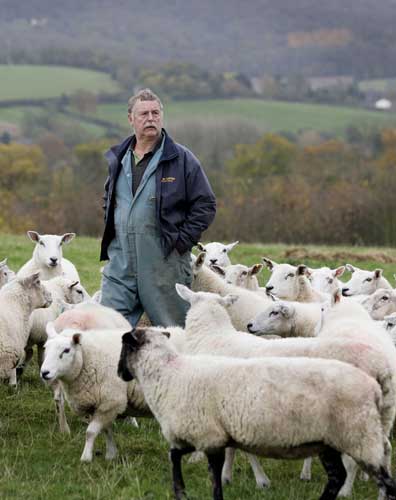
With its rolling meadows, tree-lined lanes and streams of fresh-flowing Malvern water, John Bishop's world is the quintessential English rural idyll. On arrival, it is difficult to see how he could be any less than blissfully happy. But he isn't. John Bishop is seething with anger.
For the perfection of this setting has been shattered by an outbreak of a crime most people thought had been consigned to the history books; sheep rustling. Spitting fury, he clutched his fist and waved at the corner of a field where dozens of lambs grazed last month. Now, nothing. In all, the 58-year-old Worcestershire farmer has lost more than 200 of his flock to a ruthless gang of rustlers, costing him more than £10,000.
It might seem like a tale of criminal activity that belongs firmly in the countryside's past, but the theft of large numbers of animals is an increasing problem nationwide. To tackle it, police chiefs are now looking to reopen village police stations and move officers into rural areas. Meanwhile, farmers are taking matters into their own hands by forming action groups to patrol their areas in an attempt to stop their animals being stolen by organised gangs.
There have been at least 19 separate rustling incidents investigated by police forces and almost 2,000 animals lost in the past year. But this is the tip of the iceberg, according to victims who claim that many farmers are too ashamed to admit they have lost animals that are in their care. Others simply fail to report missing sheep to the police.
Livestock theft is now costing farmers £3.5m annually, according to insurance companies that predict rural theft will soar still further as recession bites. A combination of a growing black market for cheap meat, along with sheep prices at their highest for several years, is being blamed for the resurgence of the crime.
Sheep rustling marked the start of Dick Turpin's notorious life of crime, but nearly 300 years later men on horseback robbing travellers on country roads have been replaced by organised gangs with dogs, bolt cutters and trailers.
One outfit in the north of England has become so notorious that local police have dubbed them the A68 gang – suspecting them of a string of thefts from farms near the A68 between Corbridge, in Northumberland, and Darlington, County Durham, in recent months. Other hotspots include parts of southern Scotland, Wales, the Lake District and Devon.
Some farmers have even resorted to keeping llamas – notoriously aggressive animals – with their flocks as deterrents against would-be rustlers, who operate by night, with the aid of sheepdogs.
In response to the crisis, the National Farmers' Union (NFU) is calling on farmers to set up Farmwatch schemes to keep an eye out for suspicious people or vehicles. Oliver Cartwright, an NFU spokesman, said: "Sheep rustling is part and parcel of increasing rural crime, from diesel theft to ongoing stealing of farm machinery."
A spokesman for the Association of Chief Police Officers (Acpo) admitted that "fear of crime in rural communities is high" and blamed the Government for pressuring police to concentrate on "urban-centric crime targets" to the detriment of the countryside. Police officers are now being moved back into rural areas and police stations being reopened, he added.
But it is already too late for farmers such as Mr Bishop. He appeared deeply troubled as he scoured the landscape for any sign of intruders on to his farm, in the tiny village of Colwall, near Ledbury. "I'm constantly looking around, looking for tyre tracks and any signs that people may have moved animals away. It's like being burgled – how long until the next time?" Mr Bishop said. He added: "We've had years of dealing with disease problems, scrapie, CJD, foot and mouth, bluetongue... and now this."
"Nobody was more shocked than me to find out that we'd lost so many sheep," the farmer said. "It is like highway robbery. This isn't supposed to go on in the 21st century. It is almost an old-fashioned type of crime. It is like the days of Dick Turpin."
Mr Bishop comes from a sheep-farming dynasty that goes back to the early 1800s – a time when people would be hanged for sheep rustling. "I know the punishment won't fit the crime," he said, and added: "I'd like to see them breaking rocks on Dartmoor for six months."
Bookmark popover
Removed from bookmarks