The Met: Undercover, over-familiar... and falling down on The Job
Officers appear too cosy with News International, but can't protect the royals. What is going on?
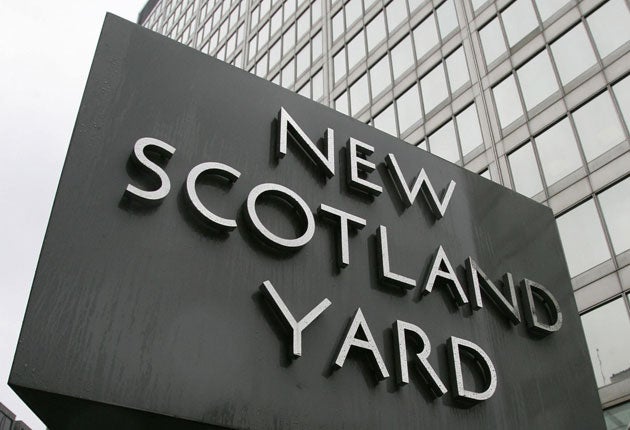
Perhaps even more than David Cameron or News International, Scotland Yard might have been hoping that the phone- hacking row would die down with the resignation of Andy Coulson. Few things seem more unlikely. Alastair Campbell, Coulson's most high-profile predecessor, summed it up simply yesterday: "I think the role of the police in this is now going to become centre-stage."
In truth it was a masterful understatement. Senior officers will face serious questions this week about their original handling of a scandal that appears to grow in ferocity with each new scalp it claims. As if this were not enough, they must also fend off strong criticism of improper relations between one of the Met's close protection officers and the wife of Alan Johnson, the former shadow chancellor; its handling of the student-fee protests and the attacks on the car of the Prince of Wales and the Duchess of Cornwall; and the management of undercover police infiltrating groups of environmental activists.
Acting Commissioner Tim Godwin will face fierce questioning on Thursday about the role of the Met at the first meeting of the Metropolitan Police Authority since Coulson's resignation and the student demonstration that resulted in widespread violence. He will also be asked about the supervision of undercover police work after revelations that a former Yard officer's behaviour had compromised the trial of environmental activists.
The growing political and public demand for explanations could scarcely come at a worse time for Britain's largest police force. Scotland Yard appeared to be facing a leadership crisis yesterday as sources confirmed that the Met Commissioner Sir Paul Stephenson, has broken his leg at his home in Lancashire and is likely to be absent from duty for longer than had been expected.
He injured himself while recuperating from an operation to remove a benign tumour from his leg. Senior officers and police authority members now question whether Sir Paul will return to his post. It will be left to his aides to steer the force through massive budget cuts under which more than 20,000 jobs will go.
Phone hacking
The Metropolitan Police insists that it investigated the case fully from the outset and found no evidence to justify new proceedings. But critics are asking why the police failed to go beyond the initial prosecution of Clive Goodman, the former News of the World royal editor, and Glenn Mulcaire, the private investigator, convicted of intercepting the messages of royal staff in 2007. A series of legal disclosures has since revealed that detectives had information gleaned from documents taken from a raid on Mulcaire's home that lawyers claim links the investigator to other reporters and senior editors on the Murdoch newspaper. Yet the police chose to interview only Goodman. Yesterday more than one commentator was pointing out that the evidence being cited by celebrities – such as Sienna Miller – bringing fresh claims, had been there all along: why had detectives not acted on it?
The newspaper argued at the time that only Goodman, a "rogue reporter", had commissioned Mulcaire to intercept phone messages. However, lawyers questioned why the paper's royal editor would be interested in intercepting the phone messages of Gordon Taylor, the head of the Professional Footballers' Association, or of Sky Andrew, an agent who represented a string of Premier League players.
After it was revealed that the NoW had paid Taylor a fee believed to total nearly £1m to settle a civil legal case, the Yard has faced a deluge of requests from others who believe their phone messages were also intercepted.
A number of influential victims are critical of the Yard's response. The former deputy prime minister John Prescott said: "I'm not a fan of the Met and I don't think they've covered themselves in any glory over this whole affair. They've been more involved in covering up instead of a proper investigation. Now I might be wrong about that but I've gone to the courts for a judgment."
Brian Paddick, a former high ranking Met officer, whose phone messages are believed to have been targeted, said of his former colleagues: "When the police are forced to disclose information by court order then it tends to raise doubts about whether the case has been properly investigated or not."
MPs who investigated the saga were critical of the Yard's handling of the case. The report, by the Culture, Media and Sport select committee, concluded: "These matters merited thorough police investigation and the first steps to be taken seem to us to have been obvious. The Metropolitan Police's reasons for not doing so seem to us to be inadequate."
According to lawyers familiar with the cases, the Yard remains "obstructive" towards other potential victims.
Scotland Yard has consistently defended its original inquiry carried out by the former Assistant Commissioner Andy Hayman, who now writes for The Times, a sister paper to the News of the World. Senior police insist there is no need to reopen the case. But in a letter made public by the Crown Prosecution Service after it announced that it was reviewing all the case evidence, Assistant Commissioner John Yates admitted "there remain outstanding public, legal and political concerns".
VIP protection
Paul Rice, 45, Alan Johnson's former bodyguard, has been suspended from duty after he admitted having an affair with the wife of the former Home Secretary. The close protection officer was relieved of duty on Friday.
Police sources suggested yesterday that Mr Johnson, 60 and his wife Laura, 47, may both be questioned about the incident in the investigation into Rice's conduct. The case is highly embarrassing for all concerned.
It appears to be a clear breach of ethics and Rice is likely to face a charge of "discreditable conduct". Senior sources at the Yard made it clear that it had sparked considerable anger among the upper echelon. The force's directorate of professional standards will have to decide what disciplinary action is appropriate. Although the individual case can be dealt with by internal disciplinary measures, the case will also have more long-term, damaging implications for the Yard's elite SO1 branch, which provides close protection officers for senior politicians, members of the royal family and diplomats.
Undercover officers
London's police chiefs face questions over the behaviour of undercover police officers after it was revealed that PC Mark Kennedy, a former Met officer working undercover to infiltrate a climate-change protest group, had undermined the trial of six people accused of planning to invade a Nottingham power station. The questionable behaviour of several other undercover officers has since come to light. As a result, the force is under pressure over its use of undercover officers to target lawful protesters.
Chris Huhne, the Energy and Climate Change Secretary, yesterday accused the force of "inventing" a threat among eco-protesters to justify increased resources for an undercover unit that lacked "proper governance".
Mr Huhne said the case of PC Kennedy was an "astonishing business". The Labour government had shown little concern for green protesters or civil liberties, he claimed.
Control of the National Public Order Intelligence Unit (NPOIU) is to be transferred from the Association of Chief Police Officers to Scotland Yard. The unit was set up to monitor animal-rights activists plotting violent campaigns against scientists engaged in animal testing. "That was quite legitimate and proportionate," Mr Huhne said. "But what often happens if there isn't a very clear management of these sorts of organisations, is once the threat it was set up to deal with passes, they try and invent new threats that justify their own existence and budget."
Mr Huhne added: "At a time when we are facing real terrorist threats... to be spending money in this way, and serious police resources, on essentially monitoring lawful protesters is just nuts." Having the unit outside the Met meant senior officers did not assess the "relative priority of chasing after eco-activists".
Student demonstrations
The police handling of student grant demonstrations has been called into question repeatedly. Widespread damage was caused to Conservative Party offices in Millbank after police underestimated the numbers of protesters and then lost control of the situation. When a second demonstration erupted into widespread violence and damage to property in central London there were demands for an investigation into the police's handling. The use of "kettling" tactics to restrict the movement of demonstrators, and the use of police horses in enclosed streets have also been challenged.
The Met faces calls for an independent inquiry into how a car carrying the Prince of Wales and his wife was attacked by a mob in central London. The calls for a fresh inquiry followed an internal police investigation which concluded that the couple were put in the dangerous situation after a breakdown in police communications.
Keith Vaz MP, the chairman of the influential Home Affairs select committee, said: "Internal police inquiries will not satisfy the public."
Bookmark popover
Removed from bookmarks