UK's youngest terrorist convicted of bomb plot
Schoolboy from a respected Muslim family was part of cell that plotted to make explosives and napalm. Jonathan Brown and Michael Savage report
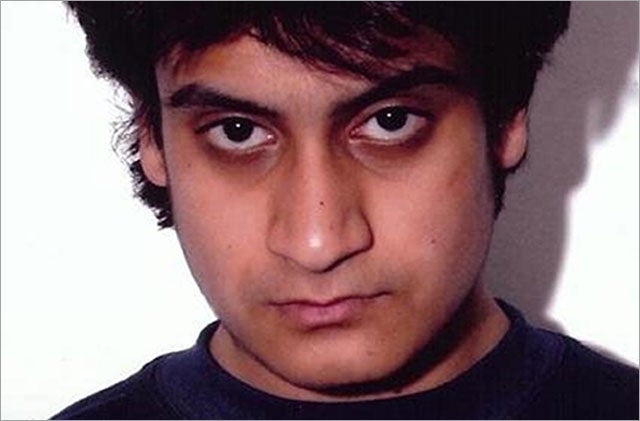
A schoolboy who possessed a guide to making napalm on his computer and had notes on martyrdom under his bed became Britain's youngest convicted terrorist yesterday.
Hammaad Munshi, whose grandfather is a leading Islamic scholar, was 16 and taking his GCSEs when he was arrested. Munshi, now 18, was convicted of making a record of information likely to be useful in terrorism following a three-month trial at Blackfriars Crown Court in London. He was cleared of one possession offence.
The teenager was remanded in custody until sentencing at the Old Bailey on 19 September when, Judge Timothy Pontius warned, it was "inevitable" that he would be jailed.
For Munshi, the first indication he was being watched by police came out of the blue one summer afternoon in 2006. He was walking home from school after sitting a GCSE exam when he was seized by officers from the Leeds counter-terrorism unit set up in the wake of the 7 July bombings in London.
A few hours later, he was in a cell being questioned about his double life. By day, he attended lessons at Westbury High School in Dewsbury, West Yorkshire, and did as he was told. But in the evening, he spent hours surfing jihadist sites and distributing material to others in what the Crown branded a global conspiracy to "wipe out" non-Muslims.
He had detailed instructions about making napalm, other high explosives, detonators and grenades, and "how to kill", the court heard. Munshi was 15 when he was recruited by Aabid Khan, 23, a "key player" in radicalising the impressionable and vulnerable in Britain and abroad with his message of "violent jihad".
They lived 10 miles apart, phoned each other during 2005 and 2006, and swapped documents about "black powder explosives". Khan wanted to fulfil the teenager's wish to go abroad and "fight jihad". During one internet exchange, they discussed how Munshi might smuggle a sword through airport security.
To those within Dewsbury's close-knit Muslim community, Munshi appeared an unlikely terrorist, not just because of his age but because he is also from one of the most respected families in town. His grandfather, Sheik Yakub Munshi, is an influential cleric and the driving force behind the creation of Dewsbury's first sharia courts, which have been widely praised by theologians and politicians alike.
Sheik Munshi is known as a moderate, who after the London bombings was praised by the former Tory leader Iain Duncan Smith as "someone who has preached peace and opposed the men of violence". The family is also close to Britain's first Muslim minister, the Dewsbury MP Shahid Malik. Munshi's uncle, Abdul Hai Munshi, is a senior figure in the Dewsbury Labour Party who once stood as a local councillor.
When Munshi was arrested, two bags of ball-bearings – the shrapnel of choice for suicide bombers – were found in one of his pockets . As officers searched an empty house in Greenwood Street, which he claimed was his home address, a package containing hunting knives was delivered for him.
His wallet included the hand-written dimensions for a sub-machine gun, the illustration taken from a book called Expedient Home-made Firearms.
Although Munhsi was the youngest member of the cell, he played a full and active part, his trial was told. He was described as a "competent webmaster" who used his expertise to host his own website and post terrorist material online. His internet nickname was "fidadee", an Arabic word meaning a person ready to sacrifice himself.
Jurors were told that Munshi circulated technical documents detailing how to make napalm, detonators and how to produce different home-made explosives. Notes glorifying martyrdom were found stashed under his bed. One read: "One who is not taking part in the battle, nor has the sheer intention to die, is in the branch of hypocrisy.
Another said: "I don't want to be a person like it has been mentioned about, I don't want to be deprived of the huge amounts or lessons Allah has prepared for the believers in the hereafter."
Yesterday, Munshi refused to comment on how he had moved away from the moderate position adopted by his grandfather. But Mr Malik said: "They are a decent family and, having spoke to them, I know they are shocked and bewildered at how one of their family members, a 15-year-old child at the time, could have been mixed up in something like this. It is an obvious tragedy for the family and I know they are finding this very hard to come to terms with."
He added: "Muslim parents need to learn the lessons of this case and be more alert, vigilant and aware of what their children are doing, as well as giving them a sound understanding of Islam."
Munshi was tried with two other members of the cell. Khan, 23, from Bradford, was convicted of possessing articles for a purpose connected with terrorism. Sultan Muhammad, 23, from Manningham, Bradford, was convicted of similar charges after a step-by-step guide to making a suicide vest was found in his possession, along with some of the most extreme terrorist videos ever recovered by British police. A fourth man, Ahmed Sulieman, 30, of south London, was cleared of all four charges against him.
The breakthrough that put police on to Munshi's came two days before they raided his home, when Khan returned to Manchester airport on a flight from Pakistan. Following a tip-off, officers examined his luggage and arrested him on suspicion of terrorism. In his bag was a laptop containing a hard drive he bought from his Muhammed, who three days earlier was filmed on CCTV entering an internet café in Manningham with Munshi. Files stored on the drive formed the basis of what the prosecution described as an "encyclopaedia of terrorism" – a reference source which Khan, as leader of the cell, used to recruit extremists through the internet and indoctrinate them in the ideology of al-Qa'ida.
The cell's communications, much of it through Microsoft's MSN portal, revealed that the members were assisting other potential terrorists and their supporters. One entry in Khan's diary read: "Cell one to stake out a target, cell two to buy the equipment, cell three to carry out the attack."
Although neighbours said Khan was "a good man" from a "nice, quiet family who are no trouble to anyone", police were convinced his polite façade hid a more sinister reality. One source described Khan as a man with "national and international links to people convicted or about to stand trial on terrorism charges". He readily told interrogators of his association with two banned Islamist organisations, Jaishe Mohammed and Lashkar-e-Tayyaba. Along with Muhammad and Munshi, and using the online sobriquet Ocean Blue, he acted as a facilitator for other terrorist groups, providing up-to-date information on training, weaponry and explosives. Khan's computer hard drive revealed that his indoctrination took place predominately in secure internet forums after he lured potential recruits from open discussion websites. He tried to persuade people to attend military training camps in Pakistan.
Speaking after yesterday's guilty verdicts, Det Chf Supt John Parkinson, the head of the Leeds counter-terrorism unit, said: "Let there be no doubt, these are dangerous individuals. These men were not simply in possession of material which expressed extremist views. They were also in possession of material that was operationally useful to anyone wishing to carry out an act of violence or terrorism."
While they had not actively planned terrorist acts themselves, he added, they "sought to incite others for terrorist purposes, promoting al-Qa'ida ideology and training programmes".
Munshi will be sentenced at the Old Bailey on 19 September. Khan and Muhammad will be sentenced today.
Bookmark popover
Removed from bookmarks