Adoptive parents believe boys are 'too much trouble'
Girls have to wait only half as long to find a family, new survey shows
As prospective parents look through the Be My Parent adoption newspaper filled with photographs of hopeful children, it soon becomes apparent to them that there are far more boys looking for a new family than girls.
Boys wait twice as long for families in some parts of the country, as agencies struggle to challenge negative attitudes among parents, according to research by the British Association of Adoption and Fostering (BAAF).
A snapshot of adoption agencies across the country last week revealed that boys are much more likely to be referred to a "hard to place" agency than girls. Experts fear boys are being overlooked because people believe little girls will be easier to look after.
According to the BAAF poll, most people believe that frequent coverage in the media of boys as knife-wielding, cannabis-smoking gang members may fuel the reluctance to adopt them. Experts hope to highlight the plight of little boys during National Adoption Week, which starts tomorrow, and to challenge their trouble-maker image.
David Holmes, chief executive of BAAF, said: "Our survey suggests that one reason people may think twice about adopting a boy is because of the negative portrayal of boys in the media. Perhaps people have a more idealised image of a girl. We need to confront these stereotypes and try to dispel some of the negative myths."
Around 3,600 children were adopted in the UK last year, 5 per cent fewer than in 2006-07. If their local council struggles to find children a family, they are referred to independent agencies or the adoption register. Around two-thirds of the children referred to the national organisation Be My Parent in 2005-06 were boys. One agency in East Sussex took twice as long on average to find families for the boys on their books.
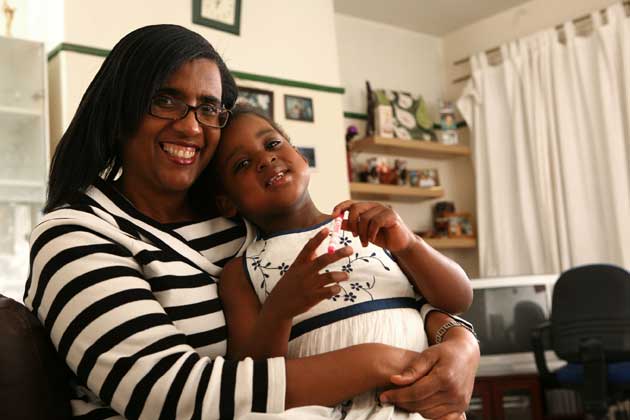
Nearly one in 10 adopters are single parents, predominantly women. Gill Theophane, 48, a nurse from north London, adopted Rozie, four, when she was six months old in 2004. She said: "The more I thought about it, I realised I would find it easier to relate to a girl than a boy. On a practical and an emotional level, I felt much more able to cope with a girl because I'd been there myself. I was very aware there were more boys waiting and I could have had my pick, but I felt so strongly about a girl that I was happy to wait for a year."
Older children, sibling groups and those from black and ethnic minorities wait the longest for suitable homes.
Nina Hansen, a family lawyer from Freemans Solicitors, said: "Sibling groups take a lot longer anyway, but especially if the older child is a boy. As for black boys, the media really works against them; people believe the future will bring serious trouble with the police. It is much harder to place boys, especially those over five, but little black boys? Well, you can pretty much forget it."
Many people continue to complain of barriers in the adoption process. Last week one London council banned smokers from fostering children, while gay and lesbian couples still report prejudice among social workers.
Susan Cotton, head of adoption at the agency Action for Children, said: "Too many social workers are still holding on to the ideal of middle-class, married couples: not looking at what a child needs, but at who the parents are. Heterosexual couples still get preference with children, and we have to work harder to get some social workers to see what a single person or a same-sex couple can offer a child."
Andrew Christie, spokesman for the Association of Directors of Children's Services, said: "In making a final decision, local authorities will take many factors into account. Stability in family life, however, does not imply preference for married, heterosexual couples or the preclusion of other arrangements. It is the needs of the child that must be paramount, and a social worker will consider all available alternatives to meet those needs."
To have your say on this or any other issue visit www.independent.co.uk/IoSblogs
Join our commenting forum
Join thought-provoking conversations, follow other Independent readers and see their replies
Comments