Children in jail: lottery of justice is revealed
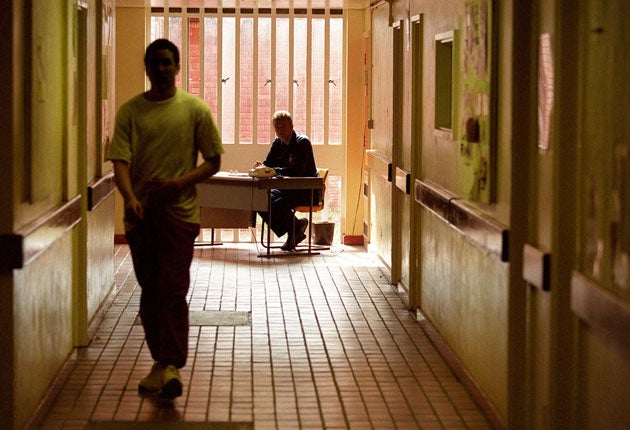
The jailing of children in England and Wales has become a postcode lottery where child custody rates in some parts of the country are five times higher than in others, according to league tables seen by The Independent.
The figures show that children who appear before the courts in some parts of the Home Counties face a one in 10 chance of being jailed – often for motoring offences and other non-violent crimes. In contrast, children living in inner-city Newcastle stand just a one in 50 chance of being detained. Now the Youth Justice Board has written to local authorities "naming and shaming" those who are not doing enough to keep young people out of custody.
In her letter, Frances Done, chair of the Youth Justice Board, tells councils that judges are more likely to impose a custodial sentence on a child when they don't have confidence in alternative community sentences or are unhappy with the standard of "supported" accommodation made available by the local authority.
While the decision to send a child or young person to prison is made by the court, Ms Done says that a council's commitment to fostering and other care provision is a key factor in that decision.
In an interview with The Independent Ms Done says her letter has already caused "quite a stir" among council leaders: "What we know about almost every authority is that the [child custody ] rate could come down. The big issue for us is pushing these young people up the agenda."
The two priorities, said Ms Done, were to ensure that children did not enter custody unless there really was no alternative and that when they had completed their sentence there was proper support to stop them returning to a young offenders' institution or other forms of custody.
Ms Done said the system for paying for the sentencing of young people was "flawed" because there was no incentive for councils to provide alternatives to custody. She said she had asked ministers to consider new ways of making councils financially accountable for the numbers of young people jailed. But Ms Done said that sometimes it was too easy for children to enter the criminal justice system when quite often they could be dealt with alternatively, adding that in some cases a "good telling off would have done just as well".
She said research showed that if a child hadn't begun offending by the age of 14 then they were unlikely to in their later teens.
Today, the Prime Minister is to use a speech on criminal justice to set out a blueprint for tackling offending in Britain which is expected to include new approaches for dealing with juvenile crime.
A recent report by the Prison Reform Trust found that the number of children sentenced to custody in England and Wales more than tripled between 1991 and 2006 and the UK now has the highest proportion of children in custody in western Europe. Latest figures released by the Youth Justice Board show that in the past 12 months nearly 4,000 children were sentenced to custody.
The Prison Reform Trust says that despite the official policy of only jailing children in exceptional circumstances, many children in jail have not committed serious or violent offences. At least one third are locked up for non-violent crimes like breaking Asbos or theft. In 2006, 286 children were imprisoned for motoring offences, 192 for drug offences, 26 for fraud and forgery and two for drunkenness.
Yesterday, a leading think-tank, Policy Exchange, found that, under the Labour Government of the past 12 years, crime prevention has taken second place to law enforcement, with the result that crime rates have remained higher than might otherwise be the case. Author Irvin Waller, professor of criminology at Canada's University of Ottawa, urged the Government to tackle the root causes of crime, including social exclusion among young people, bad housing, bullying at schools, and work and training opportunities.
Ms Done said because the Youth Justice Board holds the £325m annual budget spent on secure accommodation for children there is a "feeling" among local authorities "that that's somebody else's problem". Council budgets only pick up the bill for community-based sentences but the local authority pays nothing if courts impose a custodial sentence. Ms Done said: "It really is your [the council's] issue, these are your children and we want to know about performance of youth offending teams."
This was a point echoed in Professor Waller's report which concluded that there were "perverse incentives" at play.
Youth custody rates (per cent) by council
1 Merthyr Tydfil: 12.6
2 Liverpool: 11.8
3 Ealing: 11.1
4 Leeds: 10.6
5 Thurrock, Essex: 10.6
6 Wokingham, Berkshire: 10.5
7 Hammersmith and Fulham: 10.4
8 Trafford, Greater Manchester: 10.3
9 Barking and Dagenham: 10.2
10 Hackney: 10.2
11 Wandsworth: 10.2
12 Bridgend, South Wales: 10.1
13 Lambeth: 10.00
14 Waltham Forest: 10.00
15 Bracknell Forest, Berkshire: 9.8
16 Manchester: 9.7
17 Nottingham: 9.7
18 Kingston-upon-Hull, Yorkshire: 9.5
19 Brent: 9.4
20 Islington: 9.4
Join our commenting forum
Join thought-provoking conversations, follow other Independent readers and see their replies
Comments
Bookmark popover
Removed from bookmarks