Defamation Bill intended to kill off 'libel tourism'
Major changes to Britain's antiquated defamation laws will be outlined by ministers today with the publication of a bill to provide greater protection for free speech and an end to "libel tourism".
The draft Defamation Bill will propose a new defence of "honest opinion", which will protect academics from being sued by companies and special-interest groups for damaging their reputations. There is now a defence of "fair comment", but it has to be based on stated and true facts and rarely succeeds.
There will also be new rules to stop celebrities and businessmen from bringing libel cases in Britain unless they can prove that the publication caused them "substantial harm" in the country. Foreign litigants will have to sue in the country where most of the damage to their reputations was done, rather than using the English courts on the basis that the publication was available in Britain.
Last year MPs warned that Britain's international reputation for free speech was being damaged by the "embarrassing" spread of libel tourism. It followed dozens of cases where foreign businessmen and celebrities used the UK courts to sue for defamation even where there was no evidence of substantial publication in this country.
In one case, a Ukrainian businessman sued a Ukrainian newspaper in the UK over an article it published on corrupt land deals in Kiev. The article was written in Ukrainian and the paper had only about 100 British subscribers. But the paper was forced to apologise as part of an undisclosed out-of-court settlement.
In another case, the House of Lords allowed Russians Boris Berezovsky and Georgi Glouchkov to sue the American magazine Forbes over an article about their business activities in Russia, which contained accusations of gangsterism and corruption. Around 780,000 copies of the magazine were sold in the United States, while only around 6,000 copies were accessed in print or via the internet in the UK. Forbes did not prove the allegations were true and settled the case.
Last year President Obama signed into law legislation protecting US writers from foreign libel judgments. The Speech Act makes foreign libel rulings virtually unenforceable in US courts and was drawn up to protect Americans from claimant-friendly jurisdictions such as the UK.
Under the new rules, it will be up to a judge to decide whether "substantial harm" has been caused to reputation in this country. It is expected that if the main damage was done outside this country, UK courts will not accept jurisdiction. The Bill will also include new rules designed to protect academics and others from being sued by companies or individuals for expressing views – even if they are defamatory.
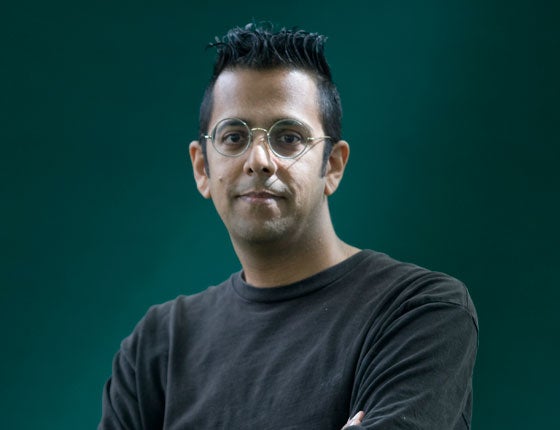
This follows several high profile cases, including that of the science writer Simon Singh, who was taken to court by the British Chiropractors Association for calling their techniques in treating certain ailments "bogus".
In another case, a cardiology consultant was sued for criticising a heart implant device at a medical conference in the US. Ministers are worried that legislation is scaring off academics from publishing critical studies – which are in the public interest – for fear of being sued by large corporations with deep pockets. Under the new rules, it will be much easier for them to defend themselves with enhanced public interest rules. It is hoped the new tests will discourage claimants from suing in the first place.
There will also be proposals to reform libel rules on the internet, so that articles are not repeatedly published and so give rise to a fresh defamation claim every time someone clicks on them.
Lord McNally, the Liberal Democrat Justice Minister, said the changes would be "radical" and would be bad news for "corporate bullies, rich bullies". They could become law as soon as next year, he said. "I think the whole package will be very much what people have been looking for," he added.
Notable cases
Ben Goldacre
As a journalist who specialises in debunking scientific myths and PR babble, Mr Goldacre is used to stirring controversy. In 2007, he was sued by Matthias Rath, a vitamin pill manufacturer, who had taken out full-page advertisements in South African publications denouncing Aids drugs as ineffective, while promoting his own supplements. Mr Goldacre raised concerns about these advertising strategies in a series of articles and Mr Rath sued him for libel. The case was eventually dropped but not before legal costs of more than £500,000 were racked up.
Simon Singh
The popular science writer became a poster child for libel reform when the British Chiropractic Association (BCA) sued him for a piece in The Guardian newspaper that was critical of the trade. Singh lost the first legal round in which the BCA sued over his assertion that some chiropractors "happily promote bogus treatments". But he appealed, and when a pre-trial hearing allowed the appeal to go ahead, the BCA dropped its case against him.
Hardeep Singh
For the past three years, the freelance journalist has been fighting a case brought by an Indian Sikh sect leader. He was sued by Baba Jeet Singh Ji Maharaj for libel after publishing an article which he said falsely accused him of being a cult leader. The action was finally thrown out two weeks ago when Mr Maharaj failed to pay £250,000 in to court as security for costs. Singh now faces an ongoing legal battle in both the British and Indian courts to recover his costs. He is tens of thousands of pounds in debt.
Kyiv Post
Being a Ukrainian language newspaper with only 100 subscribers in Britain was not enough to protect the Kyiv Post from Rinat Akhmetov, who sued it over allegations in an October 2007 article headed "Appalling Kyiv City Council Land Grab". The story concerned land deals and corruption in Kiev and alleged that Akhmetov, one of Ukraine's richest businessmen, had acted unlawfully in various real estate transactions. The paper apologised as part of an undisclosed settlement out of court in February 2008.
Join our commenting forum
Join thought-provoking conversations, follow other Independent readers and see their replies
Comments
Bookmark popover
Removed from bookmarks