Forced marriages: the trail of misery and fear in Britain
A helpline for victims has been inundated with callers. Jerome Taylor was given exclusive access to their harrowing stories
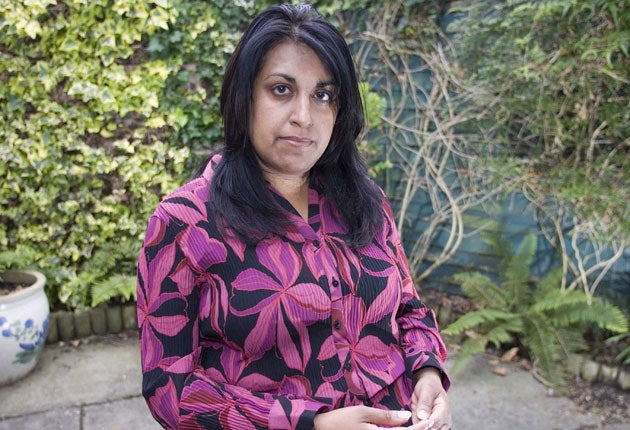
Hundreds of children fearing for their lives have called a new national helpline set up to assist victims of forced marriages since its launch four months ago, The Independent has learnt. Many are seeking ways to escape parents and family members who are trying to force them into unwanted marriages. Others have said they fear becoming victims of so-called "honour killings", because of social and sexual behaviour that their community disapproves of.
According to the first national breakdown of callers, an average of 62 victims are phoning for help every week. One in 10 is under the age of 16. One 14-year-old girl said she was in fear of her life because she had become pregnant and thought her parents would kill her or marry her off if they found out.
The Derby-based Honour Network, which began taking calls in April, is the first national helpline to give advice to those who are afraid of being forced into marriage or at risk of suffering honour-based violence.
Run by the refuge charity Karma Nirvana and initially funded by the Government's Forced Marriage Unit, the network is staffed by survivors of forced marriages who help find refuges for women who predominantly hail from Britain's south Asian and Middle Eastern communities.
According to Jasvinder Sanghera, who was disowned by her family for refusing a forced marriage and went on to set up Karma Nirvana, the youngest caller to the new helpline was 13.
"We have to move away from thinking that forced marriages and honour-based violence only affect a few people," she said. "These numbers will be just the tip of the iceberg."
Activists believe schools must do more to train teachers to be aware of the tell-tale signs that indicate a pupil might be at risk of a forced marriage so that they can alert the correct authorities without tipping off potentially violent family members.
Children who are taken out of school early and taken abroad for long periods of time are particularly at risk. In February, a Home Affairs Select Committee was told that in Bradford alone 250 girls aged 13 to 16 were taken off their school rolls in 2006 because they did not return from a visit abroad. At least 33 were still unaccounted for.
The Forced Marriage Unit, a joint venture between the Home Office and the Foreign Office, repatriates up to 70 victims a year who are forced into marriages abroad, but campaigners believe the true number is higher.
The most common age of victims calling the helpline was 17, while the Eastern, Midlands and London regions accounted for 57 per cent of all calls.
Although men can also be victims of forced marriages, 89 per cent of those appealing for help were female. Almost 80 per cent quoted "forced marriage" as the type of abuse being perpetrated, against them while 70 per centalso said they feared becoming victims of honour violence. When asked to name who was responsible for violence against them, just 13 per cent of victims mentioned husbands, while 71 per cent blamed immediate family.
"For me this is one of the most shocking, but insightful statistics," said Ms Sanghera. "It shows how violence is being perpetrated by the entire community, not just abusive husbands. That's why it is so hard to tackle and so difficult for people to escape."
Campaigners complain that historically the Government, police and local authorities have been afraid of tackling forced marriages and honour crimes for fear of upsetting those communities accused of practising them. But they have broadly welcomed legislation which from November will enable potential victims obtain an injunction halting a forced marriage.
Keith Vaz MP, head of the Home Affairs Select Committee investigating forced marriages, said he was not surprised by the figures. "The committee found that the majority of cases of forced marriage happens in the under-18s," he said. "I would like to praise the work that this helpline is doing."
Anyone wanting to contact the Honour Network can do so by telephoning 0800 5999 247
Baljit Kaur Howard: 'I was 17 and had never kissed a boy. I felt humiliated and degraded'
The home Baljit Kaur Howard has made for herself in a quiet Ipswich cul-de-sac is a world away from what she calls her "previous life". In her sitting room, a mug of tea in hand, she rests her head on her new husband, Phil. "It's taken me a long time to learn to love Phil," she says. "Before we met I'd never known what it was like to be loved unconditionally."
Bal, as she likes to be known, was 17 when her father announced that she was going to be married to a family friend she had met only once before. She then spent eight years trapped in an oppressive, loveless marriage. "I had always expected to have an arranged marriage, but I did not expect a forced marriage," she says. "I told my father that I didn't want to marry him. He just said, 'You'd better get used to the idea. If you run away I will find you'."
Now aged 39, Bal considers herself lucky. She escaped, but in doing so has been disowned by her family.
Born in the Indian Punjab to a Sikh family, Bal came to England at the age of one with her parents, who settled in Darlington.
"Growing up in Darlington was a schizophrenic existence," she recalls. "The house was India. Shoes and Western clothes were forbidden. So was English. But at school I was free. I ran around and made friends with whoever I wanted. I could actually be myself."
But by the time she reached puberty Bal's attendance at school had dropped from 100 per cent to 50. "I remember my father telling me: 'There's no need for an education where you're going'. But to my knowledge no one ever bothered to find out why I stopped turning up."
Bal believes school should have more of a role in looking for the signs of exclusion. She also believes that marriage registrars should be on the lookout for people who appear to be marrying against their will. Shortly after the marriage Bal was taken to her in-laws' home in Huddersfield where she slept with her ex-husband for the first time. "I was given a glass of milk to drink by a female member of his family. They said it would help me sleep.I was 17 and had never even kissed a boy before. I felt humiliated and degraded. I couldn't believe that my own parents had forced me into this utterly miserable situation."
The concept of honour had been so drummed into her that there were times Bal thought the only honourable escape was suicide.
She said: "I thought killing myself would be the one way I could end it all without dishonouring the family." Instead, she decided to try for a child, someone whom she hoped would love her back as much as she needed to be loved.
But the stress was too much and she miscarried three times. It was then that Bal decided she could take no more. She began interviewing for jobs in the London area and secretly organised a flat to flee to. She also began removing any bits of paper from the house that could later be used to track her down.
"The day of my Great Escape – 28 March 1996 – was the day my life began again," she says.
Five years and two diplomas later she met Phil in a pub and they married soon afterwards. "Invites went out to my family but they never showed up," says Bal. "That was when I knew I had to let go."
Join our commenting forum
Join thought-provoking conversations, follow other Independent readers and see their replies
Comments