Forcing asylum-seekers to return to Iraq is 'inhumane'
The first deportation flight to Baghdad since the war began will leave Britain this week
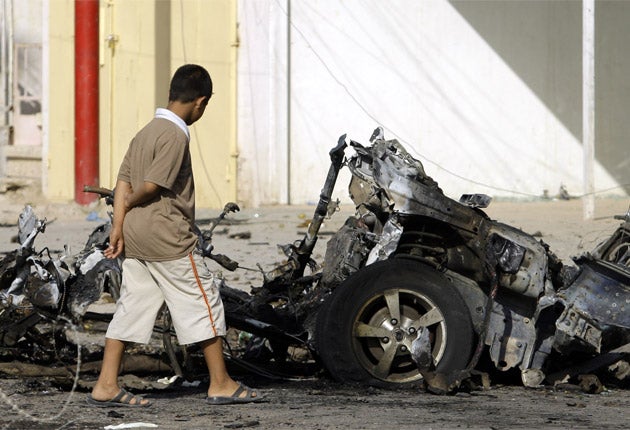
More than 40 Iraqi asylum-seekers are to be forcibly returned to Baghdad this week in the first deportations to southern Iraq since the start of the war more than six years ago.
The Home Office has chartered a special aircraft and has told the men, who have all had their claims for asylum refused, that they can expect to be removed to Iraq within seven days.
Yesterday, a suicide bomber targeted a coffee shop in Buhruz village north of Baghdad, killing eight people and injuring 10. The day before, a roadside bomb was detonated in central Baghdad, injuring four people. Last night, refugee support groups and asylum campaigners condemned the decision to return Iraqis to Baghdad as "inhumane and immoral".
The International Federation of Iraqi Refugees said: "The Government is forcing people back to a country devastated by a war it started. They are trying to keep their crimes secret – even the people they want to deport have not been told where they will be sent back to or when. We call on everybody to resist these deportations in any way they can."
Maurice Wren, the director of the charity Asylum Aid, said: "Forcing Iraqi civilians onto a charter flight to Baghdad is inhuman. Many Iraqis have fled Saddam's persecution or the risks of being killed in the insurgency and have lived with their families as refugees in the UK for years.
"The United Nations High Commissioner for Refugees says that all civilians from Baghdad and the surrounding areas should be protected, not forced to return to face the violence. Our courts are still considering test cases on whether it is safe to force civilians back to the civil strife in Iraq. Forced removals are unlawful and are in breach of international human rights law."
Among the men who have received the letter from the UK Border Agency is Yousuf, who is being held in Brook House Immigration Detention Centre, near Gatwick Airport. He said last night: "Iraq's not safe for me. I am Shia and a Sunni group is after me. The same group has killed both my brothers and now they're after me. The Government here won't let me work, and then they give me just £35 a week to live on, but I've got friends here and I'm safe. Why would they send me back?"
Hussein, who is also to be deported, said: "I'm from Baghdad. I'm a Sunni – I have a big problem with a Shia party. They've used their influence to imprison my brother and they're looking for me. If I'm deported there I know 100 per cent I'm going to be killed."
The UK Border Agency letter warns the recipient: "Directions have now been given for your removal from the United Kingdom... you are to be removed to Iraq no sooner than three days from the date on this notice [8 October] and no longer than 12 days from the date of this notice."
Britain's decision to resume deportation flights to Baghdad follows similar decisions made by Sweden and Denmark, which have begun returning refugees to southern Iraq.
Between 2005 and 2008, the Home Office deported 632 Iraqis to the safer parts of north Iraq, predominantly the Kurdistan Regional Government, and actively encourages Iraqis to volunteer to return to cities in southern Iraq. Despite improved stability in the region, violence continues to make life hazardous in southern Iraq.
Last week. three car bombs in the western Iraqi city of Ramadi killed 19 people. In the first six months of this year, 1,891 civilians were reported to have died because of the violence.
The Home Office refused to confirm or deny the Baghdad charter flight, but the Government argues that progress in ending the country's internal conflicts means it is now safe to return failed asylum-seekers.
Some of the Iraqis have lived in Britain for decades. Last year, Zyad al-Saadon, 55, an Iraqi who is married to a British national and has lived in the UK for 36 years, told The Independent that he faced deportation to Baghdad after he was convicted of a drugs offence. He predicted that he would be "dead in days" if he was forced to return to his home country. "It would be like committing suicide. As soon as I step out of the Green Zone I would be walking around Baghdad with the word 'target' across my forehead," he said.
He faces deportation under the government programme for removal of failed asylum-seekers and foreign convicts. He has already been offered £500 to be paid by the British embassy in Baghdad if he goes voluntarily. It was unclear whether Mr al-Saadon was to be part of the Baghdad charter flight.
... and the troops are going back too
Seventy British troops are to be sent back to Iraq after the resolution of an embarrassing disagreement.
With the final withdrawal of forces at the end of July, there had always been an intention to leave behind a symbolic contingent of about 100 Royal Navy personnel. However, they were forced to make an undignified retreat from Iraq when the Iraqi parliament failed to ratify an agreement to legalise their position before its summer recess. They were redeployed at first to Kuwait then, as the matter dragged on, back to Britain.
Yesterday, Iraqi politicians approved a security pact that will see about 70 return in a deal that allows British forces to stay for a year. They will be deployed to the southern port of Umm Qasr to protect oil sites, assist with mine detection and train Iraqi forces.
It is expected that Iraq will ratify the deal within 10 days and the servicemen, who have been on standby, will be ready to deploy within a month.
Supporters of the cleric Muqtada al-Sadr, who once staged a bloody insurgency against British and US forces and who strongly object to any foreign troops remaining in Iraq, walked out during the vote.
The agreement is for a year but sources said that the timeline for withdrawal would depend on how quickly the Iraqi navy develops.
Join our commenting forum
Join thought-provoking conversations, follow other Independent readers and see their replies
Comments
Bookmark popover
Removed from bookmarks