Gary McKinnon: 'If I have to spend some time in an American jail, I will survive but it will be tough. I can't imagine that I'll be too welcome'
Jerome Taylor meets Gary McKinnon, the hacker who this week lost his appeal against extradition to the US
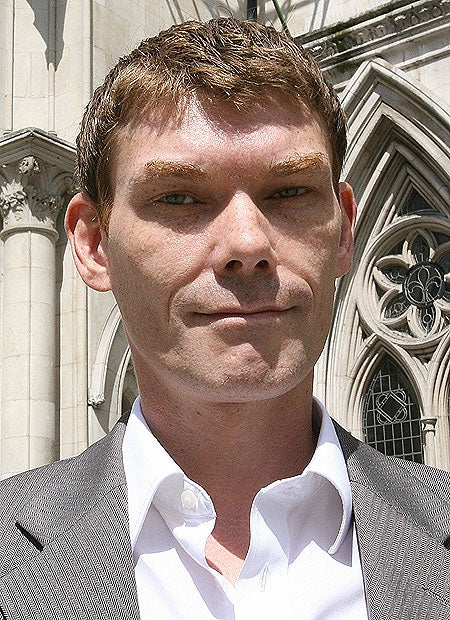
It's not often that you feel comfortable sitting in a pub garden with someone who is facing up to 70 years in prison. For that sort of sentence, surely the crime must have involved some sort of horrific or repeated violence? After all, most murderers and rapists get less than 70 years.
Gary McKinnon hasn't murdered anyone, but he nonetheless still faces the possibility of spending the rest of his life in jail. Despite his seemingly innocuous appearance, the United States believes Mr McKinnon is "the world's most dangerous hacker", a man who once seriously threatened the national security of the world's most powerful nation and someone who the US has desperately pursued over the past six years in an attempt to try him on American soil.
That impending trial is now one step closer after the House of Lords dismissed his final appeal this week against being extradited to the US under a controversial treaty which currently allows for British suspects to be sent to the States, but does not force America to hand its citizens to Britain.
With his options in the British courts exhausted, Mr McKinnon's only hope now is the European Court of Human Rights, where his lawyers have frantically lodged an appeal hoping that Strasbourg will agree with their argument that the punishment he faces in America far outweighs the gravity of his crime.
Nursing a pint of Staropramen in his north London local, the 42-year-old former IT worker is aware that he may have exhausted all his legal options.
"When I heard about the law lords' ruling, that was the first time in six years that I actually cried," he says, drawing deeply on the first of five cigarettes he smokes during the hour. "I'd pretty much managed to keep it together all these years, but when I saw my girlfriend and mother crying I just couldn't any more."
Under British law, his cyber crimes would probably warrant little more than a six-month community service order and a large fine. But in the US, the laws governing hacking are far harsher. US officials, one of whom promised to see Mr McKinnon "fry" for his misdemeanours, have talked about a sentence of 70 years – although that could be reduced if he co-operates.
Even worse, because Mr McKinnon's hacking adventures targeted military computers, America could chose to prosecute him as an "enemy combatant" – the same status given to those left in legal limbo at Guantanamo Bay.
Mr McKinnon's lawyers hoped that the disproportionate prison sentences for hackers in the US and the fact that his crimes were committed from a flat in north London would help sway the law lords in favour of a British trial.
"I'm very angry," he says. "I genuinely believe that we are the 51st State. You see it everywhere you go, not just our foreign policy, but in our schools, our hospitals and now our courts. The British Government simply bends over backwards for America."
The picture that Mr McKinnon paints of himself is of a small-time hacker who had an unhealthy obsession with finding proof that the US knew about the existence of extra-terrestrial life and, using nothing more than a single computer and a dial-up modem, decided to do some investigating. While tapping into American government computers, he says he did nothing more damaging than leaving political and sarcastic messages taunting the US military about how lax their computer security was.
"I wouldn't call what I did an attack," he says. "It was more like probing, snooping around and leaving messages – what hackers call 'hactivism'. Attack suggests some sort of malicious intent, which there simply wasn't," he explains. But America sees things very differently. In its extradition papers, the US government accuses Mr McKinnon of "the biggest military hack of all time". They say that between February 2001 and March 2002 he penetrated 81 military and 16 Nasa computers, stole documents and passwords, and even managed to shut down an entire Washington-based military network for 24 hours, causing $700,000 (£350,000) worth of damage.
Mr McKinnon believes the accusations are part of the American tradition of overstating how dangerous individual hackers are because they are embarrassed that ordinary members of the public have been able to breach their security systems.
"It's a classic case of America using a sledgehammer to crack a nut," he says. "There was a British hacker like me in the 1990s called Matthew Bevan and America labelled him 'the greatest threat to national security since Adolf Hitler'. I think they were hugely embarrassed that I got in. I remember one reporter in the States telling me that the only major damage I had done was to egos of the top military brass."
Mr McKinnon's naming of Mr Bevan is no doubt deliberate: America's attempts to extradite him ultimately failed and he is now a free man. But because his hacking occurred shortly before and after 11 September, Mr McKinnon believes the US is doubly determined to make an example of him.
Considering he is closer than ever to being extradited, Mr McKinnon appears remarkably accepting of his fate, but he says: "I think about what I did every day. If only I could build a time machine I would. When I look back at my hacking days I was a completely different person – I hardly slept, washed or changed my clothes."
Under his current bail conditions he is allowed to use computers, but is forbidden from accessing the internet. He says that has made it extremely difficult to find work or support his girlfriend, Lucy.
"Seeing what this has done to my family is the hardest part," he says. "Like any woman, Lucy wants to settle down and have kids but we can hardly do that with the threat of prison hanging over me."
He says he is happy to serve time in a British jail and admits that it is the thought of a US prison that he finds terrifying. "I think if it came down to it and I had to spend time in a US jail I would survive, but it would be really tough. All the time you hear about the rapes and beatings. Just the other month I read an Amnesty International report about how prison guards were using their stuns guns too much. As someone accused of supposedly attacking their country, I can't imagine I'd be too welcome, either."
For now he is pinning his hopes on the European Court of Human Rights, which could halt extradition plans by up to two years – if they agree to hear his case. "That might not sound all that good to you, but it's better than going to America," he says. "At least it's an extension of my liberty, even if it is just temporary."
Join our commenting forum
Join thought-provoking conversations, follow other Independent readers and see their replies
Comments