Immigration judges: 'Afghanistan is not in a state of war'
Ruling paves way for asylum-seekers to be returned
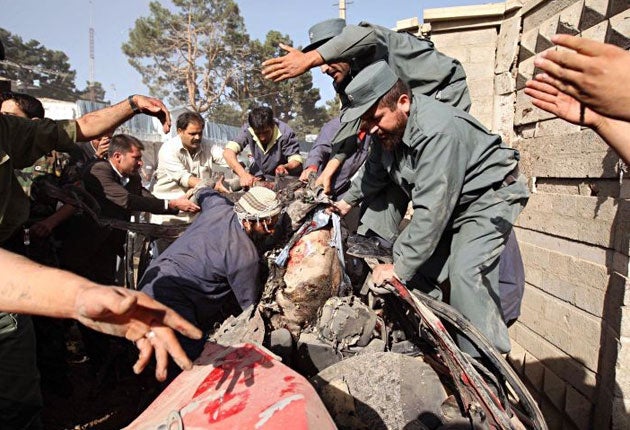
Hundreds of Afghans living in Britain face being deported after immigration judges ruled that their home country's bloody conflict did not make the region an unsafe place to return failed asylum-seekers.
The test ruling opens the way for deportation flights to southern parts of the war-torn country where thousands of civilians have lost their lives since the toppling of the Taliban in 2001.
Three judges of the Immigration and Asylum Tribunal ruled on Wednesday that the level of "indiscriminate violence" was not enough to permit Afghans to claim general humanitarian protection in the United Kingdom. Hundreds of asylum-seekers a year are returned to Afghanistan if they have not convinced a court they are in fear of persecution or that their lives are in danger. The ruling on Wednesday prevents them from arguing that the country is a dangerous place.
Last night refugee campaigners said the situation was much more dangerous than it was being represented by the UK Government and the courts.
A spokesman for the charity Refugee and Migrant Justice said: "It is now going to be very difficult for people from Afghanistan seeking asylum in Britain to win their claim by arguing that Afghanistan is a dangerous country. This decision really does take us back to square one."
Peter Kessler, the UN Refugee Agency's senior external affairs officer in the UK, said: "We are in disagreement with the conclusion that there can be returns during the winter months. The UNHCR has consistently advised that returns should not take place over the winter months (mid-October to 31 March), and only individuals from Kabul with family or other support structures may be returned."
The judges said: "Nobody is suggesting that the situation in Afghanistan is anything but a very long way short of ideal but... the numbers of civilians killed by indiscriminate violence turns out to be a great deal less than might otherwise have been expected."
Turning down an asylum claim by a Afghan man, 20, from Nangarhar, the court ruled that civilian casualty figures were not high enough to warrant protection under European law.
The judgment also made it clear that an asylum-seeker had to show why it was not possible to be relocated to another part of Afghanistan if they had succeeded in proving that they faced persecution in their own region.
Lawyers for the Home Office argued in court that progress by the US military had "yielded results". Evidence submitted by the Government showed that apart from one incident when an air strike erroneously targeted a wedding celebration, killing 37 civilians, there was a reduction in civilian casualties caused by pro-government forces.
In the judgment, the three senior immigration judges observed: "It is very difficult, from reading a number of qualitative reports concerning various incidents occurring in different parts of a country, to get a reliable feel for what is really going on. Many of the incidents are reported more than once, and the political stance of those reporting the incident is not always clear."
Last year 3,800 Afghans, of whom 1,185 were asylum-seekers, were returned to Afghanistan.
*A British soldier was killed by a blast in southern Afghanistan yesterday. The serviceman, from the Royal Military Police, died while on a foot patrol near Gereshk district centre in Helmand Province. Lt-Col David Wakefield, spokesman for Task Force Helmand, confirmed the soldier's death in an explosion. "He died doing his duty and we will remember him," he said.
Case study: Sent back to his death
Abdullah Tokhi, 35, repeatedly pleaded while seeking asylum in Britain that his life was in danger because of a sectarian and political blood feud back home. But the Government at the time decided that Afghanistan was now a safe place thanks to the intervention of Britain and the US, and Mr Tokhi was returned to his village. A year later he was dead, shot while walking in a crowded street in a bazaar.
The account given by Mr Tokhi in his asylum application stated that the family originally lived in Bangarak in the Kalakan region in the north at a time when the ruling Taliban, overwhelmingly Pashtun, carried out widespread persecution of the Tajik population in the area. After the US and British invasion of 2001, the Northern Alliance, predominantly Tajiks and Uzbeks, took control and began hunting down those who had helped the Taliban.
As Mr Tokhi continued his efforts to stay in Britain, the situation in Afghanistan deteriorated, with regions falling into lawlessness. The Taliban moved back into this vacuum. Mr Tokhi's apprehension about his family's safety increased after reports that his enemies had tracked his family to their home in Paghman. Mr Tokhi's application for asylum was turned down by the then Home Secretary, David Blunkett, as was his appeal. He returned to Afghanistan in September 2004 and was killed in autumn 2005 .
Join our commenting forum
Join thought-provoking conversations, follow other Independent readers and see their replies
Comments