Jihad: The Somalia connection
Numbers of young Britons heading for war-torn African country have soared
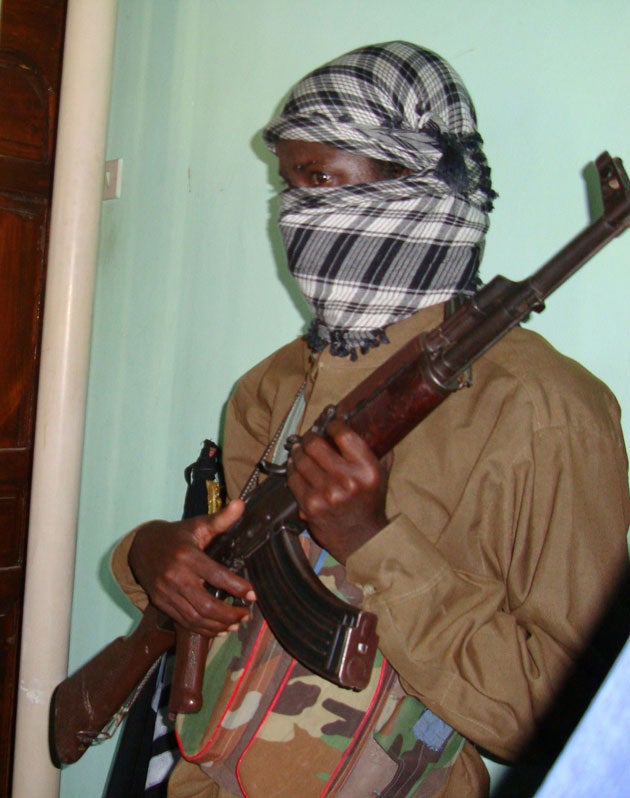
British intelligence chiefs have targeted war-torn Somalia as the next major challenge to their efforts to repel Islamic terrorism, after scores of youths left the UK for "jihad training" in the failed African state. MI5 bosses have warned ministers that the number of young Britons travelling to Somalia to fight in a "holy war", or train in terror training camps, has soared in recent years as the country has emerged as an alternative base for radical Islamic groups including al-Qa'ida.
The Independent on Sunday understands that the number of young Britons following the trail every year has more than quadrupled to at least 100 since 2004 – and analysts warn that the true figure (which would include those who enter the country overland) will be much higher.
However, the British authorities are particularly concerned about the number of people with no direct family connection to Somalia who are travelling to fight and train there. The diversity suggests Somalia is flourishing as a training ground for radical British Muslims, who could join the local terrorist militia al-Shabaab ("the youth"), go on to join conflicts including the Afghan campaign, or return home to pose a security threat to the UK.
It was reported earlier this year that a suicide bomber from Ealing had blown himself up in an attack in Somalia that killed more than 20 soldiers. Two Somali asylum-seekers were among the four men convicted of the failed attempts to bomb the London transport system on 21 July 2005.
Although Afghanistan and Pakistan remain the main destination for British would-be jihadists, the IoS has established that British intelligence chiefs have multiplied the time and resources dedicated to monitoring the trail between Britain and Somalia. The human chain to the Horn of Africa is at the centre of a number of ongoing secret operations. The most established British Somali communities – in London, Liverpool, Cardiff and Bristol – have been placed under the microscope, but "significant investigations" have been targeted on Manchester and West Yorkshire.
The Somali connection has been played down in recent years, as security services have concentrated on more traditional terror hot spots such as Pakistan, Iraq and Afghanistan. A number of the "liquid bomb" plot terrorists convicted last week had Pakistani connections and the bomb makers are believed to have received training at an al-Qa'ida camp in Pakistan.
The British Somali community has grown rapidly in recent years, with thousands of refugees fleeing the fighting in their homeland. But the hardship they have experienced has raised fears that many younger British Somalis have become detached from wider society – and ripe for radicalisation. The Home Office is funding a "Prevent" strategy to tackle radicalisation in UK Muslim communities.
Conservative MP Patrick Mercer, chairman of the counterterrorism subcommittee, said: "I have seen figures that are not in the public domain that suggest there is an increasing flow of young Britons into Somalia. There is now a mixture of British people, from numerous backgrounds, who are heading out there and that is causing great concern."
Despite international support, a series of governments has folded in the face of opposition from rival warlords over almost two decades. Al-Shabaab, a militant Islamic group with deepening ties to al-Qa'ida, is engaged in a vicious struggle with the latest transitional government.
The organisation, which has been designated a terrorist group by the US government, has imposed sharia law in the areas under its control. US officials also accuse al-Shabaab of recruiting young children to train for suicide missions in Somalia.
But it is the ability of Somali militants to reach beyond their own borders that is causing the greatest concern. A confidential report from the non-governmental organisation Partners International Foundation in 2002 identified at least 16 terrorism training camps. The Americans claim the network has grown since then.
Three men from Minneapolis have so far pleaded guilty to terror-related charges stemming from a federal investigation into Americans travelling to Somalia to fight with Islamic militants. At least three more have died, including one whom authorities believe is the first American suicide bomber. Australian authorities last month revealed they had uncovered an alleged plot by immigrants, including three Somalis, to carry out a suicide attack.
The alarm has been echoed in the UK, where undercover surveillance operations have identified a growing number of suspect visits to Somalia.
"We would have started at below 20 five years ago, when Somalia was not significant enough to be put under close surveillance," a senior Home Office source said yesterday. "It has been climbing noticeably every year. You have to remember that Somalia is not a place you would go for a holiday. It is particularly striking when people with no Somali family are going there; it looks as if some people are being attracted by the lawlessness."
The British Somali who became a suicide bomber is believed to have entered Somalia on foot, over the border from Kenya. The unnamed 21-year-old reportedly blew himself up at a checkpoint in the southern Somali town of Baidoa in 2007.
Sheikh Ahmed Aabi, a moderate Somali religious leader in Kentish Town, north London, said that he had heard from families of sons travelling to Somalia to join Islamist groups. "I'm hearing it from parents," he said. "They say they [their children] are joining the jihad. This is a big problem facing our community."
A troubled history
1960 British and Italian Somaliland join forces on independence to form the Somali Republic under the first president, Aden Abdullah Osman.
1969 Mohamed Siad Barre assumes power in a coup.
1993 US Army Rangers are killed when Somali militias shoot down US helicopters in Mogadishu. Hundreds of Somalis die in the ensuing battle, shown in Black Hawk Down. US mission formally ends in March 1994.
2007 Jan US air strikes target al-Qa'ida but reportedly kill civilians – the first known direct US military intervention since 1993. President Yusuf defends them. Interim government imposes state of emergency.
2007 Jun US warship shells suspected Al-Qa'ida targets in Puntland.
2008 Mar US launches missile strike on town of Dhoble targeting al-Qa'ida suspect wanted for 2002 bombing of Israeli hotel in Kenya. Insurgency spreads.
2008 Apr US air strike kills Aden Hashi Ayro, a leader of Al-Shabab insurgency.
2009 may Islamist insurgents attack Mogadishu.
2009 Jun Security minister killed by hotel suicide bomb. Officials ask neighbouring countries for troops.
Victoria Richards
Join our commenting forum
Join thought-provoking conversations, follow other Independent readers and see their replies
Comments
Bookmark popover
Removed from bookmarks