Lost or missing insurance policies leave asbestos victims without compensation
The industry's own scheme is supposed to track down missing details that would help claims. It has failed in its task in half of the cases
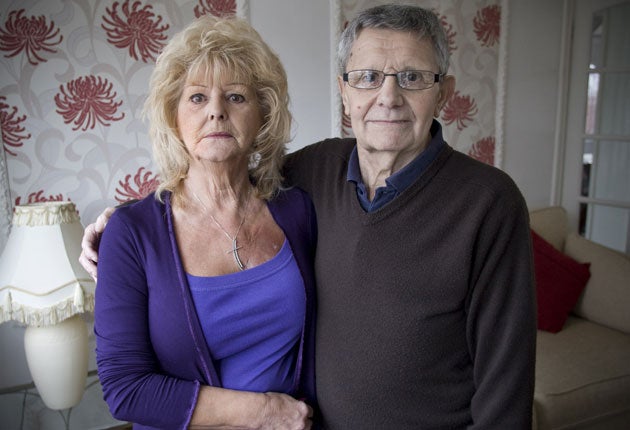
Insurance companies were yesterday accused of profiteering from victims of the deadly asbestos cancer mesothelioma. Hundreds of victims of the disease are going without compensation because many of the insurance policies meant to protect workers allegedly have been lost.
A scheme to track down insurance details of defunct companies, run by the industry itself, is failing to find almost half of the policies which would cover victims' compensation. Untraced mesothelioma cases save the insurance industry an estimated £60m a year, leaving sufferers and their families to struggle on government benefits that are a tenth of what they would be paid in a claim.
"It's an astronomical windfall for the insurance industry," said Ian McFall, head of asbestos policy at Thompsons Solicitors. "At best, they are culpable of mismanaging their policy record archives and at worst they're guilty of profiting from incompetence."
The Government admitted yesterday that the voluntary scheme, which is overseen by the Association of British Insurers (ABI), was "not delivering" and that the figures were not acceptable. The failure to find 48 per cent of policies for mesothelioma sufferers has been described as "utterly shameful", particularly as many of the "lost policies" date from after 1972 when it was compulsory to have employer insurance.
Lord McKenzie, Department for Work and Pensions (DWP) minister, said of the ABI: "It is not delivering what we hoped for it. Far too many people are still not able to trace their insurance policies and access the compensation they deserve. This is not acceptable and more needs to be done to improve tracing rates."
The Government said the scheme had been such a failure that it was now considering the establishment of a "more formal" tracing office and the creation of a fund of last resort to compensate those whose insurers could not be traced.
"The insurers save millions of pounds by not finding these records," said Kevin Johnson, solicitor at the asbestos specialists John Pickering and Partners. "They profit from the failure of the tracing scheme, so why would it be in their interests to commit resources to it? The ABI tracing scheme has failed. You've got insurers policing themselves and the whole thing is fundamentally flawed."
The latest review of the Tracing Service shows that 387 mesothelioma sufferers were left without compensation in 2008 after it failed to trace the insurers of the company that exposed them to asbestos. And the problems are not confined to asbestos: overall the ABI managed to trace only 45 per cent of the policies it was asked to find, leaving more than 3,000 people without hope of compensation.
For those exposed to asbestos before 1972, when employer liability insurance was made compulsory, the likelihood of getting compensation is low. Only 39 per cent of mesothelioma victims who tried to trace insurance policies before 1972 were successful.
Despite the difficulties in tracing policies, the DWP confirms that only one person deals with mesothelioma cases. Lawyers say he is "swamped" with claims.
Tony Whitston of the Asbestos Victims Support Group said: "The true value of proper compensation for dying asbestos victims is a sense of justice done and the solace that they are providing for those they leave behind. Robbed of their lives through no fault of their own, insult is heaped on injury as they fall back on taxpayer-funded, nominal, government compensation while insurers walk away from their liabilities with their back pockets stuffed with cash. This is utterly shameful."
An ABI spokesman said: "We would refute totally any suggestion that insurers are looking to profit by denying people compensation. The insurance industry is committed to providing compensation to mesothelioma victims."
A postponed meeting between MPs and government lawyers to discuss compensation for sufferers of the asbestos scars, pleural plaques, will take place this week. But Michael Clapham, chair of the all-party occupational safety and health group, said; "I don't think it will take us anywhere. The lawyers will just say the law can't be overturned; what's needed is political will."
CASE STUDIES
Jeff Hurrell, 57, from Stockton-on-Tees
His sons were nine and 18 when he died from mesothelioma aged 57 in 2006. His wife, Sue, 54, struggles to make ends meet and has no hope for compensation because the insurers of the companies he worked for cannot be found. Jeff was exposed to asbestos when he worked for two Teesside building contractors in the 1960s. His job involved cutting asbestolux boards and he was not given any protection or warning about the dangers. By the time he discovered he was dying it was too late to get compensation from his employers – both companies had dissolved. The ABI tracing scheme also failed to identify any employer liability insurers for either company. "More than anything in the world I'd rather have Jeff back, but the money would help us," said Sue. "I'm a carer part-time but it's not easy to manage. It would help an awful lot to get compensation. I could give our boys the things Jeff wanted for them."
Stephen Pearce, 56, from Dudley
He is dying of mesothelioma and can't get compensation because the fabrication company he worked for no longer exists and the insurers can't be traced. "It was a dirty workplace and there was dust all over," he said. "I was in the middle of a Christmas party when I was called to get my results and found out I had mesothelioma. I went back and carried on. I didn't tell my family until New Year's Day. I know they were insured because I can remember the certificates on the wall. The information should be available. I haven't yet reached the stage where I'm incapable of doing things, but when I do it would be a comfort to know there's money there. You hear about asbestos-related disease, but until it happens to you, you have no idea how bad it is."
Ronnie Cadwallader, 76, from Merseyside
He was exposed to asbestos as a welder and metal-worker, and was diagnosed with mesothelioma at the end of 2007. Initially, the ABI could not trace the company that had insured his former employer. Only after a solicitor put in another tracing request to the ABI that it discovered Zurich had been the insurer and he was paid £140,000. "My case proves that the insurance scheme for trying to trace policies doesn't work. It is totally hit and miss," said Ronnie. His wife Anne, 65, said: "It does help to have the money. It means we don't have to worry about bills when we've got so much else to worry about. It's a horrible disease. It was neglect that caused him to be exposed to asbestos. He was given no masks and had no idea how dangerous it was."
Join our commenting forum
Join thought-provoking conversations, follow other Independent readers and see their replies
Comments