One-third of deaths in Britain’s military caused by accidents
Internal documents reveal MoD must ‘improve significantly’ to counter health and safety failings
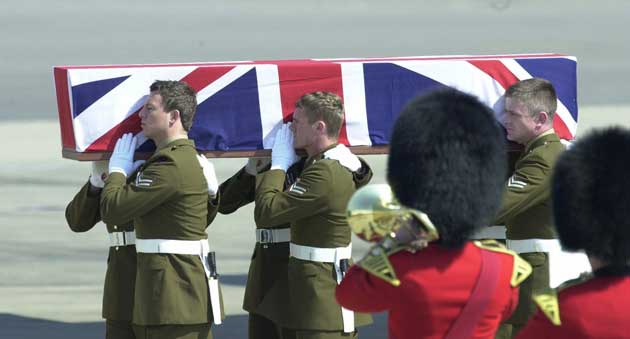
A third of deaths in the British military happen because of safety failures, the Ministry of Defence has admitted. Figures obtained by The Independent on Sunday reveal that nearly 800 service personnel have been killed over 10 years in accidents ranging from car crashes to electric shocks.
Internal documents released by the MoD outline concern at what officials describe as “health and safety failings” and warn of “significant weaknesses” in safety procedures. Senior officials are keen to improve safety standards as new laws make them criminally responsible for avoidable deaths.
The Corporate Manslaughter and Corporate Homicide Act 2007 removes the MoD’s Crown immunity in health and safety matters. Senior defence officials are now open to the same risk of prosecution as employers in the private and public sectors.
At a meeting of the MoD board last summer, Sir Ian Andrews, a senior official at the department, told colleagues: “Examination of the figures on deaths in the armed forces between 2001 and 2008 showed that one in three of the total number recorded were caused by H&S [health & safety] failures ... Analysis of the data on fatalities, which overall had worsened during the reporting period, suggested the department had to improve significantly.”
Officials were also warned that analysis of car and lorry crashes showed the department had “significant weaknesses in this area”.
MoD figures reveal that 201 members of the armed forces died in 2007; 73 of the fatalities were classed as “deaths due to violence”, including those killed in action. However, 80 of these deaths were caused by accidents, 50 of them in “land transport accidents”.
Among the other causes were adventure training, drowning and parachute failure. Seven were killed by “rotary blade aircraft”. Between 1998 and 2007, almost 800 people died in such accidents.
Peter Brierley, whose son Shaun died in a Land Rover crash in Kuwait in 2003, said a series of failures led to the tragedy. The inquest into the death of Lance Corporal Brierley, 29, heard that he did not see a large lump of tarmac in the road because infrared equipment intended to deter friendly fire had been fitted over one headlight. “I think they have got a real problem with preventing accidents across the board,” Mr Brierley said. “Shaun’s case showed there is a real problem with the maintenance of their vehicles.”
General Sir Richard Dannatt, the Army’s Chief of General Staff, has appealed to commanders to do more to stop avoidable accidents.
An MoD spokesman said the department takes “all available measures to minimise risks” for personnel. He added: “Military life can never be risk-free, however. Although we make every effort to minimise risks, we can never remove them entirely.”
The ministry admitted yesterday that the number of personnel suffering from non-freezing cold injury (NFCI), or “trench foot”, has more than trebled since 2000 – to more than 300 cases last year.
The injury, caused by prolonged exposure of the feet to cold and wet conditions, can cause pain, numbness, and permanent muscle and nerve damage. In some cases, treatment can require amputation. Defence chiefs have launched a campaign to warn personnel of the dangers from the condition, which caused significant problems during the Falklands War in 1982.
Join our commenting forum
Join thought-provoking conversations, follow other Independent readers and see their replies
Comments
Bookmark popover
Removed from bookmarks