Prejudice and ignorance skew public view of asylum-seekers
Study shows 'reality gap' for Britons who think they know about immigration
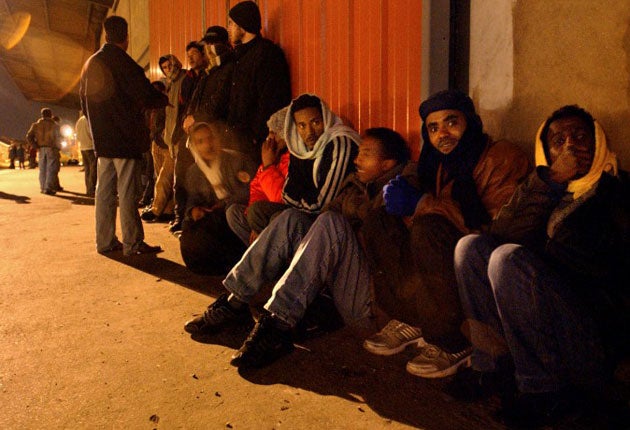
Attitudes to asylum-seekers in Britain are being skewed by gross over-estimation of the numbers of refugees reaching the United Kingdom and prejudice towards immigrants among young people, the British Red Cross says today.
Nearly a quarter of people believe there are more than 100,000 asylum applications every year – about four times the annual figure of 25,670, and just 5 per cent of Britons know to within 10,000 how many refugees come to the UK every year, according to a survey carried out for the charity.
The Red Cross said that the study, published to coincide with a campaign to combat prejudice against refugees, highlights a "reality gap" among Britons on the issue of asylum. It said most people saw refugees as poorly educated and believed that the UK offered shelter to far more migrants that it does.
Of particular concern was the negative image of asylum-seekers among the 18-24 age group, where nearly two-thirds chose the word "uneducated" and 33 per cent used "hostile" when asked to describe refugees.
A spokesman for the Red Cross said: "There is a clear gap between what people think is the level of asylum-seekers entering the UK and the reality. They are getting figures from the media and basing their opinions on perceptions that are not true. The number of refugees coming to the UK is far lower than most people think. It is interesting to note that when people are asked to describe refugees and base their opinions on people they know or have met then you find many more positive associations."
The charity said its survey of 1,000 people, conducted by ICM, had uncovered a succession of misconceptions about asylum-seeker numbers, including a belief that Britain had a disproportionate share of the world's refugees.
85 per cent do not know how many asylum-seekers are hosted by the UK.
On average, people think that the UK is home to 24 per cent of all asylum-seekers – eight times the actual figure of 3 per cent. Of those surveyed, just 3 per cent could give the correct percentage while 85 per cent said they simply did not know.
Nick Scott-Flynn, the head of the British Red Cross refugee service, said: "We provide sanctuary to far fewer people than many developing countries which are less obviously able to cope, such as Chad, Tanzania and Pakistan. We should be proud of the UK's role offering refuge to people in desperate need of safety, and celebrate the skills, talents and contributions that these people bring to the UK."
23 per cent think Britain receives 100,000 asylum applications a year.
The current total is 25,670. Home Office figures show that applications have fallen from a peak of 84,130 in 2002 to 25,670 last year. But public perception has yet to catch up, with the average person estimating there are 58,000 new arrivals each year – more than double the 2008 figure.
The study found that men are twice as likely as women to believe that asylum applications exceed 100,000 a year. Only five per cent of those interviewed could name the correct range of 20,000 to 30,000, meaning that 95 per cent of people live in ignorance of the level of refugees coming into Britain.
34 per cent believe refugees are jobless or unskilled workers.
Perceptions of the skills offered by asylum-seekers are also out of step with reality. Seven per cent thought refugees were mostly jobless while 27 per cent they were unskilled, blue-collar workers from the farming and manufacturing sectors in their countries of origins. Only 10 per cent of asylum-seekers were judged to have been in higher education when in fact about a third of refugees have university degrees or professional qualifications.
92 per cent attach positive attributes to refugees but one in two also sees them in a negative light.
Despite ignorance of asylum figures, Britons broadly see refugees in a positive light. When asked to pick from a list of character traits, more than nine out of ten chose at least one of the following words: hardworking, intelligent, brave and friendly. Forty-eight 48 per cent said refugees were either uneducated, hostile, lazy or cowardly.
Negative descriptions rose dramatically among young people with 61 per cent choosing "uneducated" compared to an average across all age groups of 29 per cent. A third of those in the 18-24 age group chose "hostile" with another 18 per cent seeing refugees as "lazy" and 12 per cent as "cowardly".
Charities hope to reverse the trend with a campaign ahead of Refugee Week this month which will encourage people to replace their photographs on social networking sites such as Facebook with an image of an asylum-seeker.
Titcha Kanjanda, 38, who fled Zimbabwe and is now studying for a social care degree in Portsmouth, said refugees needed to be allowed to feel proud of themselves by contributing to their adoptive country. She said: "I didn't want to leave but circumstances forced me to. I'm not a liability, I want to be an asset. I want people to realise 'she's a refugee, but she's working towards the development of this country'."
Click here to visit the British Red Cross' refugee awareness website
Join our commenting forum
Join thought-provoking conversations, follow other Independent readers and see their replies
Comments