Review will shape future of Britain's armed forces
Pressure of fighting war on two fronts forces first strategic overview for 11 years
The Government has announced it will set up the first strategic defence review in 11 years to shape the future of Britain's armed forces at a time of military commitment abroad and economic hardship at home.
However the final process is not due to start until after the next general election and the Conservatives said they would have their own agenda for the review if they won government.
Ministry of Defence officials have spent eight months preparing for a wide-ranging study. The Defence Secretary, Bob Ainsworth, told the Commons yesterday that a Green Paper would be published next year setting out the parameters of the review.
Mr Ainsworth said a comprehensive study had become necessary again, a decade after the last one, because the demands facing the military had "inevitably changed".
The issues to be covered would include the lessons learnt from operations in Iraq and Afghanistan, partnership of the military with other government departments, conflict prevention, high-tech warfare, the aspirations and views of personnel and the procurement of equipment.
The pressures of fighting a war on two fronts, in Iraq and Afghanistan, and the increasing competition among service chiefs over restricted resources has led to repeated calls for a fresh strategic defence review.
Army chiefs have been particularly vocal in questioning why billions of pounds are being spent on ships and fast jets when the wars in Iraq and Afghanistan have been land-based. Future conflicts of the 21st century, they hold, will involve similar unconventional warfare. Only 10 per cent of the procurement budget, they point out, is spent on land forces.
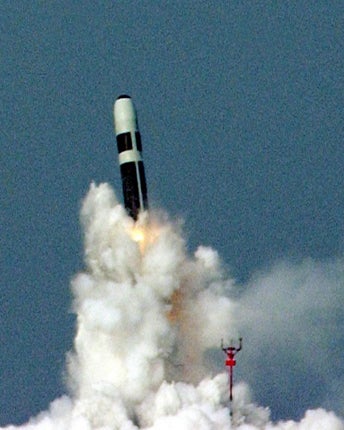
Projects under threat include the Royal Navy's two aircraft carriers, which spurned directly from the last strategic review, when they were seen as critical to conducting expeditionary warfare abroad. The first ceremonial cutting of steel for the 65,000 tonne HMS Queen Elizabeth took place yesterday. However, with delays and a cost overrun of £1bn, the ships are considered to be one of the projects most vulnerable to being scuppered. Economic problems may also put the £76bn Trident missile system under threat. The RAF, too, faces calls to slash numbers in its £20bn Eurofighter Typhoon fleet.
The outgoing head of the Army, General Sir Richard Dannatt, has said that a "Cold War" mentality in ordering equipment was not suitable in the post 9/11 age.
Admiral Sir Jonathon Band, the First Sea Lord, has in turn warned of "sea blindness" – neglecting the Navy – and the RAF head, Air Chief Marshal Sir Glenn Torpy has sought to defend the Typhoon programme.
The incoming head of the Army, General Sir David Richards, former commander of the Nato forces in Afghanistan, set out his vision for the military in a speech to the Royal United Services Institute. His diagnosis was generally well received and parts of it were echoed in a report into defence written by Lord Robertson, the Defence Secretary when the last strategic review took place, and Lord Ashdown of Norton-sub-Hamdon which stated that Britain should focus on capabilities such as light and mobile units, special forces and unmanned "drone" aircraft.
General Sir Mike Jackson, the former head of the Army, has called for a "national debate" on defence. He told The Independent yesterday: "This is a step in the right direction and I hope that it will come up with the right ideas for the strategic defence review. There is absolutely no doubt that there is a need for a thoroughgoing examination of all the issues. A lot of it, however, is political and it would be interesting to see what the Tories do with it all if they happen to form the next government."
The shadow Defence secretary Liam Fox said: "This announcement represents the last gasp of a dying Government under a Prime Minister who has never given the Armed Forces the priority they deserve.
"We nevertheless welcome it as long overdue, as long as the work will serve to inform the full strategic defence review which a Conservative government is committed to undertaking."
Join our commenting forum
Join thought-provoking conversations, follow other Independent readers and see their replies
Comments
Bookmark popover
Removed from bookmarks