Secret documents say Markov's killer was given a medal
As Bulgarian authorities close the file on the murder of the dissident journalist in London in 1978, newly-released papers have shed fresh light on one of the most infamous episodes of the Cold War
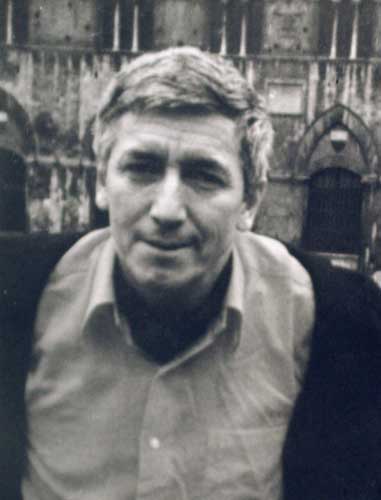
The assassination of the journalist Georgi Markov in London in 1978 by a man wielding a poison-tipped umbrella was one of the most infamous episodes of the Cold War and brought relations between Britain and Bulgaria to breaking point. Thirty years on, with the Bulgarian authorities closing the case on the anniversary of the dissident's death this Thursday, secret official documents have uncovered the truth behind the killing.
The papers, from the archives of Bulgaria's National Intelligence Service reveal how discussions about the assassination took place between the KGB and the Bulgarian intelligence services. They show how the suspected killer, Francesco Gulino (also spelt Gullino and Giullino), referred to as Agent Piccadilly, was given the mission and later decorated for his services. Among the documents is a secret agreement between Bulgarian intelligence and the KGB, whereby Russia would provide fast-acting poisons and devices for their delivery.
Several classified documents relating to the assassination, secured after a three-year legal battle by the Bulgarian journalist Hristo Hristov, are to be published in Bulgaria's Dnevnik newspaper this week.
Other revelations in the Bulgarian newspaper Sofia Echo suggest parallels with the case of Alexander Litvinenko, the critic of the Russian Prime Minister, Vladimir Putin, who was fatally poisoned in London in 2006.
While the Bulgarian authorities are preparing to shelve their investigations, under a 30-year statute of limitations, the Metropolitan Police remain on the case. Several visits have been made by Scotland Yard in the past two years to gain access to classified documents and interview dozens of people.
Gulino's current whereabouts are unknown, but it is believed that British detectives are trying to track him down as he remains the sole suspect. The Met refused to comment but confirmed that detectives would return to Bulgaria in the near future. A spokesman said: "This inquiry remains open and has been a particularly complex investigation. We continue to work with the appropriate international authorities to investigate any new information that is passed or made available to police."
The Foreign Office is stepping up pressure on Bulgaria to help bring Markov's killer to justice. A spokesman said: "We are seeking confirmation from the Bulgarian authorities that co-operation will continue and that the files and archives will remain open when the statute of limitations passes."
Alice Dilke, Markov's mother-in-law, criticised the Bulgarian government for not doing more, but welcomed the news that, as far as Britain is concerned, the case remains open. "I'm delighted the British police are continuing to investigate the case. It was a horrible thing to happen and it's never been cleared up," she said.
Mrs Dilke revealed how Markov had predicted his death: "He always thought he'd be poisoned and watched his back, so to speak, but he never envisaged what did happen to him." She recalled threats he received before his death: "He had been threatened before, and my daughter had been rung up and told he should shut up or there would be dire consequences."
The death of her son-in-law has scarred family, said Mrs Dilke, whose daughter Annabel was left widowed with a young child. "It is very distressing for my granddaughter and my daughter. It crops up so much and it's always painful for them. We all just wish it could come to an end."
The world in 1978
* The frost of the Cold War was deep and hard in 1978, with Russia beginning its ill-fated involvement in Afghanistan's civil war.
* Britain's Prime Minister, James Callaghan, was still clinging on to power until, battered by the "winter of discontent", he was ousted by the Tories under Margaret Thatcher, just months later.
* Keith Moon, the drummer with The Who, died, of a drugs overdose.
* 13-year-old paperboy Carl Bridgewater was shot dead at an isolated farmhouse in Staffordshire.
* Millions were given hope by the birth of Louise Brown, the world's first "test-tube baby", in Manchester.
* Ray Reardon won his sixth snooker world championship and Argentina won the World Cup, beating Holland 3-1.
* 'Saturday Night Fever' unleashed a storm of bad clothing and worse dancing as the Bee Gees soundtrack leapt to number one in the album charts.
* Space Invaders was the latest craze; petrol cost 76p per gallon, and the average house cost £13,650.
Join our commenting forum
Join thought-provoking conversations, follow other Independent readers and see their replies
Comments
Bookmark popover
Removed from bookmarks