Seven hours to save the world
As economies fracture across the globe, the capital's greatest gathering of leaders since 1946 has less than a day to agree a rescue plan. By Paul Vallely
The danger with summits is that you march people to the top of the hill and march them back down again. Gordon Brown has, unhappily, taken a leaf out of the primer of the Grand Old Duke of York in his preparations for the meeting of the leaders of the world's 20 top economies in London next week.
The agenda is an ambitious one. Beneath all the news hoo-haa about grungy protesters, cancelled police leave, be-suited City workers being told to dress down and even the spectre of a terrorist dirty bomb lies the grim reality of a deepening global financial crisis. The task before the G20 is to rescue the drowning global banking system, write the rules of the financial markets and stop a global recession tuning into a great depression. Oh, and, if possible, rebuild the ebbing electoral capital of a British Prime Minister who has invested much of his political fortunes in the success of next week's gathering.
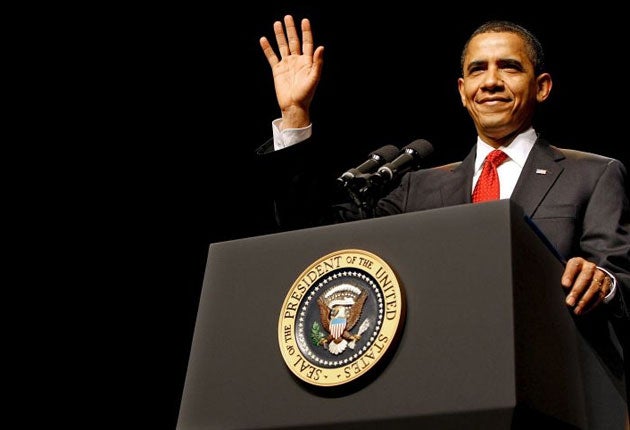
That is why Mr Brown has spent the past month meeting leaders including Barack Obama, Nicolas Sarkozy and Angela Merkel, ending up with a 17,500-mile three-continent trip taking in the United States, Brazil and Chile in an attempt to ensure that the London summit did not end up with what the Foreign Office minister Lord Malloch Brown this week decried as "meaningless empty commitments".
His problem is that though President Obama is singing from the same reflationary hymnbook of increased public spending, printing money and bank rescue packages, many of the other key figures at next week's meeting have turned to a different page. Germany, France and others are saying No to more of the same – and they have been given unexpected backing by the pronouncement by the Governor of the Bank of England this week that Britain has run out of cash for more moves in that direction.
This is why Mr Brown has already begun marching down the hill again in an attempt to lower expectations about what the meeting will produce in terms of a further fiscal stimulus.
This may be no bad thing. It should force the G20 to focus on a wider package. In part that will be about new rules to force banks to hold more capital and stop them paying big bonuses that encourage risky behaviour. They could also regulate tax havens, hedge funds and opaque derivatives.
But the summit offers a much greater opportunity. It already marks a significant shift in power in that it is the G20, rather than the old economic elite of the G8, which is seen as the apt forum for change. The G8 has been joined by the so-called Bric nations (Brazil, Russia, India and China) whose combined economies will soon be bigger than those of the G8.
Yet it is many of those emerging economies, along with the world's poorest nations, which have been worst hit by the downturn. World trade has slumped by 25 per cent and the global economy will contract this year for the first time since 1945.
A key factor in this has been the collapse of short-term trade credits on which 90 per cent of trade among developing nations depends. The Brazilian economy, which grew by more than 5 per cent last year, has shuddered into reverse – and shrunk dramatically by 3.6 per cent in the last quarter. The summit is expected to agree a $100bn fund to underwrite export credit agreements for poorer countries. This is a crucial kickstart. Trade is the motor that pulls developing nations out of poverty, as South-east Asia and China have proved.
But it will not be enough. The World Bank recently revealed that 17 of the G20 have engaged in protectionist measures, despite promises not to do so at their last meeting in Washington. It is vital that the summit sees serious measures to counter this.
World leaders must also resist the temptation to save money by cutting aid. A UN commission chaired by the Nobel laureate, Professor Joseph Stiglitz, has just predicted that the crisis could push 200 million people into extreme poverty. Poor nations have been hit by a fall in commodity sales – diamond exports from Botswana are down 60 per cent.
There has also been a massive drop in the monies sent home by Africans who live in rich countries. Exchange rate fluctuations have also hit developing countries hard. It is therefore essential that the summit presses rich nations to deliver on the rest of the promises made at Gleneagles in 2005.
Now is also the time to move on reforms to international institutions like the International Monetary Fund to give a greater voice to both emerging and developing nations. It could happen, because nations like China will be reluctant to stump up the cash now needed to refinance the IMF, unless they are given more say in how the body is run.
Above all, what Gordon Brown must do next week is turn crisis to opportunity. The five years of economic slowdown which Chatham House yesterday predicted for the world could be the spur to take action on climate change which the world has been studiously avoiding.
Cuts in carbon use come naturally in a recession. But restructuring economies to ensure that when growth returns, it is low-carbon will require the kind of agreement which might well be more politically realistic now than in the boom years. If Mr Brown could pull that off he might even get himself re-elected.
The agenda: The timetable
*How to stimulate demand to combat global recession
*International Monetary Fund's budget to be doubled to $500bn
*To set up new rules on banks, tax havens and hedge funds
*Commitment to free trade, $100bn fund for trade finance
*Restatement of aid pledges to world's poorest nations
Wednesday
AM Gordon Brown and President Obama hold talks and give a press conference at 10 Downing Street
11am "G20 Meltdown" march begins, City of London
2pm Stop the War Coalition march to US embassy
PM President Obama to meet Russian President Dmitry Medvedev, President Hu Jintao of China and the Queen at the G20 leaders' reception, Buckingham Palace.
Evening G20 leaders' dinner, Downing Street, hosted by Gordon Brown
Thursday
Seven demonstrations, including 7am march on ExCel centre in Docklands
AM G20 leaders arrive at ExCel – Leaders and finance ministers hold separate working breakfasts
– Leaders' "family photograph"
– Opening session
Lunch Leaders and finance ministers' separate working lunches
PM Afternoon session
Closing press conference
Friday
Nato 60th anniversary Strasbourg
Join our commenting forum
Join thought-provoking conversations, follow other Independent readers and see their replies
Comments
Bookmark popover
Removed from bookmarks