Terrorists 'gaining upper hand in cyber war'
The West's military infrastructure is at growing risk from sophisticated hackers
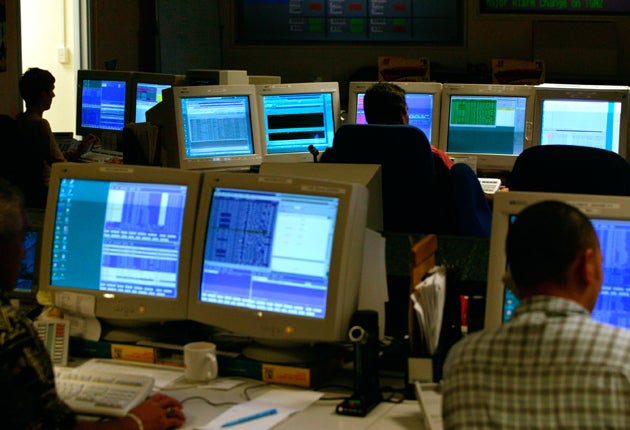
Western governments are facing a potent and ill-understood new threat from terrorists and hostile powers in the shape of cyber warfare, military and security experts have warned.
Network attacks, a British government report says, are "growing in seriousness and frequency". And in a timely reminder of the emphasis that states and corporations alike are placing on the problem, Google and the National Security Agency were yesterday said to be finalising the details of a co-operative deal aimed at boosting the search engine's defences after it was hit by sophisticated hacking attacks.
The company has stated that it will pull out of its business operations in China where the targeted attacks on the accounts of human rights activists are supposed to have originated. But the risk is not confined to individuals. US and British officials say what is at stake goes far beyond attempted state censorship, with military infrastructure and financial markets becoming vulnerable.
To overcome that risk, the Green Paper just published by the British Government has stated that part of the forthcoming Strategic Defence Review will focus on the risks posed by technology in enemy hands. At the moment, it is believed that insurgents with the right electronic capability could jam weapons systems and intercept classified communications during military missions.
"Cyber space, in particular, poses serious and complex challenges for UK security and for the armed forces' operations... Cyber attacks are already an important element of the security environment and are growing in seriousness and frequency," says the report.
"The most sophisticated threat is from established and capable states but cyber eliminates the importance of distance, is low cost and anonymous in nature, making it an important domain not just for hostile states, but terrorists and criminals." The result of losing a "technological edge", said the Paper, would mean "operations would be more hazardous. Our casualty rates, in particular, could be expected to increase markedly."
The boon of the internet for those opposed to Western governments is not limited to opportunities for direct assaults. Internet chat rooms have now become regular meeting grounds for Islamist terrorism, with activities ranging from recruitment to planning attacks. At least part of the indoctrination of the "underpants bomber" Umar Farouk Abdulmutallab, who attempted to blow up transatlantic airliners, is believed to have taken place in cyberspace.
The US administration is expected to use the Google security breach to step up counter-measures in the cyber field. Dennis C Blair, the director of national intelligence, told Congress in his annual review that the threat of a crippling attack on telecommunications and other computer networks was growing with an increasingly sophisticated group of enemies "severely threatening the somewhat fragile system behind the country's information infrastructure".
The UK is working with key Nato allies to formulate defences in the cyber war. However, John Chipman, the director-general of the International Institute of Strategic Studies, said: "Despite evidence of cyber attacks in recent political conflicts, there is little appreciation internationally of how to assess cyber conflict. We are now, in relation to cyber warfare, at the same stage of intellectual development as we were in the 1950s in relation to possible nuclear war."
"Cyber warfare may be used to disable a country's infrastructure, meddle with the integrity of another country's internal military data, try to confuse its financial transactions or to accomplish any number of other crippling aims," he said. However, governments have only limited ability to ascertain even basic facts such as when they were under attack and by whom.
The Indian government recently claimed that hackers based in China had tried to infiltrate computers in the office of its prime minister in New Delhi. And Estonia was subjected to a cyber attack in 2007 when government computers were jammed, causing millions of pounds of financial losses, during a period of tension with Moscow.
If the British Green Paper is to be believed, such problems are only likely to get worse. "The armed forces' dependence on space [communications] has grown rapidly over recent years," it said. "This makes us vulnerable... it is likely to become more difficult for our armed forces to maintain a technological edge over the range of potential adversaries."
Join our commenting forum
Join thought-provoking conversations, follow other Independent readers and see their replies
Comments
Bookmark popover
Removed from bookmarks