The day I hit a child at 20mph - and realised the speed limit must be cut
In an impassioned appeal, Dr Nick Foreman remembers the near-fatal accident that convinced him of the need to stop motorists driving at 30mph in built-up areas
This is what happens and this is how it feels. I was driving along a well-lit suburban street with my two small stepchildren in the back of the car. We were on the way to pick up my wife who had been working away for a few days, and we were all excited about seeing her. It was 6.35pm on a dark February evening and I had some rather gloomy Radiohead music on the CD player.
In an instant, a few yards in front of me was a small child. He was followed by an adult. I remember thinking "WHAT THE..." and then reflexively hit my brakes. The car skidded and I ran into both of them. The child flew through the air, caught in the beam of my headlights. I didn't see the adult.
Traffic stopped behind me and on the other side of the road ahead of me. For a few seconds everything was still. The child, who looked about three years old, was crying in a heap a few yards in front of my car; the adult had been thrown further.
I stopped thinking normally. I had no idea what to do. It was probably only 30 seconds after the accident and already a crowd was appearing. I realised that I needed to phone the emergency services and I went back to my car and got my phone. I couldn't bring myself to address my children in the back seat.
Ringing 999 seemed to takes ages. There was a dislocation between the absolute panic now enveloping me and the calm voice on the other end. I grabbed a bystander to ask where we were. By this point, a large number of people had gathered.
My victims were clearly local with lots of family and friends in the vicinity. They surrounded the bodies lying on the road and after a few false starts at trying to be a doctor, I gave up. I felt incompetent and could only think that I had done this.
It started to become clearer what had happened. The child had got out of a car in a side street and had run towards the main road; his aunt had screamed and run after him. Both had run into my path.
Somebody tapped me on the shoulder. "Are you all right, mate? I saw everything. The kid ran out in front of you – there was nothing you could have done." These were very kind words. I remembered my children. I put my head back into the car – both were crying. I said everything was going to be fine, but I had no idea whether this was the truth.
On the road, nothing had changed. I rang my wife, incoherent. "Something awful has happened..." She was calm. She established where I was and said she'd be there shortly in a taxi. The traffic was backed up on either side of the car. It must have been about seven or eight minutes after the accident when an off-duty paramedic appeared and took control.
After a further five minutes or so the police arrived – lots of them. I was identified as the driver and was told to switch off my engine and sit in my car. Then a rapid-response team arrived in an ambulance car and another five minutes after that, thank God, an ambulance. I heard them apologise for being so long.
The policemen were very young. They were polite but firm and they started to appeal for witnesses, whom they began to interview as the ambulance men got out stretchers to carefully move the bodies.
A man tapped on my car window. I got out. He said he was the child's father. He asked me how I was and said he thought his son was going to be OK. A paramedic then came over. He told me not to be frightened about the stretchers, he didn't think there had been any major injuries.
The ambulance then sped off and a police sergeant appeared. He was less friendly and spent a long time inspecting my car. He ordered the young policemen to chalk the road, to show the position of my car.
My wife appeared, walking along the road with her luggage. The sergeant then allowed the car to be moved and one of the young policemen said he would take me home later. My wife drove the children home.
The police then explained that I would need to accompany them to the police station. They asked me if I had been intimidated by the crowd – I hadn't. The police were now friendly and sympathetic. The witnesses corroborated my story.
The ride in the police car was short and the police station was cold. I couldn't stop shaking. The Breathalyser test was carefully explained and I passed it. I was led through my witness statement by one policeman as another checked my car insurance and tax on their databases.
I was then told that no action would be taken against me and I was taken home by one of the young policemen. He told me to ring him if I needed to talk. He rang me a day or two later and told me that the aunt and the child had no broken bones and were both at home nursing some bruising.
The aunt wanted to talk to me and he asked whether he could give her my phone number. She rang me a few minutes later to tell me that she and her nephew were both well and to thank me for not driving fast. I told her that it was brave of her to try to save the child, and she laughed.
So what has this experience done to me? Suddenly, a few speeding points on my licence don't seem quite so innocent. If you have any, you should also feel ashamed. It is easy to exceed the speed limit and, thankfully, on this occasion, I wasn't. Nor was I fiddling with my mobile phone, sat-nav, or CD player, all of which I have done before.
I think I was going at 20mph at the point of impact, and maybe now you will agree with me that that should be the speed limit in built-up areas.
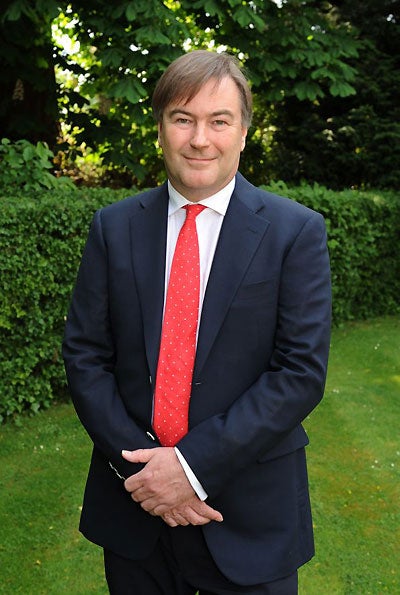
Dr Nick Foreman is a GP from Rickmansworth, Hertfordshire. This article is published in this week's British Medical Journal
Join our commenting forum
Join thought-provoking conversations, follow other Independent readers and see their replies
Comments