We shall (not) overcome... Nuclear protest survived six Tory governments. But not New Labour
Fifty years after historic march, protest camp at atomic weapons base is outlawed in a new blow to civil liberties
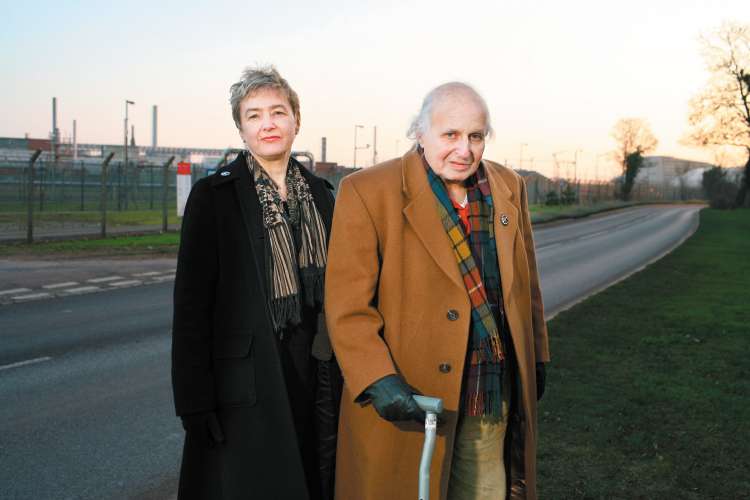
It survived six Tory governments, the end of the Cold War and the rise and fall of mass marches against the British nuclear deterrent. But after 50 years in which the tradition of peaceful demonstration has been maintained outside the Atomic Weapons Establishment at Aldermaston, the New Labour era has finally done for one of the most famous symbols of protest in British political history.
Today would have seen the latest gathering of the band of women who have assembled on the second Saturday of each month since the 1980s to object to the continuing development of the United Kingdom's nuclear deterrent. Instead, following a High Court ruling this week, the protest tents are being removed, demonstrators are being threatened with arrest and "no camping" signs are being erected.
From being a symbol of the right to protest, Aldermaston has become the latest testament to the desire of successive New Labour governments to curtail the right to assemble, demonstrate and object to government policy.
Evidence from the Ministry of Defence to the High Court cited "operational and security concerns". In their High Court appeal, legal representatives for the Aldermaston women argued that the by-law which ostensibly took effect last May banning "camping in tents, caravans, trees or otherwise" amounted to an unlawful interference with freedom of expression and the right of assembly guaranteed by articles 10 and 11 of the European Convention on Human Rights. David Plevsky, appearing for the Aldermaston Women's Peace Camp, said the new regulations were "criminalising the peaceful, traditional and regular activities of the AWPC".
It cut no ice. Before the ruling, Sian Jones a member of the peace camp, said: "If we don't win this review our very existence will be under threat. But there are also wider implications for the long-held right to protest, which is such an important part of British society. Aldermaston has been known as a place of protest for the last 50 years, and this year is the 50th anniversary of the first CND march there." That battle has now been lost.
As a result of the heavy-handed prohibition of a long-running series of protests which have never resulted in violence, a march this Easter to Aldermaston – intended to commemorate the pioneering protest of 1958 – has now taken on a wholly contemporary significance. After a series of assaults on the right to protest around Westminster and beyond, the 2008 trek through Berkshire is set to become the latest chapter in the fight to wrest back civil liberties that New Labour appears determined to take away.
The CND is planning a 50th anniversary day of action on Easter Monday, when the atomic weapons establishment is to be surrounded by a "human chain" to highlight what it says is the stifling of legitimate protest. The police have warned that anyone causing an obstruction during that protest is likely to be arrested and prosecuted.
Kate Hudson, the chairperson of CND said: "We feel this is an extremely serious matter where the long-established and hard-won right to protest is now under attack. People are extremely worried about the weapons of mass destruction being produced at Aldermaston and it is unrealistic of the Government to think that they will not take part in expressing their views. "We hope that on Easter Monday people will not only come because it is the 50th anniversary of the first march but also to show the need to defend their civil liberties."
One campaigner planning to take part, 57-year-old Margaret Jefferson, from west London, said: "I think it is essential that people make a stand on this issue. I had stayed at that peace camp as have so many others without posing any threat to anyone. What is this Government afraid of, what do they think we will do?
"We live in a very dangerous world as it is and with the end of the Cold War there is even less justification for nuclear weapons. As long as these weapons are here there is the risk that a version of them will come into the hands of terrorists."
One of the most famous figures to participate in 1958 is too frail to be there on Easter Monday. But there is no questioning his ongoing commitment to the protest and outrage at the modern Labour Party's complicity in its suppression.
Michael Foot, the former Labour leader, who marched with his late wife, the actress and author Jill Craigie, said last night that he was "deeply saddened" to hear of the camp being closed down, and especially dismayed that this should happen under a Labour government.
"We thought the cause was right and just and we were glad to take part in these marches," Mr Foot said. "I think it is wretched that they are now thinking of shutting down the camp after it had been goingsuccessfully for more than 20 years and I am sure Jill would have felt the same way as well.
"The governments at the time sometimes behaved very badly towards these protesters who were simply exercising their rights in a peaceful way. But these were Tory governments, the Labour Party supported them as I recall, I was the leader at the time. But times seem to have changed."
Join our commenting forum
Join thought-provoking conversations, follow other Independent readers and see their replies
Comments