End of 'compassionate Conservatism' as David Cameron details plans for crackdown on welfare
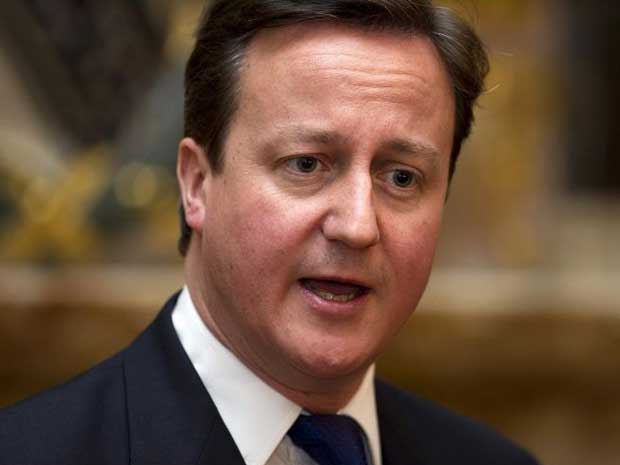
David Cameron today signalled the end of “compassionate Conservatism” with plans for a crackdown on welfare spending for the young, the jobless and those with large families.
In a speech in Kent, which appeared designed to appeal to the Tory right, Mr Cameron demanded an end to what he called Britain's “culture of entitlement”.
He proposed:
* Removing or restricting some benefits from out-of-work families with large numbers of children. This could include cuts to child benefit;
* Scrapping housing-benefit payments to 380,000 under-25s, worth an average of £90 a week, forcing them to support themselves or live with their parents and saving the Government £2 billion a year;
* Making the long-term unemployed carry out full-time community work or lose all their benefits.
However a key section of the speech – briefed to reporters this morning – was omitted from the final version.
In it Mr Cameron was to suggest introducing more regional flexibility into welfare payments because benefit levels affected work incentives.
“Clearly wage rates vary around the country,” a Downing Street spokesman said.
“What someone receives in benefits compared to what they potentially get by going into a job has an impact on the incentives they face.”
However in the end there was no mention of measure in his final remarks.
Although Mr Cameron said the ideas in his speech “might not win the government support” and could “rub people up the wrong way” polling shows huge public support for a crackdown on benefit payments.
A survey by YouGov for Prospect magazine found 94 per cent of Tory voters versus 59 per cent of Labour voters feel “the government pays out too much in benefits and welfare levels overall should be reduced”.
But the proposals are likely to encounter opposition from the Liberal Democrats and most of furthest reaching ideas will form part of the Tories next election manifesto.
Liberal Democrats sources have insisted that they will not allow measures penalising the vulnerable to pass during the lifetime of this Government.
In the speech Mr Cameron also ruled out means testing benefits for the elderly as a way of finding the extra £10 billion needed to balance Britain's books.
He said he would not renege on his election pledge to maintain universal state pensions, winter fuel allowances and free transport for the over 65s.
“Two years ago I made a promise to the elderly of this country and I am keeping it,” he said. “I was elected on a mandate to protect those benefits – so that is what we have done.”
Instead the Tories are likely to go into the election promising swingeing welfare cuts to eliminate the structural deficit at the expense of the young and jobless.
Signalling a harsh line on welfare payments, Mr Cameron argued the benefits system has become too skewed in favour of those who don't work.
“Compassion isn't measured out in benefit cheques," he said. “The time has come to have a real national debate and ask some fundamental, searching questions about working-age welfare: what it is actually for.”
He suggested new measures to stop jobless young people claiming housing benefit – suggesting they should live at home unless they have the means to support themselves – saving the Government nearly £2bn a year.
He added it was wrong that many young people in work has to stay at home because they didn't have enough cash to live on their own, while for the jobless “it's a trip to the council where they can get housing benefit”.
He will also said there should be limits on benefits for people who decide to have large families – despite not working.
“We have been encouraging working-age people to have children and not work, when we should be enabling working-age people to work and have children,” he said
He also suggested changes which will make jobless people do community work to get benefits.
“We have yet to introduce a system whereby after a certain period on benefits, everyone who was physically able to would be expected to do some form of full-time work helping the community, like tidying up the local park.”
Tory strategists believe the party should take a tough line on benefits at the next election – which Mr Cameron seems to accept.
“I am exploring these issues not just as leader of a coalition but as a leader of the Conservative Party who is looking ahead to the programme we will set out to the country at the next election.”
He is unlikely to get support from the Liberal Democrats for any of the more radical welfare proposals.
“But the substance of these proposals could be supported by the Liberal Democrats,” a Lib Dem source said.
The Lib Dems are likely to go into the next election promising tax rises for the rich as a way of closing the budget deficit rather than cutting welfare.
Mr Cameron's proposals have also been attacked by charities and the Labour Party who say they are simplistic and could fuel a rise in homelessness – particularly amongst the young.
Balbir Chatrik from the homeless charity Centrepoint said: “These proposals will be catastrophic for young people and will lead to a significant increase in young homelessness, which is already on the rise. Most of the people we encounter can't go home. Many of them can't live at home safely. So what's going to happen to them?”
Campbell Robb, chief executive at Shelter, added: “It's outrageous that the government is considering undermining the housing safety net yet again.
Shadow Work and Pensions Secretary Liam Byrne said Mr Cameron had put worklessness to a record high.
“It's now very clear that a welfare revolution was all talk,” he said.
“Out-of-work benefits are going through the roof. Each week we hear of another new initiative, another crackdown, another test.
"Meanwhile in the real world, the cost of out-of-work benefits is up nearly £5 billion, housing benefit over £4 billion, the Work Programme is failing and the multibillion-pound Universal Credit scheme is running late and over budget.
"Welfare spending is going up under this Government because too many people are out of work, but at the last budget the Chancellor's priority was not help to get people into work but a tax cut for millionaires."
Join our commenting forum
Join thought-provoking conversations, follow other Independent readers and see their replies
Comments