General: British troops killed by amateurism
Lack of expertise at the top had fatal consequences in Iraq, inquiry told
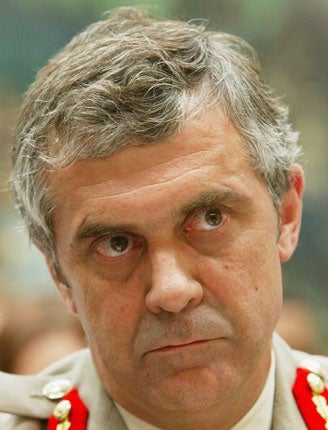
British soldiers have been killed in Afghanistan because of the "amateur" handling of the operation by the Government, one of Britain's most senior military officials has said.
Lt-General Sir Frederick Viggers, who led British forces in Iraq in 2003, said that lessons had not been learnt from the mistakes made during that campaign, which had suffered from a "lack of a sense of direction from the outset".
He told the Chilcot Iraq inquiry that problems in the planning of military action, such as that currently being carried out in Helmand province, Afghanistan, persisted because those at the top of Government did not have the necessary expertise. "We have not really progressed at the strategic level," Sir Frederick said. "I am not talking about the soldiers and commanders and civilians... who did a great job.
"It's the intellectual horse power that drives these things [which] needs better co-ordination." He added: "We are putting amateurs into really important positions and people are getting killed as a result of some of these decisions. It's a huge responsibility and I just don't sense we are living up to it."
The Government will be annoyed at the criticism as Sir Frederick is now Black Rod, a ceremonial position in the House of Lords that is supposed to be scrupulously independent. The death of another soldier in Afghanistan on Monday meant that 100 British military personnel have now been killed there this year.
Sir Frederick said that the speed at which troops reached Baghdad after the March 2003 invasion surprised those in charge of planning the mission, while there was a "lack of any real understanding" of what would happen to Iraq in the aftermath of the invasion. "It was rather like going to the theatre and seeing one sort of play and realising you were watching a tragedy as the curtains came back," he said.
Troops were confronted with a society descending into chaos, the inquiry heard, as they faced a "growing insurgency" that led to huge security issues, economic problems and constant difficulties in supplying electricity to the local population. Sir Frederick said expectations that British forces would be greeted with a population willing to help to avoid a humanitarian crisis were a "long way" from the reality on the ground.
Coalition soldiers reached Baghdad in just 16 days, well ahead of the estimate of 100 days that planners thought it would take. "That was a stunning military operation but in so doing it took everyone by surprise," Sir Frederick said. However, relations with the local population soured when basic amenities began to break down. "We were not laying on everything that we were expected to do," he said. "They are saying to us, 'You people put a man on the Moon and now you are telling us we can't have electricity'."
The inquiry heard that one senior military figure was told by a US colleague that military action in Iraq was a question of "when not if" almost a year before the invasion took place. Air Chief Marshal Sir Brian Burridge, who led British troops into Iraq in March 2003, said that the comment was made to him by the head of the US forces, General Tommy Franks, in May 2002. Sir Brian said that General Franks had also spoken of his hopes that British troops would be "alongside" US soldiers.
However, he said no promises were made by the British at that point: "It was absolutely clear that the UK had a view about the process that needed to be gone through."
Join our commenting forum
Join thought-provoking conversations, follow other Independent readers and see their replies
Comments
Bookmark popover
Removed from bookmarks