Labour 'has cost the rich £25,000 every year'
Institute of Fiscal Studies has laid bare the scale of redistribution since 1997. Sean O’Grady reports
The richest households in Britain are about £25,000 a year worse off as a result of changes to the tax and benefits system introduced by Labour since 1997 – while the "working poor" are better off by almost £1,700, or 13 per cent of their income.
The very poorest sections of society – those with a typical annual income (after tax) of £9,000 or so – are about £1,200 better off. "Middle England" – those households with a typical joint income of £28,000 or more after tax – are a little worse off as a result of the changes to taxes and benefits, about £175 a year poorer.
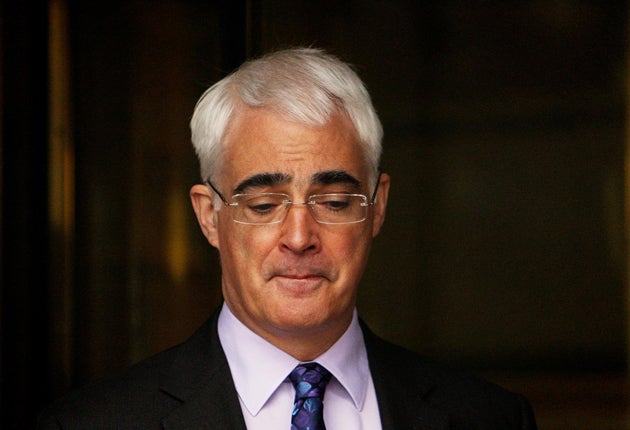
These figures, from the respected Institute for Fiscal Studies (IFS), will bolster the Government's claims that it has been sharing the burden of adjustment in the economy "fairly". In his Budget speech, the Chancellor, Alistair Darling, said: "I believe those who have benefited the most from the strong growth in incomes in past years should now pay their fair share of tax." The IFS research bears out Mr Darling's belief.
The IFS also said that his Budget was the least generous pre-election Budget since at least the 1980s.
The outlook for those government departments that have not received guarantees "ring-fencing" their spending is bleak. Labour has pledged to protect "frontline" spending in the National Heath Service, schools, policing and the overseas aid budget. Given that debt-interest payments are set to rise by 12 per cent over the next few years, and that unemployment benefit payments will still be comparatively high, the squeeze in public spending will be concentrated on those areas that remain "unprotected".
The IFS says that could mean a staggering spending cut of about 25 per cent in areas such as defence, transport and higher education by 2014-15, compared with spending levels now.
Thus, all the boosts given by Mr Brown to public spending over the past decade will be wiped out by the middle of this decade, the IFS concludes.
The Institute's researchers have found that dramatic claims of differences between Labour and Conservative spokesmen on their plans for the public finances are much exaggerated. Given the improvement in the borrowing figures reported by Mr Darling in the Budget, and from what can be gleaned from the public utterances of Tory frontbenchers, the IFS says that the actual gap between the two parties' plans could be as little as £8bn a year – a small sum in the context of total public spending of about £700bn and borrowing of £163bn.
However, the IFS research also provides support for opposition claims that Labour is stifling the "aspirational classes". Any household in the top 40 per cent of incomes would have found themselves at least a little worse off since 1997 in terms of their tax bill, taking into account all changes to income tax, National Insurance, tax credits, social security benefits, inheritance tax, stamp duty and other measures.
The richest 10 per cent of households, with a typical joint net income of £75,462, are on average £6,724 worse off. Within that group, the very richest are the ones who have faced the heftiest losses since New Labour came to power, the IFS says. In households where at least one person earns more than £100,000, and those where the joint income is typically about £170,000, the loss is as much as £25,539 compared with where things would have been under the 1997 tax and benefits regime.
Many of the latest changes to taxes affect people who are just over the six-figure earnings bracket. These trends will be perpetuated by the new 50p rate at £150,000, the removal of personal allowances for those on more than £100,000, the restriction of pension benefits for those on more than £130,000 and tougher inheritance tax and stamp duty bands.
However, taking into account all changes in income since 1997 – including growth in salaries, bonuses, rents and investment incomes – the UK is still a very unequal society, despite the Treasury's efforts, the IFS points out. Income inequality has risen in each of the past three years and is now at its highest level since at least 1961, according to the IFS.
On the proximity of the Conservative and Labour fiscal plans, the IFS director Robert Chote commented: "The Conservatives have not said what their time horizon for reducing the structural budget would be, but if we make the plausible assumption that it would remain five years as now, then the extra fiscal tightening that they would need to achieve by 2015-16, on top of that planned by Labour, has fallen from 1.1 per cent of national income (£15bn) before the Budget to 0.6 per cent (£8bn) after it." So a 1.5 per cent rise in VAT to 19 per cent, for example, could be sufficient to bridge the gap and unite Mr Darling and George Osborne in perfect fiscal harmony.
Join our commenting forum
Join thought-provoking conversations, follow other Independent readers and see their replies
Comments
Bookmark popover
Removed from bookmarks