MoD admits campaign in Afghanistan is 'an unwinnable war'
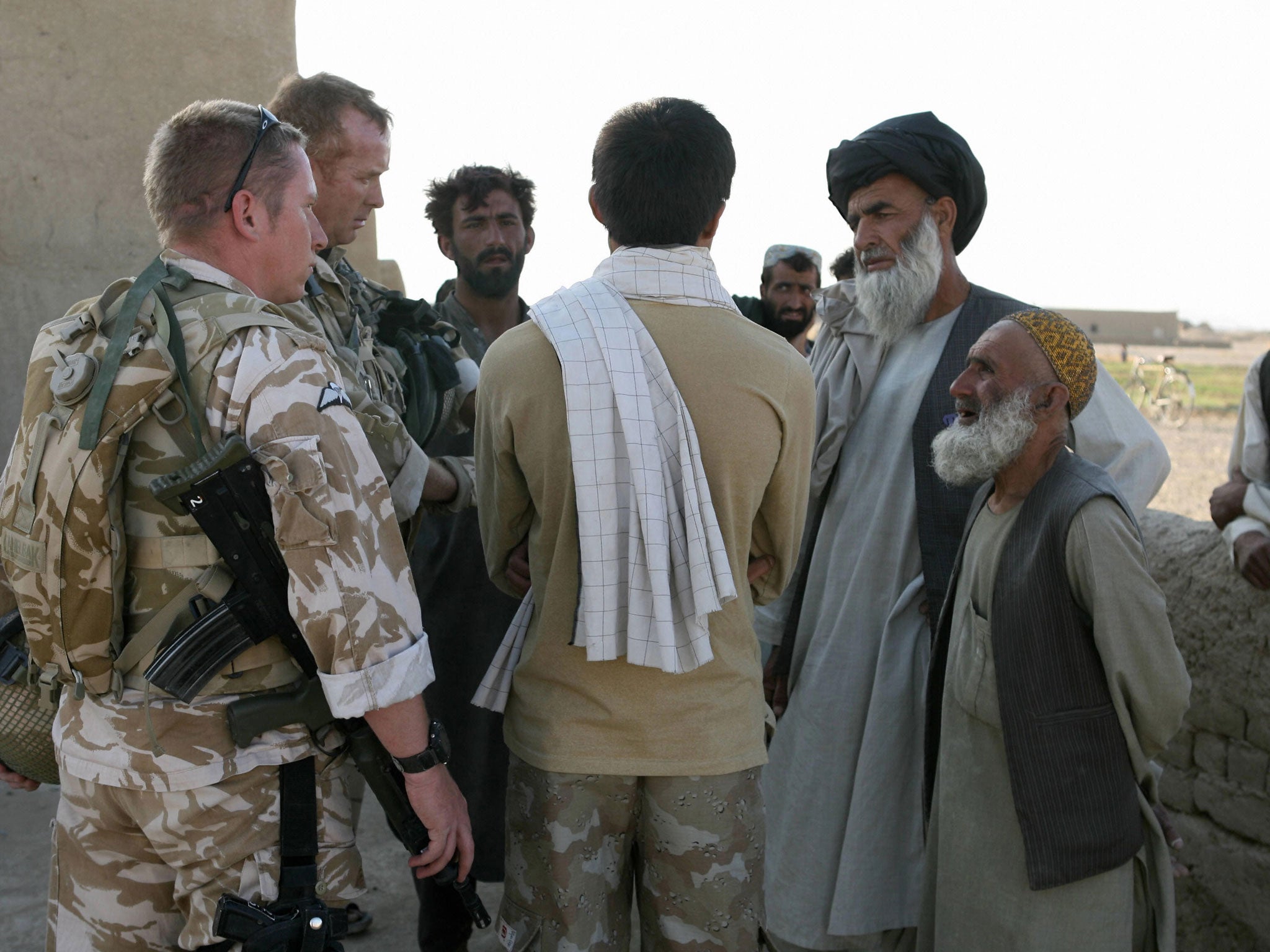
British soldiers fighting in Afghanistan are part of a campaign that attempted to “impose an ideology foreign to the Afghan people” and was “unwinnable in military terms”, according to a damning report by the Ministry of Defence.
The internal study says that Nato forces have been unable to “establish control over the insurgents’ safe havens” or “protect the rural population”, and warns the “conditions do not exist” to guarantee the survival of the Afghan government after combat troops withdraw next year.
The report, obtained under the Freedom of Information Act, says that when troops leave, Afghanistan “will be left with a severely damaged and very weak economic base”, which means that the West will have to continue to fund “large-scale support programmes” for many years to come.
Even if the internal situation were stable, the Afghan government may not survive the destabilising activities of its neighbours. “Regional players do not have a vested interest in the success of the Kabul government”, states the document in a clear reference to Pakistan.
The report, Lessons from the Soviet Transition in Afghanistan, is an internal research project produced in November last year by the MoD’s think-tank, the Development, Concepts and Doctrine Centre (DCDC). Based in Shrivenham, Wiltshire, the DCDC’s reports “help inform decisions in defence strategy, capability development and operations” across all three branches of the armed forces.
The study examines the “extraordinary number of similar factors that surround both the Soviet and Nato campaigns in Afghanistan” and highlights lessons that military commanders could learn.
“The highest-level parallel is that both campaigns were conceived with the aim of imposing an ideology foreign to the Afghan people: the Soviets hoped to establish a Communist state while Nato wished to build a democracy,” it says. “Equally striking is that both abandoned their central aim once they realised that the war was unwinnable in military terms and that support of the population was essential.”
It continues: “Both interventions have been portrayed as foreign invasions attempting to support a corrupt and unpopular central government against a local insurgent movement which has popular support, strong religious motivation and safe havens abroad. In addition, the country will again be left with a severely damaged and very weak economic base, heavily dependent upon external aid.”
In unusually frank terms, it goes on: “The international setting for both campaigns has significant similarities with world opinion judging both as failed interventions. Both faced a loss of confidence in their strategic world leadership and increasing domestic and financial pressure to abandon the enterprise.”
Turning to lessons for the armed forces, it says: “The military parallels are equally striking; the 40th Army [of the Soviet Union] was unable decisively to defeat the mujahedin while facing no existential threat itself, a situation that precisely echoes the predicament of Isaf [the Nato-led security mission]. Neither campaign established control over the country’s borders and the insurgents’ safe havens; both were unable to protect the rural population.”
The report states that the Soviet withdrawal plan was handicapped by a publicly announced timetable. Western commanders have blamed the British and American governments for publicly presenting just such a timetable.
It adds that the success of the withdrawal in Afghanistan “is likely to be judged on the same criteria as those used to objectively judge the Soviet transition”, which includes “the longevity and effectiveness of the incumbent central government”.
An MoD spokesman said: “We are in Afghanistan to protect our national security by helping Afghans to take control of their own. We are not trying to build a perfect Afghanistan – rather one that does not again provide safe haven for international terrorists.
“A key purpose of the DCDC is to produce research which tests and challenges established doctrine and its papers are designed to stimulate internal debate, not outline government positions.”
Join our commenting forum
Join thought-provoking conversations, follow other Independent readers and see their replies
Comments
Bookmark popover
Removed from bookmarks