New watchdog 'will have power to axe aid projects'
5 years after Live Aid, minister in charge of overseas spending tells Peter Gill how he plans to ensure British money is well spent
The government is to introduce a "traffic-light" labelling system to make it easier to judge if British foreign aid is delivering help effectively to the world's poor.
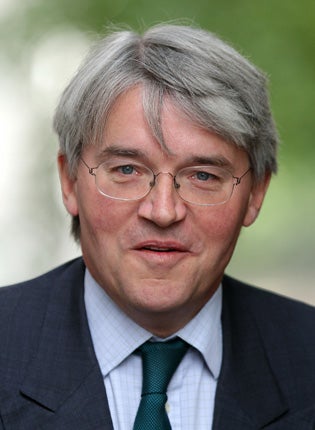
In an interview coinciding with today's 25th anniversary of Live Aid, Andrew Mitchell, the Secretary of State for International Development, told The Independent that the system would be used by a newly created watchdog which will be set up to evaluate his department.
Mr Mitchell said the watchdog would no longer report to ministers or to officials at the Department for International Development (DFID), but to the International Development Select Committee in the House of Commons. Other changes include not allowing DFID officials to comment on evaluation reports before they are published, and providing the watchdog with its own director and secretariat which will be able to initiate investigations into aid expenditure.
"We must be able to take it on the chin when we get it wrong, and then put it right," Mr Mitchell said. "And we must be self-confident enough to accept independent evaluation, because that it what is coming."
The scheme is part of a coalition initiative aimed at persuading increasingly sceptical taxpayers that the aid budget should increase during the next three years by around £1bn a year, despite swingeing cuts in almost all other areas of public spending.
British aid trebled under New Labour and stands at a record £7.3bn a year. Both the Conservatives and Liberal Democrats supported Labour's plan to raise aid to an estimated £10bn by 2013, achieving a UN aid target of 0.7 per cent of gross national income.
Mr Mitchell said the rating system would use four "traffic light" signals. Red will mean "this has gone terribly wrong", and such projects are likely to be axed. Red-yellow will mean "there are very serious negatives here"; yellow-green will signify that there are "some matters that are not well here, but on the whole very good and successful". And green will mean "this is absolutely first class."
He added: "I want it to be very user-friendly and so it has to be explicable in these terms." With food labelling in mind, he said the aid traffic lights had to be "edible by the public."
When traffic lights were introduced to warn of fats, salt and sugar in food, the Food Standards Agency said: "If you see a red light on the front of a pack, you know the food is high in something we should be trying to cut down on." For DFID, the "something we are trying to cut down on" is wasted taxpayers' money.
The new warning system and an independent aid watchdog are both likely to cause alarm among DFID officials. They have so far been subject only to internally commissioned evaluations and have been free to comment on, delay and amend them before publication.
In a series of damning reports last year for an advisory committee established by Labour ministers, DFID was criticised for adopting "an unduly defensive attitude towards evaluation". When presented with unwelcome conclusions, civil servants were accused of "rewriting parts of the drafts, deleting some critical comments and replacing them with other more positive statements" and comments which were "sometimes strident and very directive".
One of the outside assessors commented: "In my view, such 'feedback' provided to almost all the evaluations reviewed represents a clear threat to their independence."
Indicating that there may be resistance within DFID to his new evaluation regime, Mr Mitchell commented: "It is the sort of promise you make in opposition and then rather regret in government. But we're going to do it."
In another challenge to the old order of vetting aid projects, the minister said he would insist on investigators talking to the people who are supposed to be the beneficiaries of British aid. This does not often happen under the current system. "I don't see how they can do the evaluation any other way," he said. "They've got to be able to talk to the people who are the recipients, and empowering them is absolutely central to our approach to development."
Although Mr Mitchell appears to be guaranteed a steadily rising budget during the next three years, there are still likely to be tussles with the Treasury over the size of DFID's administration. In opposition, the minister said there would have to be an increase in managers to run a bigger aid programme, but the department nevertheless remains subject to civil-service cutbacks. "It is ridiculous that with a rising budget we are seeking to administer it with less people," Mr Mitchell insisted at the weekend.
There will be administration savings when DFID's programmes in China and Russia are axed, and further likely reductions were announced at the weekend in aid to India and Vietnam. Staff at the 20-strong in-house DFID evaluation team based in East Kilbride, Lanarkshire, also face the loss of their jobs.
With an extra £1bn to spend each year, Mr Mitchell will switch attention to what he calls "two key obsessions": malaria eradication and family planning. "If you're going to be secretary of state, you're allowed to have obsessions that you drive 24/7," he said.
Some aid experts, however, last night questioned how persuasive a new independent aid watchdog will prove to be. More and more DFID money is being spent in such nebulous areas as "governance" and "fragile states" where progress in poverty elimination is notoriously difficult to assess.
Peter Gill's "Famine and Foreigners: Ethiopia since Live Aid" is published by Oxford University Press
Join our commenting forum
Join thought-provoking conversations, follow other Independent readers and see their replies
Comments