No 10 attempts to bring errant ministers to heel
The forestry saga is the latest in a series of setbacks for the PM. So he's decided to act
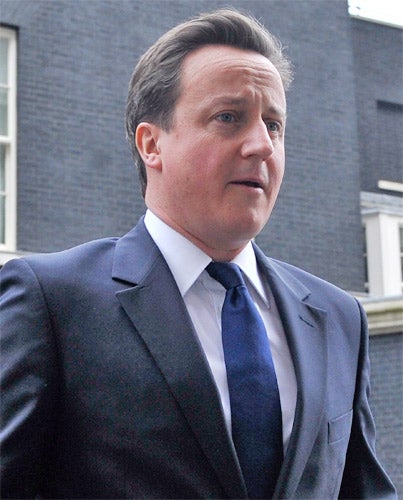
David Cameron is to recruit 10 high-powered policy advisers to keep a close check on his ministers in an attempt to put a stop to mistakes which have forced him into a series of embarrassing U-turns.
Nine months into his premiership, Mr Cameron has decided to fine-tune the Downing Street machine. With hindsight, his aides admit, he has allowed ministers too much leeway to draw up and announce policies without No 10 knowing the full details.
As the Prime Minister pulled the plug on a controversial plan to sell off England's public forests, it emerged that a 10-strong policy unit will be formed to shadow the work of Whitehall departments. Some officials will keep check on more than one minister. For example, an expert on criminal justice will cover the Home Office and Ministry of Justice.
The policy unit was a powerful force under Labour but was scaled back by Mr Cameron, partly because he had pledged to employ fewer special advisers. He scrapped the Downing Street delivery unit set up by Labour, with some staff leaving and others transferred to the Cabinet Office.
The number of special advisers, publicly funded officials who carry out party-political tasks, was cut from 78 under Gordon Brown to 68. It was hoped this would reduce the £6.8m wage bill by £2m. But the changes could result in the Cameron regime employing more special advisers than Labour did. Insiders say the promise to have fewer did not anticipate the extra pressures of a coalition. Junior and middle-ranking Liberal Democrat ministers may be allowed to recruit special advisers for the first time.
Other U-turns have been made on plans to withdraw free school milk for children from poor families; to end a scheme to provide free books for such children; and to scrap the ringfencing of money for sport in schools.
Although Mr Cameron is backing the Health Secretary Andrew Lansley's plans for the biggest shake-up of the NHS since it was formed in 1948, No 10 was not aware of the full details until relatively late in the day.
Allies say Mr Cameron's instincts on taking office were to "trust ministers to get on with it", but that he now recognises the need for Downing Street to have a stronger grip on what his aides call the Whitehall "sausage machine".
One said: "We need to stop things being announced before they have been road-tested. We need to spot the problems before proposals are in the public domain, not afterwards."
Cameron allies have identified a "gap" in his operation. Steve Hilton, his strategy guru and architect of his flagship Big Society agenda, focuses mainly on long-term planning, while the communications team is more concerned about day-to-day media coverage. "No one is looking properly at what is coming down the tracks in three or four weeks," one source admitted.
A new Downing Street director of strategy will address the problem: Andrew Cooper, head of the pollsters Populus, a former member of the SDP who became a Tory official. An arch-moderniser, he was one of the first to argue that the party needed to "decontaminate" the Tory brand. Although highly rated by Cameroons, his appointment will alarm some right-wing Tory traditionalists.
Craig Oliver, a BBC executive who will take up the post of No 10's director of communications early next month, will also take a close interest in medium-term planning. He succeeds Andy Coulson, who quit last month over the continuing fallout from the telephone hacking controversy at the News of the World, where he resigned as editor in 2007.
Since the Coalition Government was formed, the job of vetting departmental policies has been handled by Oliver Letwin, the Cabinet Office minister, and Danny Alexander, the Liberal Democrat Chief Treasury Secretary. The beefed-up policy unit will relieve some of the pressure on them. "The idea is there will be fewer 2am phone calls between Oliver and Danny," said one insider. The shake-up should allow Mr Letwin and Mr Alexander to draw up policies for the second half of the five-year parliament.
The aim is to show that the two parties have not run out of steam after pushing through reforms on health, welfare and education, and to sharpen the Government's message. There is deep frustration that policy announcements are being drowned out by headlines about spending cuts.
"There is a lot more to this Government than 'cuts, cuts, cuts' but we need to be better at explaining that," one cabinet minister said yesterday. "We have got to have a prospectus at the next election that says more than we have cleared up the mess we inherited."
A doomed policy?
Why did it fail? The Government's plan to sell off England's public-sector forests was squarely driven by the Big Society ideology of shrinking the state, and what was never considered in the plan was public acceptability. It turned out that there wasn't any.
Five days before the proposal was formally launched on 27 January, a YouGov poll found that 2 per cent of people supported the idea. Some 84 per cent were strongly against it.
The poll reflected a drive by the campaign group 38 Degrees to whip up opposition to the sell-off with an online petition, and the setting-up of a Save Our Forests campaign. Much of this support was middle class. David Cameron's Government found it was fighting its own supporters – never a good political position to be in.
The forests sale and the public anger it produced made nonsense of the Prime Minister's claim that his would be "the greenest government ever". It gave useful ammunition to Labour and its shadow Environment Secretary, Mary Creagh.
Those called on to defend the policy in public, especially the Environment Secretary, Caroline Spelman, sounded unconvincing and hesitant. The policy was dying on its feet as soon as it was announced. David Cameron cancelling it will be merely to put it out of its misery.
Join our commenting forum
Join thought-provoking conversations, follow other Independent readers and see their replies
Comments