'The BNP are now a bigger threat than ever'
Labour fears the far right will win its first European seats in June, Harriet Harman tells Andrew Grice
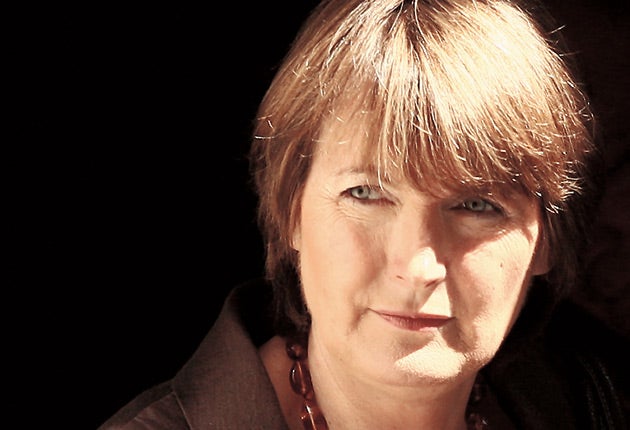
Labour is facing its biggest threat from the BNP, Harriet Harman admits today, as the party gears up to prevent the far right group from winning its first seats in nationwide elections this June for the European Parliament.
In an interview with The Independent Ms Harman, the Leader of the Commons, who is heading Labour's election effort in in her role as the party's chairman and deputy leader, said Labour was launching its biggest-ever campaign targeting the BNP. "It is a worry," she said. "Certainly they [the BNP] are a bigger threat than they have been before."
Labour fears the BNP could land two or three seats in the European elections, which are fought under a proportional representation (PR) system based on huge regional constituencies. Labour believes the BNP threat is greatest in the North West, where its leader, Nick Griffin, is a candidate; Yorkshire and the Humber and the East and West Midlands.
Labour is mobilising at local level wherever there is a sign of heavy BNP activity. National funding has been provided for "Stop the BNP" leaflets, and Labour uses a different slogan – "fairness not fear" – rather than its national theme of "winning the fight for Britain's future". It is also linking up with anti-fascist groups such as Searchlight and sending anti-BNP battlebuses into areas targeted by the group.
However, Labour leaders have rejected calls from many of their own MPs to launch a full-frontal national attack on the BNP, fearing that would merely play into the party's hands by giving it "the oxygen of publicity".
Labour insists it is matching the BNP at its own game – by fighting it at local level. "Most people are not aware the BNP is standing," Ms Harman said yesterday after a campaign visit to the North West. "It is below the radar. There is very low public awareness of these elections. For us, it is a question of pointing out the dangers of the BNP, which now wears suits but whose ideology is as pernicious as ever."
She said Labour's challenge was to persuade its supporters to vote even when they thought their area was "safe Labour ". They will be told that would help the BNP, which could land seats under the complex PR formula used by winning between nine and 12 per cent of the votes. "The electoral system makes it more of a challenge for us," she said. "We are telling people every vote counts, to come out and vote or else they will let the BNP in."
Some Labour MPs fear the party will pay a price for neglecting white working-class voters. Ms Harman is more diplomatic. "It is very important for the party to be active, to say to people we are on your doorstep, on the phone, on your side," she said. "The party is focused on the BNP in this election in a way it hasn't been previously. But the solution is not just mobilising young people or mobilising in a particular region."
She argued that the BNP had won council seats after an impressive campaign but then been unseated at next election. "There is a pattern of them getting elected, [and] not delivering what they said they would," she said.
Elections also take place in county councils in England on 4 June. The last three times these seats were up for grabs, the poll coincided with a general election – helping Labour, which traditionally benefits from a higher turnout. Similarly, Labour's performance in the last European elections in 2004 was helped by experiments with postal votes, which also raised turnout.
All parties play down expectations ahead of such elections, in the hope they can claim on the night. they have performed better than expected. Labour officials insist they have reason to fear a "double whammy" this year: an anti-government protest vote due to the recession and a turnout which could easily drop to around 30 per cent.
"There is always a danger of low turnouts in European elections," Ms Harman admitted. "People know what their council and their government does for them. They are not quite clear yet what the European Parliament means to them. A low turnout does not help us."
Despite such fears, Ms Harman insisted that the elections provide "a real opportunity" for Labour to spell out the dividing lines with the Conservative Party. "We are not on the defensive; we are on the front foot," she said.
She believes the Tories' recent talk of a public spending squeeze to balance the nation's books if they win power allows Labour to run campaigns about which local services would be at risk. "It is a good opportunity to be highlighting what the recent Tory pronouncements would mean," she said.
Because of the recession, Ms Harman conceded that the June polls would be "challenging" for the Government, and acknowledged that it needed to explain how Gordon Brown's strong leadership at last week's G20 summit would help them in their daily lives.
Admitting people were "apprehensive" about the economy, she said: "People understand the argument Gordon is making about the need to take action. They have worries about how it will affect the future of public services. They have seen the investment going in, and know the Tories would cut it."
Ms Harman told Labour MPs at a private meeting that the June elections would be a "dry run" for the general election. In public, she played that down, knowing commentators will be eager to say heavy Labour losses in June mean the party cannot win a general election. She pointed out that Labour has done poorly in local and European contests before, only to win the following general election. "It is an opportunity to get our message across," she said."But it is a very different kettle of fish because of the turnout issue." She admitted Labour's budget would be tight – even though the party's treasurer, Jack Dromey, is her husband. "We are mobilising human resources," she said.
The BNP said yesterday it had raised £170,000 towards its £220,000 target for its campaign fund for the European elections. "This will be the day the people of this country say, 'that's it ... enough is enough!' and will vote for the British National Party in their millions," it said.
Election facts
*Elections take place on 4 June for the European Parliament and county councils.
*In the last European elections in 2004, the Tories won 27 seats and 27 per cent of the vote; Labour 19 seats (23 per cent); the UK Independence Party (Ukip) 12 seats (16 per cent) and the Liberal Democrats 12 seats (15 per cent).
*Ukip's fortunes have declined since. Labour and the Tories suspect most voters who switch from Ukip will go to the Tories, although Labour fears some could back the BNP.
*Some 2,300 council seats in 34 English local authorities will be contested – on 27 county councils and seven in all-purpose "unitary" authorities.
*There are no local elections in Scotland or Wales this year.
*The Tories, traditionally strong in the counties, are defending about 1,200 seats. Labour, which is defending about 490 seats, fears it will lose about half and lose control of all its four counties – Staffordshire, Lancashire, Nottinghamshire and Derbyshire. The Liberal Democrats are defending about 500 seats.
*Experts say the Tories need to win more than 40 per cent of the national vote to show David Cameron is on track to win the general election.
Join our commenting forum
Join thought-provoking conversations, follow other Independent readers and see their replies
Comments