Whistleblower: Foreign Office officials thought war 'illegal'
Chilcot inquiry will be told Lord Goldsmith's top lawyer advised invasion was against the law
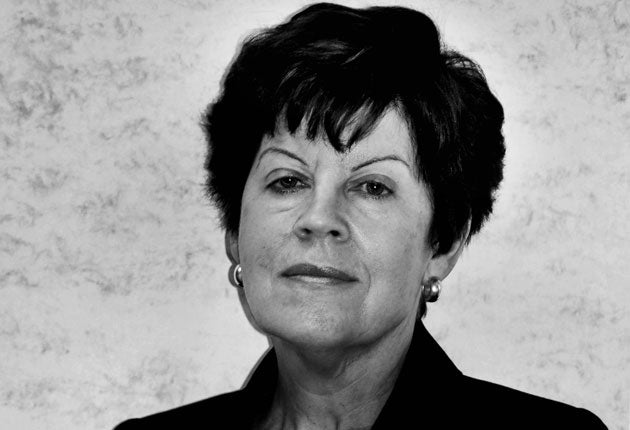
A senior Foreign Office lawyer who quit in protest at the invasion of Iraq will this week lay bare the sharp divisions within the Blair administration and its Whitehall advisers as Britain careered towards war in 2003.
On Tuesday, three days before Tony Blair faces the Chilcot inquiry into the Iraq war, Elizabeth Wilmshurst will make perhaps the most explosive contribution to date by revealing the confusion and infighting between officials and ministers over the legality of deposing Saddam Hussein without United Nations support.
Her first public account of the circumstances leading to her dramatic resignation threatens to permanently undermine the Government's insistence that it was united behind the fateful decision to join the United States in attacking Iraq in March 2003.
The Independent on Sunday understands that Ms Wilmshurst will tell the Iraq inquiry that she was not "a voice in the wilderness" in harbouring doubts over the legitimacy of military action without UN backing.
Instead she is expected to describe how senior colleagues in the FCO shared her reservations, which were ultimately overruled by ministers. And, crucially, she is also expected to claim that her former boss, Sir Michael Wood, "clearly advised" that the conflict would be illegal under international law, when he offered his assessment of the situation to the then attorney general, Lord Goldsmith, days before the attack on Baghdad began.
Philippe Sands QC, an expert on the legality of the war, last night claimed the inquiry had received documentary evidence of Sir Michael's reservations – but is yet to publish it.
Ms Wilmshurst's contribution to the Chilcot inquiry comes at a critical time for the investigation; as it moves on to study the strength of the legal case for attacking Iraq.
The inquiry has already heard a number of damning contributions which questioned the government's motives, including the claim that the Americans had revealed their plans for Iraq as early as June 2002.
The panel also heard that Mr Blair was told "regime change" would be illegal under international law, and Sir Jeremy Greenstock, the UK ambassador to the UN before the war, said he feared the invasion was of "questionable legitimacy" because it did not have majority support of the international community. He also confessed he had considered resigning, partly because he had not been fully briefed on UK-US plans in advance.
Last week, Jack Straw, who was foreign secretary during the build-up to the conflict, told the inquiry that British policy had never been to achieve "regime change" in Iraq.
Ms Wilmshurst became the only UK civil servant to quit over the war when she resigned before the first attacks on Iraq, telling her superiors that an invasion without UN sanction would be a "crime of aggression".
Her insistence that she was not the only official to harbour doubts about the legality of the invasion raises questions about the position of Sir Michael, who will appear before the inquiry hours before Ms Wilmshurst, on Tuesday morning.
It has been rumoured in the past that Sir Michael, who was then the FCO's chief legal adviser, was also sceptical about the case for war. But, while Ms Wilmshurst walked out, he stayed on and was awarded a knighthood in the 2004 New Year Honours list.
"People shouldn't be focusing on Elizabeth so much as the others who will be giving evidence on Tuesday – in particular, Sir Michael Wood," a source said last night. "He advised clearly that the war was unlawful.
"Elizabeth was one in a team – she wasn't a voice in the wilderness. They worked closely together and spoke about this a lot. The invasion ran counter to international law."
Professor Sands, director of the Centre on International Courts and Tribunals at University College London, said both the FCO's most senior legal advisers opposed the invasion. He said: "Both Michael and Elizabeth took the view immediately after [resolution] 1441 that to go to war without another resolution would be unlawful.
"The inquiry has before it documentary evidence confirming the point that Michael saw the invasion as unlawful. It is more explicit than anything we have ever seen before."
One senior lawyer who knows both Ms Wilmshurst and Sir Michael said last night: "There was no legal clarity on the side of what the government wanted, and I don't know if he would have said it was definitely illegal. It wasn't fair to either to ask them to resign or carry on in the hope of maybe influencing the conduct of the war. I know that personally they both had a very tough time, with so many lives at stake."
Revelations about the depth of official opposition to such a critical government policy emerge amid growing accusations about Mr Blair's conduct in the run-up to the war.
Lord Goldsmith will appear at the inquiry on Thursday, 24 hours before Mr Blair.Lord Goldsmith's original advice on the legality of the war, compiled with the help of Sir Michael's team and given to Mr Blair on 7 March 2003, warned that an invasion would be illegal without another UN resolution to supplement resolution 1441, adopted the previous November. But 10 days later, his "too equivocal" advice had been hardened to the point that Mr Blair was able to maintain that it was "very clear" that the war was legal.
t Lord Hutton, who chaired the inquiry into the death of government weapons inspector Dr David Kelly, has ordered that medical records in the case be kept secret for 70 years, it was learnt last night.
Sir Michael Wood: 'Establishment man' to have his say
If Sir Michael Wood ever had reservations about the invasion of Iraq, he has made a good job of covering his tracks over almost seven years.
Former colleagues of Sir Michael insist that he is just as professional, just as fastidious, as his former deputy Elizabeth Wilmshurst. The similarities extend to their view on the legality of invading Iraq in March 2003. Where they parted company was over their response to the Government's driving a coach and horses through their advice.
While Ms Wilmshurst resigned immediately after Tony Blair used Lord Goldsmith's "beefed-up" advice as the legal platform for his decision to join the Americans in overthrowing Saddam Hussein, her boss chose to stay on.
Critics have since grumbled about the alleged act of self-preservation, arguing that Sir Michael could have helped stop the invasion in its tracks if he had ever threatened to plunge Tony Blair into crisis by joining his deputy's march out of the door. But, above all, Sir Michael is an Establishment man: a career civil servant who joined the Foreign Office two years after being called to the Bar in 1968. He was into his fourth decade in the service by the time he was confronted with the biggest crisis of his career.
That career took him to conferences all around the world and to assignments including – like Ms Wilmshurst – an attachment to the UN mission in New York. Barely a year after the Iraq invasion, the loyal adviser was awarded a knighthood.
He has since left the Foreign Office and gone on to work as a member of the United Nations International Law Commission and a barrister in private chambers. But he has remained scrupulously silent about the events of March 2003.
"I've known Michael for more than 20 years," one veteran lawyer said last night. "I know what he thinks about the invasion. The whole international legal community knows what he thinks about it."
"What he thinks" has been increasingly assumed to be in line with Ms Wilmshurst's view: that an invasion would be illegal without a fresh UN resolution. Reports last night suggested he, too, might be preparing to unburden himself after all these years: The Observer suggested that he is ready to confirm that, in the run-up to war, he did argue that the conflict would have been unlawful without a second UN resolution. It is also believed that the inquiry will publish his advice from 2003.
On Tuesday, whether he likes it or not, Sir Michael will finally get the chance to make his feelings known beyond that select band of international lawyers.
Join our commenting forum
Join thought-provoking conversations, follow other Independent readers and see their replies
Comments
Bookmark popover
Removed from bookmarks