YouTube videos should be given '18' certificate, MPs say
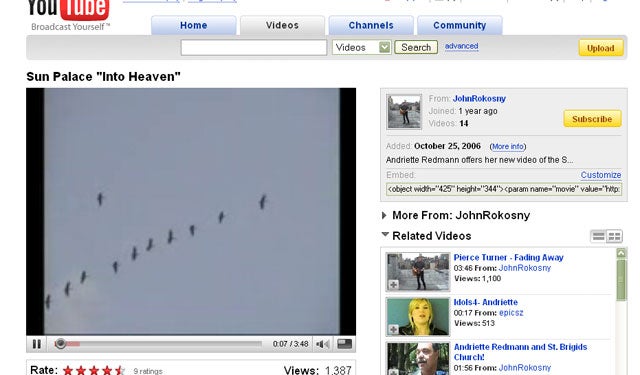
Films posted on video-sharing websites such as YouTube should carry age certificates and those with pornographic or violent content should be subject to a television-style "watershed", MPs say today.
Warning about the internet's "dark side", they also protested over "shocking" delays by the industry in taking down images of child abuse once they have been spotted.
The Commons Culture, Media and Sport Select Committee warns in today's report that many social networking and video-sharing sites carried material that was unsuitable for youngsters. It said: "We are concerned that user-generated video content on sites such as YouTube does not carry any age classification, nor is there a watershed before which it cannot be shown."
The MPs expressed their anger that the operators of such sites did not routinely screen clips posted on them by the public.
They said the practical problems of sifting through vast quantities of material could be overcome as technology is being developed that can rapidly spot hardcore pornography when it is uploaded. Explicit images could also soon be spotted because of the "tags" used to describe them. Filters could be developed to block them.
"In a lucrative market, the cost to internet service providers of installing software to block access to child pornography sites should not come second to child safety," the committee said.
The MPs were told that the "industry standard" for removing images of child abuse was within 24 hours of their being reported, but there was no guarantee that the deadline was always met.
John Whittingdale, the committee's Conservative chairman, said a warning about such material should be checked "within hours, if not minutes, and taken down instantly and reported to the police".
The committee called for video-sharing sites to include a "one-click" facility that enabled users to report clips appearing to contain images of abuse directly to the police.
It said there was "growing public concern" over the content of the internet, including videos of fights, alleged rape and bullying, and sites promoting suicide and anorexia. Some sites allow users to create "avatars" which then simulate sex with children.
The committee wants children to be given stronger warnings that the personal information they post on websites could potentially be accessed by millions of internet surfers.
The MPs called for the industry to set up a body, similar to the Advertising Standards Authority, to enforce minimum standards of material allowed on the internet. But they believe the Government should ultimately force the industry into line if self-regulation does not work.
Andy Burnham, the Culture Secretary, welcomed the committee's conclusions. He said: "The internet now has a great impact on our lives and we need urgently to find a consensus about the standards of the future, standards to help navigate this vast and rapidly evolving world if we are to protect young people."
Join our commenting forum
Join thought-provoking conversations, follow other Independent readers and see their replies
Comments
Bookmark popover
Removed from bookmarks