Archaeologists dig up 200-year-old skeleton of London's Moby Dick
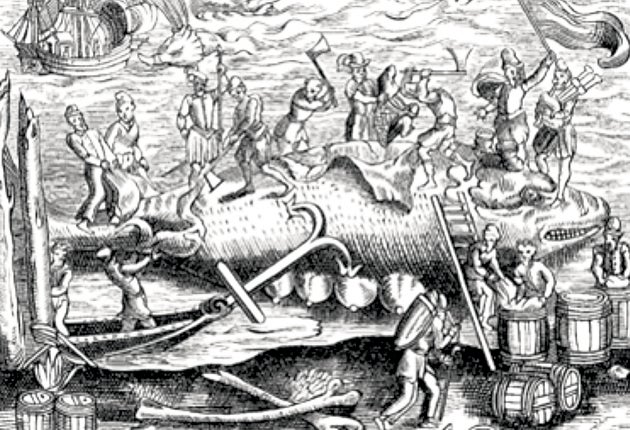
Remarkable discoveries on the River Thames foreshore at Greenwich indicate that London was the final resting place, some two centuries ago, of a giant whale the size of the legendary Moby Dick.
Archaeologists have unearthed the remains of a 17-metre-long whale which was butchered for its valuable oils and "bones" sometime in the mid to late 18th or early 19th century.
Like the creature in Herman Melville's novel, it was a giant whale of great age. Zoologists from the Natural History Museum estimate that when it perished in the Thames it was between 50 and 100 years old. Archaeologists say it is one of the biggest single finds every discovered in Britain.
Historians believe that the London version of Moby Dick – due to go on display at the Museum of London Docklands in Canary Wharf for six days from today (Thursday) – was stranded on the beach at Greenwich, where it was found buried beneath two metres of mud.
Alternatively it may have been harpooned in the Thames estuary or beached itself on the Essex or Kent banks, before being seized by whalers who would have towed it to Greenwich for butchering. It is rare for whales to enter the Thames estuary, but sometimes they become disoriented and stray far from their normal habitats.
The Greenwich area – especially Blackwall and Rotherhithe – used to be a base for whaling fleets that combed the far north of the Atlantic searching for just such prey. To find one on their doorstep, delivered for nothing, would have been a godsend.
But how much the whale merchants would have gained from the carcass is unsure, as any whale which beached itself between the low and high tide marks would have legally belonged to the Crown. It could have been worth up to £4,400 (or £400,000 in today's money) in oil and whalebone.
"This is a very important discovery," said Dr Tony Barrow, a leading whale industry historian at the University of Sunderland and the Open University.
Whale oil was used to light houses and streets, as well as for processing wool, and would have sold for between £20 and £40 per thousand litres. Whalebone (technically baleen, composed of keratin, the substance fingernails and hair are made from) was used to make umbrellas, ladies' corsets, horse saddles and harnesses and even springs for horse-drawn carriages.
The creature was a North Atlantic right whale, so called because, in northern waters, its group of species was generally thought to be the most profitable to catch (one great advantage was that they floated when dead, and could therefore be butchered at sea). The Greenwich whale almost certainly came from the far northern Atlantic, between Spitsbergen and Greenland.
The London whaling industry peaked around 1785, when 78 out of 140 British whaling vessels were based in the Greenwich area. This particular creature would have yielded around 12 tonnes of whalebone and more than 11,000 litres of whale oil.
Most of that would have come from the front third of the animal, which was missing from the remains found by archaeologists. The whale merchants probably hacked off this part and hauled it ashore to be cut up and removed for processing, leaving the rest behind.
The discovery will help zoologists to assess how long-term commercial whaling has affected whale evolution and survival. DNA tests planned by the Natural History Museum will help them compare the genetic diversity of North Atlantic right whale populations centuries ago with that found today.
Join our commenting forum
Join thought-provoking conversations, follow other Independent readers and see their replies
Comments
Bookmark popover
Removed from bookmarks