Secret Britain: Readers share their best-kept secrets
For our 'Secret Britain' series, David Randall asked experts at Britain's major countryside and heritage bodies to share their best-kept secrets, and we published the top 100. It concluded last week with an appeal to readers for places we missed in our categories of Coast, Woodland, Gardens, Wildlife, Heritage, and Scenery. Readers – and five organisations – responded with a raft of rural gems. Here they are
Coast
1. North Gower; Gower Peninsula, Wales
While the southern coastline of the Gower Peninsula is well known for its spectacular beaches, the northern coastline is largely ignored. Llanrhidian in North Gower is rich in wildlife, with sheep-grazed salt marshes, bird life and coastal footpaths, including the walk to Weobley Castle, the ruins of a 14th-century fortified house overlooking Llanrhidian Marsh. Nominated by VisitWales.
2. The Giant's Causeway; Antrim, Northern Ireland
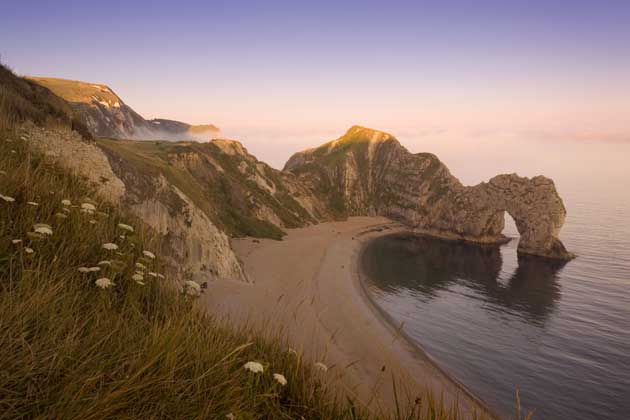
The Giant's Causeway was suggested by reader Henricus Peters, a teacher involved with the National Association for Environmental Education, along with the Jurassic Coast in Dorset, and Scara Brae, Orkney, among other places. None is exactly unknown, yet they are examples of that curious phenomena: sites of which all literate Britons have heard, but very few have actually visited.
3. Horsey; Norfolk
Horsey on the Norfolk coast was on our list of coastal delights, and reader David Bligh endorsed the selection. He writes: "It's the most perfect place on earth. And to think that there is talk of giving up sea defences and letting the sea reclaim this area is shameful. Along the walk is a derelict mill, beside a river where you can watch marsh harriers, and in the springtime you can hear bitterns booming."
4. Sutton-on-Sea; Lincolnshire
Sutton-on-Sea was recommended by reader Michael Clarke, along with Sandilands, a little further down the coast. He writes that they both have "great beaches, beach huts, and all the usual seaside amenities without the crowds".
Woodland
5. Coed Hills; Vale of Glamorgan, Wales
Coed Hills, set in 100 acres of woodland in the Vale of Glamorgan, is run on alternative energy: from high-tech wind turbines and biomass underfloor heaters to showers made of scrap radiators. The residents live in buildings such as old railway carriages or Mongolian yurts and share their knowledge with visitors. Overnight stays are available at the Helter Shelter Woodland Tipi Campsite, which has a central fire pit, covered seating, and hammocks. Nominated by VisitWales.
6. Lake Wood; East Sussex
Lake Wood is a wonderful ancient woodland surrounding a picturesque lake on the outskirts of busy Uckfield. It is owned by the Woodland Trust, which writes: "Lake Wood is currently under threat from a potential develop-ment of commercial units and, as such, it makes this site ever more significant in light of its possible destruction."
7. Mauldon Wood; Bedfordshire
Maulden Wood is a Forestry Commission site of semi-natural broadleaf woodland, acidic grassland, and conifers. Mammals found here include dormice, muntjac deer and foxes. There are also adders and slow worms, and among the butterflies that can be seen here are clouded yellow, white admiral, grizzled skipper, and small copper. Part of the wood is an SSSI.
Gardens
8. Abbeycwmhir Hall; Powys, Wales
The Hall, near Llandrindod Wells, is a Grade II-listed building surrounded by a 1.5-acre walled garden. The gardens are especially worth visiting between May and September, which is when the rhododendron and roses are at their best. The hall itself has recently been restored to its full gothic splendour. Nominated by VisitWales.
9. Aberglasney; Carmarthenshire, Wales
Aberglasney House and Gardens recently underwent a £1.3m restoration, which uncovered a historical site dating back to the 13th century. The latest work on the site has seen the creation of a Ninfarium – an indoor garden set under the glass roof of the courtyard which is filled with highly scented plants and exotic species. Two self-catering cottages have been restored in the grounds of Aberglasney and offer five-star accommodation to those wanting to stay. Nominated by VisitWales.
10. RHS Garden Rosemoor; Devon
The Royal Horticultural Society's garden, near Torrington, is recommended by reader Georgie Webb, who writes that it is "absolutely lovely, and looks just as stunning in winter as it does in summer. It has secret nooks and crannies to explore, is packed full of ideas to take home – it's also free for children to visit at the moment. My niece and nephew loved the Beatrix Potter exhibition. Well worth a trip any time of year."
Wildlife
11. Corrieshalloch Gorge; Highlands, Scotland
The gorge, found to the south of Ullapool, is a spectacular mile-long canyon which is now a national nature reserve. Prized by naturalists for its mosses and ferns, this National Trust for Scotland site also has a suspension bridge over the gorge which was built by Sir John Fowler, the man who designed the Forth Railway Bridge.
12. Ceredigion Coast Path; Cardigan Bay, Wales
This path in mid-Wales was opened in July, giving access to some stretches of coastline that were previously out of reach to walkers and making it possible to walk from Cardigan to Aberystwyth. The coastline has a huge variety of wild flowers, as well as choughs, sparrowhawks, peregrines and porpoises. Nominated by VisitWales.
13. The Chilterns; Buckinghamshire
"An alternative to Wales for seeing red kites," writes Helen O, "and just a short drive from London, are the Chilterns, which are home to England's largest population of red kites. Exit the M40 between junctions 4 and 7 and watch them gliding over the towns and villages of the Chilterns – which is an Area of Outstanding Natural Beauty. Plus, it's all free, not a penny to pay!"
14. Tiggywinkles; Buckinghamshire
The Tiggywinkles Wildlife Hospital, near Aylesbury, was nominated by Henricus Peters. It is an extraordinary place where more than 10,000 wildlife casualties are treated every year. At any time, it is likely to have around 1,200 patients, among them hedgehogs, foxes, deer, and badgers. It is open every day until the end of September.
15. The Darwin Centre; London SW7
The Darwin Centre, a more recent addition to the Natural History Museum, was nominated by one reader for being a remarkable, environmentally sensitive building which houses the museum's collection of 22 million specimens, all preserved in spirit. Visitors can not just look, but also learn from the museum's experts what these creatures can teach us about ecology, disease and pollution.
Heritage
16. The Hermitage; Perthshire, Scotland
The Hermitage, by Dunkeld, has "a series of wonderfully atmospheric woodland walks [which] lead through the property," writes the National Trust for Scotland. "Created as a fashionable 'wilderness garden' in 1756, its visitors enjoy the magical effects of the changing seasons in the valley of the River Braan. Ossian's Hall – a cliff-edge summer house – provides a spectacular encounter with the Black Linn Falls. There is also a hermit's cave, nestled under the towering Douglas firs which lend the place such a sense of tranquillity."
17. Dale Abbey; Derbyshire
Dale Abbey, near Ilkeston, was recommended by Michael Clarke, who writes: "Walk to the hermit's cave in the woods, visit the unique tiny church – the only church in England which shares its roof with a farmhouse, see the abbey ruins and the post mill. If you go to Dale Abbey on a Sunday afternoon, you could attend the three o'clock service in the tiny church and/or take tea in the old chapel (now the parish centre). There is no charge, but donations are invited."
18. The Tenement House; Glasgow, Scotland
This building is the former home of Miss Agnes Toward, a spinster who lived in it for 50 years and threw absolutely nothing away. Owned by the National Trust for Scotland, it is a study in aspic of the life of Miss Toward, who was a typical tenement house-dweller of the time and who came to live there in 1911. Preserved are all her documents, receipts, furniture, and household goods – all in the gas-lit flat where the table is set for tea. Open for eight months of the year.
19. Scopwick; Lincolnshire
Scopwick, near Sleaford, is another tip from Michael Clarke. He says the village "has a stream running through it, with little bridges across, rather like Bourton-on-the-Water." This latter, the great tourist trap of the Cotswolds, is certainly delightful, but is severely over-run with coach-loads that can fill the local tea-rooms to overflowing.
20. Broughton Castle; Oxfordshire
Broughton Castle is often described as the most perfect and romantic home in all England, Built in 1300 and enlarged in 1550, the castle has been owned by the same family for 600 years. It has a large moat, medieval Great Hall, secret rooms, extensive vaulted passages, and gives visitors the feeling that there's always some corner of it that they have left unexplored. It has many Civil War associations, and has been used as a location for filming everything from Shakespeare in Love to a Morecambe & Wise Christmas Special. Nominated by Visitnorthoxfordshire.com.
21. Little Cawthorpe; Lincolnshire
Little Cawthorpe, near Louth, is a very pretty village. A reader has recommended a "drive through the ford to the pub (known as The Splash) and a walk along the bank of the stream through the village".
22. Down House; Kent
The house that Charles Darwin owned, and in whose grounds and surrounding fields he refined many of his theories and studies. Here he not only wrote On the Origin of Species, but also conducted experiments on orchids, observed bees in their hives, studied inheritance in his vegetable garden and used his meadow as his "thinking path". Suggested by Henricus Peters.
23. Woolsthorpe Manor; Lincolnshire
This modest limestone manor house near Grantham was where Isaac Newton was born, two months after his father died. It was also the place where his uncle recognised that the young Newton had a genius that would be wasted on agricultural matters. He later returned here to avoid the plague, and this is where his most famous discoveries were made. You can find a Science Discovery Centre here – and, of course, an apple tree.
Scenery
24. Shetland Islands; Scotland
Various scenic sites were suggested by reader Ron McMilland, who writes: "Eshaness has some of the most stunning volcanic cliff scenery in all of Europe, while Hermaness on Unst has 300ft cliffs and hundreds of thousands of seabirds, plus views of Muckle Flugga, which is the northernmost outpost of Britain. And Foula and Fair Isle offer island landscapes without peer anywhere in the UK – or beyond."
25. Dollar Glen; Stirlingshire, Scotland
Walk through wooded ravines through which tumble two burns called Care and Sorrow. At the top is the 15th-century Castle Campbell, whose tower house commands views as far as the Forth Estuary. The place used to be called "Castle Gloom", a description which visitors on a grey day would certainly endorse. Nominated by the National Trust for Scotland.
26. Cliff Walk, Radcliffe-on-Trent; Nottinghamshire
The Cliff Walk takes you from Radcliffe-on-Trent along the river to nearby Shelford village. This suggestion has come in from a reader who writes that it "provides extensive views across the Trent towards Nottingham".
On the other hand...
First of the dissenting voices was Geoff Powell of Newton Abbot, Devon, who quoted the introduction to our series ("David Randall guides you to the best places in the country for wildlife, heritage and scenery that have managed to stay under the radar – until now"), and wrote: "So, this silly man encourages the gawkers to trample around our quiet places known to a few lovers of nature and serenity! How stupid. Soon there will be the ice cream and burger van and children with American cartoon accents screaming through the woods and "grown-ups" suing for damages having tripped over a tree root! Yes, that happened near here! Best to keep quiet about quiet places off the beaten track, otherwise it will be beaten to death by gawking, squawking morons." It's a point of view, but we struggled to recognise the average 'IoS' reader from Mr Powell's description.
Tony Brown offered the ritual rejoinder to any encouragement to stray beyond the front door: "Ninety per cent of these places need a car to get to – go on, go there and add to global warming." There are several answers to this. First, all the places are reachable by public transport, bike or on foot; second, all the organisations that care for them have full website directions for the car-less; third, the author of the series (me) can personally vouch for the carbon-friendly accessibility of many of them. I don't drive.
Join our commenting forum
Join thought-provoking conversations, follow other Independent readers and see their replies
Comments
Bookmark popover
Removed from bookmarks