The people's poet
The <i>IoS's</i> literary editor, Katy Guest, considers how Carol Ann Duffy will handle the 'poisoned chalice' of being the new Poet Laureate
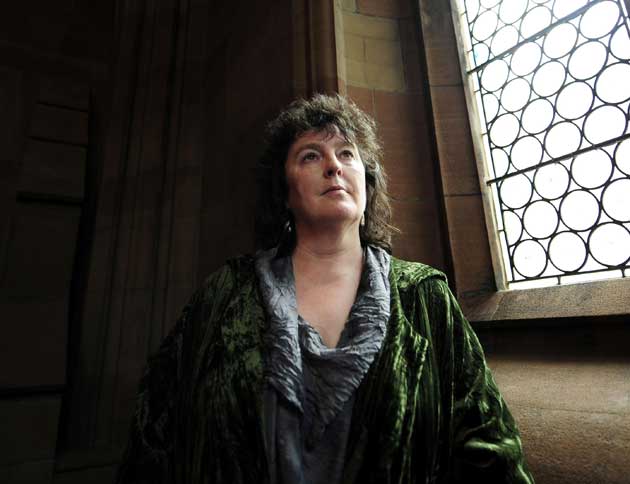
Carol Ann Duffy's publisher may have had it right when he said, in 1999, that the poet laureateship is a "poisoned chalice". "I genuinely don't think she even wanted to be Poet Laureate," said Peter Jay of Anvil Press, after Duffy had been tipped for the post and then rejected, reportedly because Tony Blair was worried about how a homosexual Poet Laureate "might play in middle England". Jay added: "It is not a role I would wish on anyone – particularly not someone as forthright and uncompromising as Carol Ann."
Bad luck Carol Ann, in that case. With great ceremony but hardly surprising anybody, the Secretary of State for Culture, Andy Burnham, announced on Friday that the forthright and uncompromising Glaswegian is the new Poet Laureate. Calling her a "towering figure in English literature today", a "superb poet" and a "spellbinding performer", Burnham declared his conviction that she will "bring a new generation to poetry".
Much has been made of Duffy's accessibility as a poet. She is already being discussed as if she were the bastard offspring of Alfred, Lord Tennyson and Pam Ayres, creating as if by alchemy verse that appeals to professors and plebs alike. She performs the unusual conjuring trick of being "regarded as both popular and profound", Burnham said on Friday, adding to the acclaim of the TS Eliot Prize panel who said, when she won in 2005, that the decision marked "a rare moment of agreement between the critics and the booksellers as to what constitutes great poetry". Gordon Brown, who is known actually to read books, hailed her as "a truly brilliant modern poet who has stretched our imaginations by putting the whole range of human experiences into lines that capture the emotions perfectly".
Duffy has declared herself "very honoured and humbled" by the appointment, and has promised to work hard to bring poetry to the people. But she must have had a moment's pause before she decided to accept the job. When Andrew Motion was appointed instead of her back in 1999, the life sentence of a laureateship was commuted to 10 years and a salary of £5,000 attached to it. In return for the honour, the five grand and the annual butt of canary wine, the laureate is supposed to mark public occasions with a glowing poetic tribute, and have his or her private life continually ransacked by the nation. Duffy claims that she and Motion are friends. When he said last year that "the job has been incredibly difficult and entirely thankless", did he not warn her off it?
It remains to be seen how Duffy will interpret the role. She declared 10 years ago: "I will not write a poem for Edward and Sophie. No self-respecting poet should have to." Will she find herself tempted to mark the next royal occasion with an "Ode to Harry Falling Out of a Nightclub"? How long will she wait before criticising the Government's latest war, as Motion did in "Regime Change" in 2003? Will she be mirroring the latest national obsession and looking in her rhyming dictionary for "Obama"?
Fortunately, there is a long tradition of dead, white males from which the first woman Poet Laureate can choose her strategies for how to be – and how not to be – a successful incumbent. She will surely have been studying the history of the laureateship in order to get a firm idea of the traditions associated with it: traditions of complaining about the job, sucking up to the monarchy, getting one's end away and picking epic bitch-fights with other poets. Many of these have been part of the job description since the role was first invented for John Dryden.
When Dryden was appointed in 1668, the recently restored monarchy badly needed a fine wordsmith on its side. But their alliance was short-lived. In 1688 Dryden became the only Poet Laureate to be sacked, when James II was deposed and he refused to swear allegiance to the new regime. However, he carved out a laureately style that would endure for centuries. In his satire Mac Flecknoe (1682), he derided his contemporary Thomas Shadwell: "The rest to some faint meaning make pretense," he wrote, "But Shadwell never deviates into sense." It sounds catty, but Shadwell started it; he wrote The Medal of John Bayes: A Satire against Folly and Knavery. He also had the last laugh, when he was appointed as Laureate in Dryden's place.
Dryden and Shadwell's next few successors were, for the most part, a more savory bunch. Nahum Tate, appointed in 1692, wrote the hymn that begins, "While shepherds watch'd their flocks by night". Nicholas Rowe (1715) invented Lothario. The Rev Laurence Eusden (1718) seems to have made enthusiastic use of his butt of sack. Thomas Gray, the author of "Elegy Written in a Country Churchyard", said that "Eusden set out well in life, but afterwards turned out a drunkard and besotted his faculties".
The first Poet Laureate to receive a salary was Henry James Pye (1790), who was given £27 a year and was not widely held to deserve it. The post in relation to women was defined by Robert Southey (1813), who in 1837 received a letter from Charlotte Brontë, asking for his advice about her poetry. He replied, discouraging her from writing anything further and advising her that "literature cannot be the business of a woman's life". John Masefield (1930) combined the laureateship with being a successful children's writer, as does Duffy. John Betjeman (1972) is the only laureate to have been honoured with both a statue at St Pancras station and a dismissive assessment by David Brent in The Office. Ted Hughes (1984) was played in a film by Daniel Craig.
It is to be hoped that Duffy avoids the Curse of the Laureateship that has crippled the writing of many of her predecessors. There is a saying: if you want a job done well, ask a busy woman. So Prince Harry knows who to turn to when he wants that ode written on his next trip to Boujis.
Join our commenting forum
Join thought-provoking conversations, follow other Independent readers and see their replies
Comments
Bookmark popover
Removed from bookmarks