Bin Laden brother unveils £100bn plan for world's longest bridge
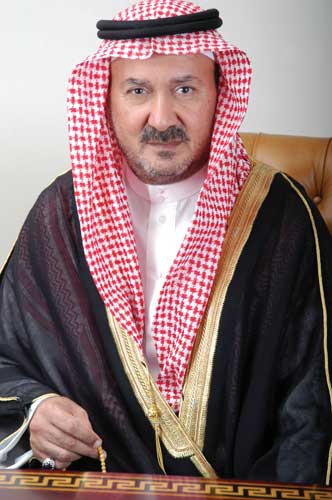
It sounds like a joke. The brother of the world's most famous terrorist wants to build the world's longest suspension bridge, linking two continents across the world's most dangerous waters. As if that's not enough, he also plans to build two new cities – one at each end.
If Sheikh Tarek bin Laden is joking, it's an expensive gag. The Al Noor project will cost some $200bn (£100bn) and, according to Sheikh Bin Laden's people, he has already ploughed hundreds of millions of dollars into the scheme himself.
The project is nothing if not ambitious. A bridge, 18 miles long, will link Africa with Arabia across the Bab al-Mandib (Gate of Tears), the strait connecting the Red Sea with the Gulf of Aden. Two cities, one in tiny Djibouti, the other in Yemen, will sit at either end.
The new metropolises, the Saudi developer claims, will be the envy of the world: the finest hospitals and schools, world-class universities and sporting facilities – everything will be the biggest and the best. Building them will require a staggering influx of migrant labour. The Djibouti city alone needs 850,000 workers – the country's entire population (children and babies included) is 800,000.
Once built, the two cities will be models for a further 98 Sheikh Bin Laden hopes to build worldwide. Where, he does not know. And, judging by the grand launch in Djibouti last month, it is a question he is unlikely to ever have to answer.
An odd mix of Djiboutian government officials, American military contractors and journalists gathered in the splendour of the Djibouti Kempinsky Palace, the country's sole five-star hotel, to watch hyperbolic promotional videos.
The project was compared to the construction of the Pyramids, the Garden of Eden and the Great Wall of China. It would be a "hope for all humanity". Whereas once people from around the world dreamed of one day living in America, soon they would hope and pray for a life in Djibouti, said the company's chief executive, Mohamed Ahmed al Ahmed.
The bridge linking the two continents would allow trade to blossom "from Dakar to Beijing", he said, ignoring the fact that Djibouti's best link to the rest of Africa is a 90-year-old railway that takes two days to travel 300 miles to the nearest city, Addis Ababa.
Without new transport infrastructure on both sides of the bridge, people will not be able to travel far. Maybe that's just as well. Djibouti's neighbours are not premiere business destinations. Ethiopia, the largest, is currently fighting three wars. Eritrea, to the north, is one of the most closed societies in the world and is currently engaged in a small border war with Djibouti. And then there is Somalia – a failed state and one of the world's worst humanitarian disasters.
Which makes it all the more curious that some major US companies with strong links to the Bush administration appear to be in charge of the project. The main contractors are a firm called L3 Communications, a company which styles itself as offering "global security and engineering solutions". It is also one of America's largest defence contractors and its senior staff includes retired military officials and Republican businessmen.
Sheikh Bin Laden may be the front man, but L3 seemed to be running the show. Experts lined up to answer questions after the video screenings were all working for US firms – some were former Bush administration officials. Even the chief executive, Mr Ahmed, has close American ties. He previously worked for another US defence contractor, DynCorp.
And yet, despite all the hype, the project does not appear to be particularly well thought through. No-one seemed to think it was a problem building two new cities in one of the most unstable regions in the world. Nor did anyone think it was a problem that neither country has enough water or food for its current population – the Djibouti city will raise the country's population from 800,000 to more than three million. One eighth of the current population is already in need of food aid, according to the World Food Programme.
Mr Ahmed claimed these were minor problems. Look at Dubai, Abu Dhabi and Doha, he insisted. But those cities were built on oil money. Neither Djibouti nor Yemen has any real income of its own. Djibouti's main exports are re-exports – it acts as a port and transportation hub for landlocked African countries. Yemen is the world's leading producer of myrrh.
So far, the project has no major investors. But Mr Ahmed said: "People will have doubts. But we will realise our dream."
Join our commenting forum
Join thought-provoking conversations, follow other Independent readers and see their replies
Comments