Bodies of 53 'executed' Gaddafi loyalists discovered
Corpses dumped in hotel garden in Sirte lead to calls for inquiry into human rights abuses
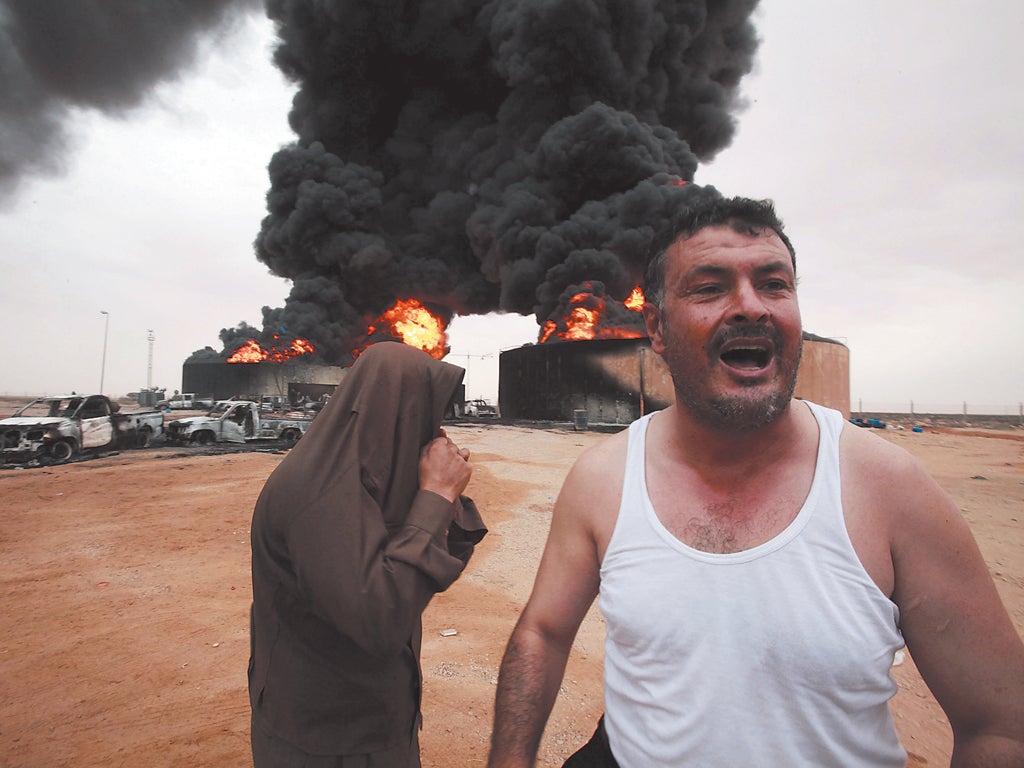
The dead had been dumped on the "Sea-View Gardens" of an abandoned hotel. Many of the killings had been carried out with shots to the head; some were already injured when the executions took place; some had their hands tied behind their backs. Amid bullet and bomb casings, pools of water from burst pipes provided grim testimony to the revenge meted out on the last of the regime loyalists.
While international focus has been on the killings of Muammar Gaddafi and his son Muatassim and the display of their corpses, little is known about the fate of those who were with the Libyan dictator in his last refuge, his home town of Sirte. The discovery of the 53 corpses at the Mahari hotel, and another ten dumped in a nearby reservoir reveal a glimpse of the bloodletting.
It has not been possible to ascertain who was responsible for the dead in the reservoir. But the hotel had been in the hands of the rebels, by then the forces of the new government, when the slaughter was believed to have been carried out between 14 and 19 October.
Pools of blood had stained the ground beneath the bodies, spent cartridges lay scattered around suggesting a firing squad had been at work.
Yesterday, Mustafa Abdul Jali, the acting head of the country's government, the National Transitional Council (NTC), bowed to rising pressure from abroad and ordered an inquiry into the shootings of Muammar and Muatassim Gaddafi after they had surrendered. Authorities in Misrata, where their remains have been exhibited for the past four days, announced yesterday that the morbid show was finally over.
Human Rights Watch, which discovered the evidence of the hotel massacre in Sirte, yesterday called for a wider investigation. Director Peter Bouckaert, said: "What happened was pretty bad. If the NTC fails to look thoroughly into this crime it will signal that those who fought against Gaddafi can do anything without fear of prosecution. There is evidence to suggest that some of those shot were prisoners."
The NTC was able to force Gaddafi from power, largely with the help of foreign forces, including Britain. A Foreign Office spokeswoman said last night of the Mahari killings: "We condemn human rights violations perpetrated by either side and we expect the NTC to fully investigate all allegations of abuse committed by its forces, and to bring those responsible to account."
The rebels who had been in the Mahari wanted to be remembered. At the entrance, in the flaking rooms and on the outside walls were written the names of the Tiger Brigade (al-Nimar) Support Brigade (al-Isnad), the Jaguar Brigade (al-Fahad), the Lion Brigade (al-Asad), and the Citadel Brigade (al-Qasba). It is not known if fighters from these groups were present when the killings took place.
Sirte, built up as a model city by the Gaddafi regime, and proclaimed as a future capital of Africa by the delusional former leader, had been pulverised during the assault by opposition forces. Street after street had been smashed and most of the population had fled during the brief lulls in the fighting. Many bitterly complained that they were not being liberated, but facing punishment for the city's links to the dictator.
Residents among the small number left had ventured out after the gunfire ended to find out what happened to family, friends and the Mahari casualties. Among the decomposing corpses they could identify four from the neighbourhood – Ezzidin al-Hinsheri, a former Gaddafi government official, a military officer named Muftah Dabroun, and two others, Amar Mahmoud Saleh and Muftah al-Deley, whose political allegiances were not known.
Sirte is now a desolate place, with small communities scattered across the city. The homes which have not been destroyed have been looted, according to local people, by rebel fighters.
Residents fear criticism of what has taken place will lead to accusations of being regime collaborators. Amar al-Bawadi, 46, who sent his family away but stayed behind – unsuccessfully – to protect his clothes shop, said: "This is just the beginning, there will be lots of dead bodies found. They just opened fire without any care who got hit. Now we are seeing what happened to those who were arrested. What would people in Europe and America say if Gaddafi was doing this?"
Join our commenting forum
Join thought-provoking conversations, follow other Independent readers and see their replies
Comments
Bookmark popover
Removed from bookmarks