Crackdown on witchdoctors after albinos killed to harvest body parts
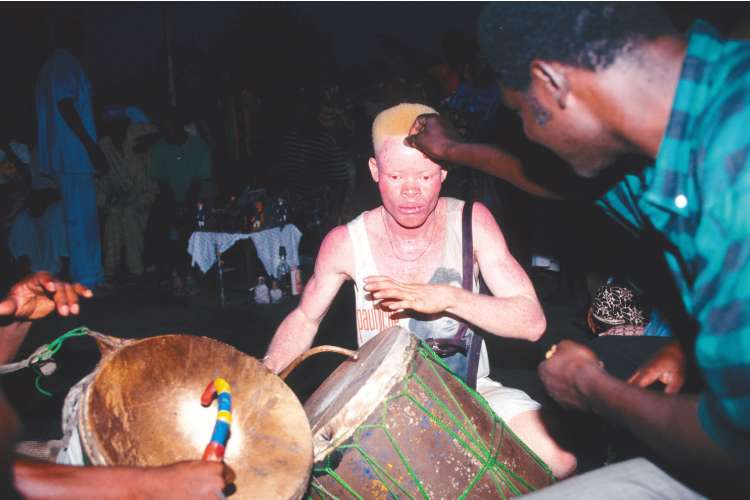
Known as the "Zeru Zeru", or ghosts, Tanzania's albinos have put up with the name-calling and the stigmatisation of being "black in a white skin" for years. The unluckier ones have even been kicked out of their home by relatives who see their condition as a curse on the whole family. Now albinos in the east African nation face an altogether more deadly threat. They have become the favoured prey of traditional healers, who kill them to harvest their body parts for get-rich-quick concoctions.
In the most gruesome of a spate of albino murders in the north-west region around Lake Victoria, one corpse was exhumed with all its limbs cut off. Others have been found minus tongues, genitals or breasts.
"In the past, albinos have been killed after being accused of witchcraft but this is a new phenomenon. This time they are being targeted by the witchdoctors themselves," said Simeon Mesaki, a sociologist at the University of Dar es Salaam.
The problem has reached such proportions that Tanzania's President, Jakaya Kikwete, used his monthly television address to announce a crackdown on the traditional healers as well as plans to register albinos to improve their safety. "These killings are shameful and distressing to our society," said Mr Kikwete in his Wednesday night speech to the nation. "I am told that people kill albinos and chop their body parts, including fingers, believing they can get rich."
Many of the people using the potions made from sacrificed albinos are thought to be miners and fishermen, hoping for extra lucrative mineral finds or bumper fish catches.
According to the Tanzanian government, 19 albino people have been killed in the past year, with another two missing presumed dead. However, disability campaigners say the real number of victims could be as high as 50, given that many deaths do not get reported in a country where albinism is still seen as something to hide or where family members may even be complicit in the killings.
"Parents exchange their albino children for money so there's a poverty connection," explained Theodore Mwalongo, the head of the Tanzanian arm of Action on Disability and Development.
The Tanzania Albino Society, which in the past has accused the government of turning a blind eye to the killings, welcomed the President's words, but stressed that they must be backed up with action.
"The key will be whether the message gets down to local authorities so that there will real changes on the ground," said Samuel Mluge, its chairman. "We need to get rid of the corruption, and make sure that those behind the witchcraft are identified and brought to justice, and cannot buy themselves immunity."
Out of a population of 39 million, there are about 270,000 people in Tanzania who suffer from albinism – which stops them producing pigment in their skin, hair and eyes. This means that instead of having dark skin and black hair, they are blond with pinkish complexions.
Less than a century ago, most albinos born in Tanzania would have been killed at birth – viewed as proof of a woman's adultery with a European man. Because the gene for albinism is recessive, parents can both carry it and pass it on to their child, even if they look "normal". Yet even today, albinos are often called "mzungu" – the name given to the colonial white man – and many people do not understand that it is a genetic condition, not a curse.
Organisations such as the Tanzania Albino Society and Action on Disability and Development are trying to educate the population, helping to train healthcare workers and staging workshops for teachers and parents to encourage them to make sure albino children wear long-sleeved clothing and hats to protect them from the sun.
Join our commenting forum
Join thought-provoking conversations, follow other Independent readers and see their replies
Comments
Bookmark popover
Removed from bookmarks