'Economic cleansing' in BBC's World Cup backyard
Evictions are designed to improve South Africa's image, campaigners say
On the one hand, a glass-sided television studio with panoramic views of Table Mountain and Cape Town's spectacular new 68,000-seater football stadium is installed by the BBC for the forthcoming World Cup. On the other, destitute locals are evicted from their only home, barely 100m away. Welcome to the two faces of modern South Africa.
Amid considerable fanfare the BBC last week announced its intention to use a historic hospital in Cape Town as its central headquarters during this summer's World Cup. The corporation will spend several hundred thousand pounds building the pentagonal glass-sided studio on top of the six-storey Somerset Hospital.
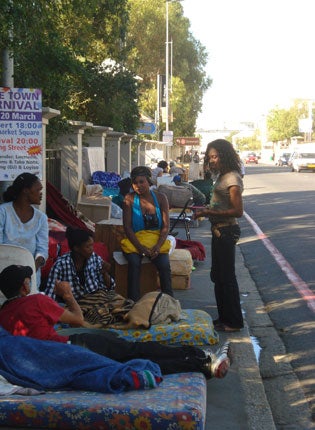
But just days before the deal was made public, 150 destitute locals, mostly women, were forcibly evicted from a hostel in the shadow of the stadium, 100m from the BBC's new home. Poverty campaigners claim the evictions were part of an effort to cleanse the image of the nine host cities South Africa will present to the world. "The World Cup is going on at the expense of South Africans who urgently need housing, public services and jobs," said Ruth Tanner, from the charity, War on Want
Yesterday, the shabby Waterfront Lodge hostel lay empty, its windows boarded up to prevent its former residents returning. But those who lived there say until 10 days ago a fragile community relied for their home on the building which lies within the hospital complex close to Cape Town's famous Waterfront shopping and entertainment precinct.
Among those evicted was an HIV outreach worker, Priscilla, 30, from South Africa's Eastern Cape province. She said she was removed from the property by police armed with pepper spray. She said: "I lived in this place only for a few months but some have been there for many years. The hostel is shabby but it was our home. They told us last year that we would have to leave but then they came and evicted us without warning. They should be caring about the people in this country but they don't want us being here when the reporters and the soccer players come here."
And 30-year-old Nikki, who said she had lived at the hostel for three years is eight months pregnant and now among former residents forced to sleep rough on nearby streets. "I have no family in the area," she said. "I don't know about my future and I'm expecting a baby. The World Cup has done nothing for me and I cannot see how it could."
The evictions are the latest in a pattern of similar actions which some say suggests South Africa is prepared to put its public image before the rights of its people. In Durban, police have been accused of rounding up street children and shipping them to outlying suburbs. In the north-eastern city of Nelspruit, two primary schools were demolished to make way for a World Cup stadium.
In Cape Town in December, officials moved dozens of homeless from the city centre when international media flooded the city during the World Cup draw. City councillor JP Smith said the eviction process had taken up to two years and predated the BBC's contract to use the facility. He added: "These people were land-grabbers, plain and simple. They were asked to leave and they disobeyed the court order. The regeneration of this area is something has been tabled by provincial government and is long overdue."
Campaigners claim more than 500,000 people have been evicted since the advent of democracy in 1994.
Join our commenting forum
Join thought-provoking conversations, follow other Independent readers and see their replies
Comments
Bookmark popover
Removed from bookmarks