Firm with licence to print Mugabe's money
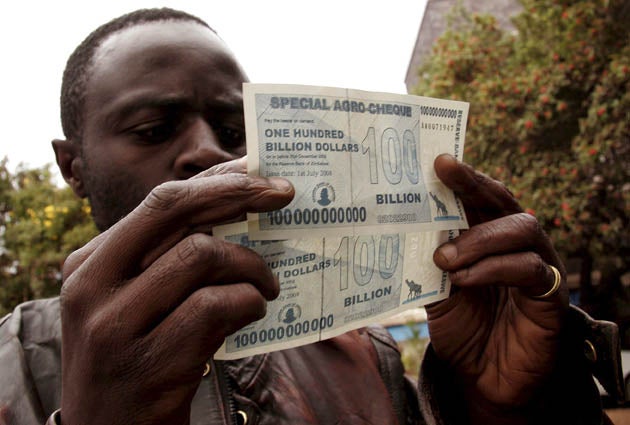
The Mugabe regime's final lifeline is a small Vienna-based software company that helps it to keep printing the money it relies on for its survival, The Independent can reveal.
Jura JSP, an Austro-Hungarian firm with just 50 employees, has been dealing with the pariah government in Harare, enabling it to keep ahead of its hyperinflation crisis. Officials at the company confirmed yesterday that it supplied the licences and software used to design and print the Zimbabwe dollar, but would review this position if required to do so by the EU.
Fresh EU sanctions announced yesterday do not cover all companies dealing with the Mugabe regime, but other firms named and shamed for profiting from the Zimbabwe crisis have cut all links. The software company enables the regime to print the money it uses to pay the army, police and security agents which keep Zanu PF in power. Without access to paper money, Mr Mugabe would face an immediate crisis.
Inflation is running at nearly three million per cent and the country issued a 100 billion dollar banknote this week, worth only about 7p. The economist say John Robertson said inflation was the greatest threat to the ruling party and the rate was likely to climb to 100 million per cent within the next month. "If the software is withdrawn there is no language to describe what would follow," he said.
Paper is running out at the state-run mint Fidelity Printers and Refiners after the Bavarian company Giesecke and Devrient stopped deliveries last week following pressure from the German government. Now Austria and Hungary are expected to come under diplomatic pressure to follow Berlin's lead.
After withstanding years of intense international criticism, targeted sanctions and domestic pressure, a move against the software supplier could be a decisive blow against Mr Mugabe, analysts said. And with crucial negotiations getting under way in South Africa today between the government and the opposition, the timing could be critical. David Coltart, an opposition senator, said: "If the company does stop supplying then that will show the regime that there is no place to hide and that the game is up... That may then even assist the negotiations."
In Harare, supplies of paper money are already running out. The embattled Central Reserve Bank has capped daily withdrawals to 100 billion dollars per person, but this is barely enough to buy a bus ticket or a loaf of bread. Long queues appear from first light at banks throughout the country in a daily battle to survive.
The regime's answer to economic meltdown – driven by its own looting of state and private assets – has been to print more and more worthless money, creating unprecedented hyperinflation and the prospect of trillion or quadrillion dollar notes in the coming months.
While Mr Mugabe and his circle of cronies have proven deaf to international calls to hold free and fair elections, his government continues to rely on its control of the central bank and the Fidelity money presses which until recently ran 24 hours a day to keep up with the crisis. Trades union leaders appealed to the government yesterday to lift the cap on withdrawals of Z$100bn, describing it as a "joke". As recently as 2006 the central bank was still issuing a Z$50 note.
* A new list of Zimbabwean targets for sanctions, including asset freezes and travel bans, by the European Union includes the central bank governor, Gideon Gono, the attorney general Bharat Patel and the cricket chairman Peter Chingoka. Most of the 37 targets posted on the EU website are security officers, "directly involved in the terror campaign" waged around the disputed elections.
Join our commenting forum
Join thought-provoking conversations, follow other Independent readers and see their replies
Comments
Bookmark popover
Removed from bookmarks