Gaddafi planned to flood Europe with migrants as final revenge
People-traffickers were ordered to step up exodus
When the Mukhabarat, Libya's dreaded secret police, came for Mustafa Fauzi his immediate reactions were fear followed by resignation. He had already undergone a brutal experience in prison for human trafficking and this time his ordeal was bound to be even worse.
The trepidation rose when his blindfold was removed. Sitting across the table in the harshly lit bare room, dried blood from past interrogations on the walls, was the same officer who had been in charge of his previous case.
But, along with the proffered cigarette, the man had surprising news for Mr Fauzi: not only was he not going to be charged over the latest offence, there was also an invitation to carry on with his work. Muammar Gaddafi wanted to send 100,000 African migrants to Europe, he was told, and it was his patriotic duty to help.
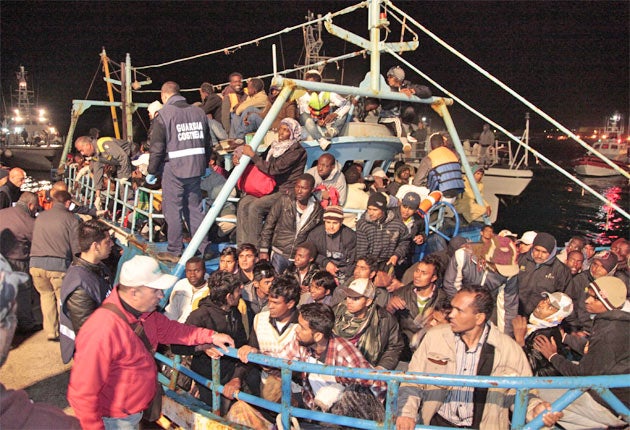
This was at the end of May and Mr Fauzi was among the members of people-smuggling gangs encouraged to carry out Gaddafi's threat of switching back on the tap of illegal entrants in retaliation for Nato's backing the rebels and bombing his forces. The result was a tide of men and women, infants and the elderly being shipped across the Mediterranean in leaky boats and the resultant tragedy of dozens of dead bodies washing up on Europe's southern shores.
"These people were packed up and sent, the government wanted to send as many as possible so no one cared," Mr Fauzi, 32, told The Independent, with pride that his group had never lost a "cargo" during many years of operating. "The prices were really low, instead of say 2,000 dinars (about £1,000) for one it could be 1,000 dinars or even 500 dinars. There were no bribes to be paid to officials, so it was all profit. But everyone got careless, they just wanted to be seen doing what they were asked to do."
Libya's opposition, now forming the new administration, has pledged to stop the trade in migrants. But Mr Fauzi and others familiar with the business point to evidence that agents are tapping up the thousands from sub-Saharan Africa trapped in camps, terrified of persecution by rebels who may accuse them of being regime mercenaries.
Mr Fauzi insists he has turned his back on his old life and is concentrating on his day job as an electrician. He has turned a page with the advent of new Libya and named his daughter – born on the day the rebels came into Tripoli – Takhbir, the call made in the mosques for people to rise up.
Mr Fauzi was also apprehensive of being a regime collaborator in the smuggling during the civil war. "The truth is that I did not send anyone at the time, I never followed the order," he claimed. "The government even offered to pay the costs of some of the groups. I just did not want to get involve. But I know some of the rebels are planning to take part in this. They say it is a good way of getting rid of the blacks."
Mr Fauzi, who leads a middle-class lifestyle in the Ben Ashur district of Tripoli, refused to disclose how much he made from trafficking. His role in the syndicate, he said, was to approach black migrant workers, who arrived in large numbers under the regime, and persuade them to make the journey.
The economies of human trafficking pointed towards the profits which could be made. "The groups built their own boats and the big ones can take between 300 and 500 people and each group will have many boats," Mr Fauzi said. "The pilot is very important and he can make 10,000 or 15,000 dinars for each trip. The rest of the money will be shared between the group depending on people's jobs."
A year ago his syndicate and several others were smashed after Colonel Gaddafi ordered a crackdown following pleas by the Italian government to help stem the migrant influx. "They came to my house and arrested me. I was beaten cruelly and they asked me for all kinds of information.
"I was kept in an underground prison in a very small cell, I could not see any of the other prisoners, we had to shout messages to each other. My family did not know whereI was.
"I was told that we had to stop the business to Europe because that was the government's decision. I would go for trial and I would get a long sentence."
In the end Mr Fauzi pulled strings, paid out cash to officials and was freed after three months. "I went back to smuggling because of the money, that was foolish. But money will always be there in the business and that is why it cannot be stopped."
The passengers, if and when the trade restarts in earnest, will not just be from the Tripoli refugee camps. Despite the beatings and executions of black men by the rebels a steady stream has started to make its way from the south into Libya.
"They say blacks are being killed as suspected Gaddafi fighters, but I say we all have a destiny," said Sule, a 25-year-old Nigerian. "I see this war as an opportunity that I cannot let pass if I want to make it to Europe. I will always regret it if I do not take this chance."
Join our commenting forum
Join thought-provoking conversations, follow other Independent readers and see their replies
Comments