Gaddafi snatch squads took hundreds of men and boys from Misrata
In some quarters of the once besieged Libyan city, nearly every family has lost a member. Ruth Sherlock reports
The lifting of the siege of the embattled Libyan city of Misrata has revealed the disappearance of hundreds of people with many of them suspected victims of snatch squads loyal to the Gaddafi regime, relatives and rights workers said yesterday.
A desperate search has begun for "the disappeared", many of whom were reported to have been taken away to regime prisons or killed during some of the fiercest fighting of a three-month rebel uprising that has reduced parts of the city to rubble.
Witness accounts gathered by The Independent and rights groups indicate that there was a systematic attempt to kidnap men from parts of the city.
Sixteen members of one family were captured by troops loyal to Muammar Gaddafi when they left their home to inspect a factory that had been destroyed in the fighting, according to their relative Salem, who declined to give his full name for fear of recrimination. "There had been shooting on the road in the morning, it is near the front line but later the rebels told them it was safe," he said. "Suddenly Gaddafi's men appeared waving guns, they rounded them up into pick-up trucks, and took them all away."
After nearly two months of no news, he received word from a man who claimed to have escaped from Tripoli prison. "He told me my family members are there. But up to this day I cannot be sure they will come back.
"If somebody is dead, we consider them martyrs; at least you can bury them and know that they are going to heaven. But to have them taken alive: you don't know if he is being tortured."
The full extent of the missing has only been revealed as the city slowly comes back to life following the ferocious bombardment by forces loyal to Col Gaddafi.
Many families were unable to leave their homes after regime tanks entered the heart of the city and snipers took up positions on roof tops. Rebel fighters backed by Nato airstrikes forced regime forces to the outskirts of the city two weeks ago, allowing families to venture out again.
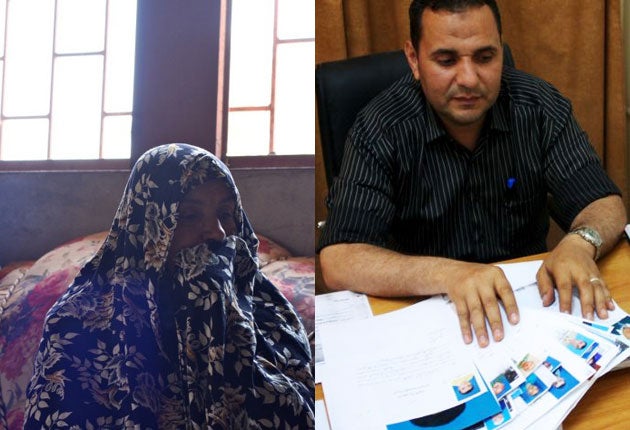
A newly opened missing persons office has registered 1,020 people with the number rising every day, said lawyer Tarek Abdul Hadi, organising the piles of forms detailing those missing. Families yesterday were pushing photos of their loved ones into the building. "These just arrived in the last hour," said Mr Hadi, indicating a pile of passport photos of Misrata's lost men, women and children on his desk.
Most of the missing are men between the ages of 20 and 40. More than 40 children, some as young as six, and elderly people between 60 and 85 years are also missing, he said. "Fighters report seeing some being used as human shields on the front lines, others have been taken away to fight for Gaddafi," he said. "But many, many are presumed dead."
Residents reported large numbers of people were snatched in the suburbs where Gaddafi soldiers lived for more than one month, launching rockets and artillery into the city. In Zawiyat El-Mahjoub, a suburb 9 miles west of the city centre, locals document 80 victims of forced disappearance, according to a report by Amnesty International.
In the district of Kerzaz, where houses are pockmarked with bullets and shrapnel damage from the fighting, some families said that those who stayed there in the early days of the fighting were captured in house raids by Gaddafi forces. The home of Soliman Zain, 37, was looted and burned by Gaddafi forces. A safe taken out of the house was riddled with bullets. "They stormed into all of these homes, stealing money, jewellery and all our valuables. Anyone they found here was captured," said Mr Zain, whose neighbours, brothers Khalil and Faitoui, were taken in the raid. They are still missing.
In another suburb of el Ghiran, at least one member of almost every family has disappeared. On 22 March, Gaddafi soldiers stormed into the home of 63-year-old Huda and took away every man in the household. "They came with a tank and three armoured personnel carriers," she said. "They were shouting and shooting into the air, they banged the door. They took five men away from this family."
She has been left with nine grandchildren to take care of. "What did we do? What did we do to deserve this?" she said crying. "We are just women here, we need a man to protect us." She has heard nothing from them for more than two months.
News of the abductees is scarce despite appeals on television and through Facebook and contact with the Red Cross. Some of the captives have been seen on the government-run Libyan state television among the crowds in pro-Gaddafi rallies in Tripoli, according to families.
Abdul Hadi's 80-year-old father was captured as he returned to his farm from the mosque. For over a month his family heard nothing from him. On 18 April they saw him on television. "They give him a green flag, and make them sing in support of Gaddafi," Mr Hadi said.
Join our commenting forum
Join thought-provoking conversations, follow other Independent readers and see their replies
Comments
Bookmark popover
Removed from bookmarks