World

Mostly Cloudy with Showers 6° London Hi 9°C / Lo 6°C

Graca Machel: Africa's people need bold, focussed and sustained leadership from its governments
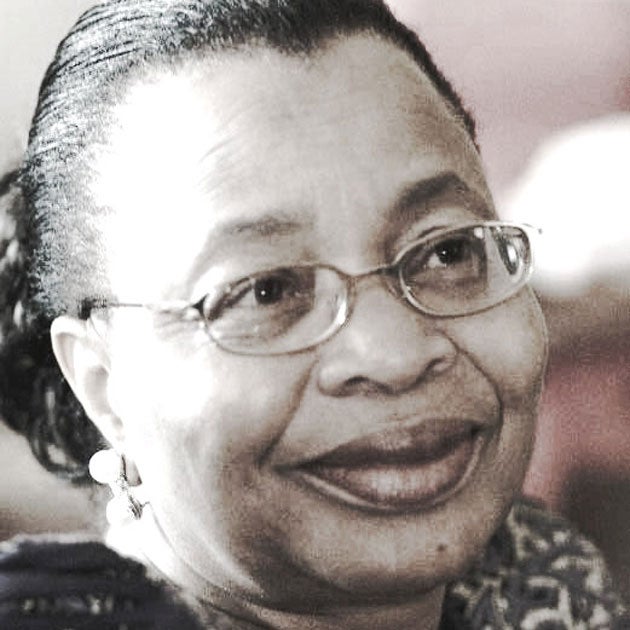
Graca Machel: 'Africa has reason to be angry at the way it is paying the price for the mistakes and misjudgments of others. But there is no point in simply lamenting our fate. We need bold leadership from Africa'

Graca Machel: 'There is no point in simply lamenting our fate. We need bold leadership from Africa'

It would be easy, when faced with the crisis in development that now threatens Africa, to demand that the rest of the world ride to our rescue. After all, it is not the people of Africa who are responsible for the financial crisis devastating our economies or the climate change that has unleashed floods, droughts and storms on our land.

The latest report from the Africa Progress Panel details the impact of these twin disasters on the continent. But it is also clear that, wherever the blame lies, the main responsibility for reducing their impact on Africa lies with the continent’s own leaders.

This does not mean the rest of the world can walk away. But without bold, focussed and sustained leadership from Africa’s governments, outside assistance won’t safeguard our people or protect the progress we have made. African business must also be an active part of the pact to make the continent work better for all its people.

You don’t have to look further than my own country, Mozambique, to see what’s at stake. Over the past 15 years, it has been one of Africa’s greatest success stories. Indeed, its journey from conflict to democracy, stability and strong growth has given me joy, and hope to our whole continent.

But the financial crisis, collapse in trade and cuts in overseas investment have dramatically reduced economic growth. Money sent back home by our citizens abroad has been cut back as jobs overseas are lost. While, for the moment, the government can continue to fund health and educational services, the effect on families in Africa is instant.

When you lose your job, there is no redundancy payment, welfare safety net or savings to soften the blow. From being able to put bread on the table one day, the next you can no longer feed your family. The result is hunger, disease and despair. As is the case elsewhere, it is the very young who are most at risk.

My country was, of course, already struggling with the increasing impact of climate change. Every year since 2000, Mozambique has been hit by flooding, drought or cyclones far worse than we would expect. Hundreds of thousands have been forced to flee their homes. Crops are destroyed.

Mozambique has put in place effective disaster management policies and structures so loss of life is reduced. But scarce resources are spent each year replacing schools and clinics, instead of building anew.

South Africa, where I live now, is also suffering particularly from the impact of the global economic meltdown. But for the boost that preparations for the football World Cup next year are giving to the economy, the position could be much worse.

Across the continent, we are seeing the same story of economic decline and extreme weather threatening solid progress. It is a tragedy that, when millions of Africans believed their countries and continent were finally on the right track, this crisis has fallen on our shoulders.

But it is how Africa, in partnership with the international community, reacts to this challenge that will decide whether we go forward or slip back. At times of crisis, bold and visionary leadership is more important than ever. That’s what is now needed in Africa. Our leaders, who have already shown what can be achieved, need to redouble their efforts and work together to consolidate the right foundations for Africa’s prosperity.

Africa’s land is rich but the way we farm is behind the times. It is why our continent is the only one that can not feed itself. If we learn from the success of others and adapt techniques and crops to our own particular needs and conditions, we have a huge opportunity not just to feed 900 million Africans but also to help meet food shortages in other continents.

In Mozambique, for example, the Government already has the right policies for a major expansion of cereal production, especially rice. The need now is to work with local farmers, big and small, and with international partners to reap the benefits of an African green revolution. We need as well to step efforts to harness Africa’s immense potential to produce green energy - and invest to modernise the continent’s infrastructure to boost trade within and outside the continent.

But using money wisely also means far more rigorous efforts to root out corruption – an estimated $150bn burden on Africa’s people. Our leaders need to show much greater resolve in tackling this cancer. Good clean governance is not an optional extra, but essential to fulfil Africa’s potential.

It is not the right laws that are missing. It is the determination to investigate and bring to justice those guilty of diverting the continent’s resources into their own pockets. The most important single step is to safeguard and strengthen the independence of the judiciary. Too often prosecutions fail because the courts can be pressurised to protect the corrupt but powerful.

The role of civil society must also be bolstered. We have seen the growth in organisations and networks outside government that represent the interests of citizens. But these voices, important watchdogs on corruption and champions of change, are still too often too weak and fragmented. African Governments must have the confidence to encourage a strong civil society and its engagement with local, national and regional partners.

At the same time, Africa must find a stronger united voice in the international community. We can’t allow the interests of our continent to be marginalised. We need to negotiate a better deal so that Africa benefits fully from the natural resources with which our continent is so richly endowed. This is the best way to persuade the wealthier countries to offset the calamitous drop in income that Africa is now suffering. Short-term grants, loans and easier credit are also important contributors to Africa’s growth.

Africa has reason to be angry at the way it is paying the price for the mistakes and misjudgments of others. But there is no point in simply lamenting our fate. We need bold leadership from Africa. The international community must live up to its responsibilities and commitments. The campaign group ONE today reports on the G8’s mixed progress so far. If all our leaders rise to the challenge, the result will be a stronger Africa and a better world.

Graca Machel is a member of the Africa Progress Panel.

Post a Comment

View all comments that have been posted about this article.

Offensive or abusive comments will be removed and your IP logged and may be used to prevent further submission. In submitting a comment to the site, you agree to be bound by the Independent Minds Terms of Service.

Comments

Great writing... but why not name the good and bad?
[info]freedommonger wrote:
Thursday, 11 June 2009 at 07:17 am (UTC)
Africa should be a food exporting continent, but protectionism stops trade developing

Africa should have less corruption, but developed world policy promotes and sustains corrupt regimes

Africa should benefit from promised aid flows, but promises are simply broken and what aid is spent by many goes to promote their mercantilist interest rather than feed the poor and develop their economy

Its true that Africans must lead but the contrast between developed nations is also stark.

The UK has become the first G8 country to give 0.7% of GNP in aid. We promote democracy and fight corruption, We champion free trade.

At the other end of the spectrum, France gives little and then only to promote its Francosphere (21st century colonialism), France leads efforts to maintain and enhance agricultural protectionism, France runs its decades long hateful secret policy of Francafrique run from the Elysee whose most visible result was the Rwandan genocide in 1997 but whose misery afflicts perhaps half the continent.

UK good, France bad. Expect little comment as Indy writers and readers struggle toi fit this reality to their prior conclusion, UK bad, France good.

p.s. you might consider the inverse reality in economics and banking problems as well. US and UK were supposed to be the loosers, arentt we? So much drivel about isnt there? And Iraq free with no oil stolen and no puppet installed, just free. How did such massive disconnects between received "wisdom" and reality happen? Ask yourself, because these disconnects are perhaps the greatest avoidable human misery in our world.
Re: Great writing... but why not name the good and bad?
[info]uanime5 wrote:
Thursday, 11 June 2009 at 01:19 pm (UTC)
Africa does export food. Many farms in Africa grow food specifically for the west.

Research shows that developed countries prefer non-corrupt regimes because they are less likely to demand a new bribe every week.

The aid is given to African leaders. If these leaders then abuse the aid this is the fault of the African leaders, not the west.

When you claim France is 'good' are you claiming that the Rwandan Genocide was good for Africa?
Re: Great writing... but why not name the good and bad?
[info]freedommonger wrote:
Thursday, 11 June 2009 at 01:58 pm (UTC)
sorry uanime5, IO was being sarcastic, a weakness of the British I think.

I was pointing out the (bad) reality of French influence and interference in Africa with the (good) UK record and contrasting this reality with the received wisdom that is (falsely) that France is good unless proven otherwise and the US/UK is bad unless proven otherwise.

The received wisdom is the precise opposite of reality

Still, who could concede this and spoil their weekend in paris (a city whose beauty is daily testament to the benefits of immediate surrender)

D-Day, and decency (or at least the effort to be decent), are it seems sadly primarily anglo saxon affairs
Africa's People need Clean Elections
[info]alexweir1949 wrote:
Thursday, 11 June 2009 at 07:23 am (UTC)
Africa's People need Clean Elections

Graca Machel has pious words, which largely restate the position of the so-called International Community. Behind the incremental changes which she espouses, there lies an ugly truth - the large majority of African Leaders are pro-western dictators. They cream off 7% of their people's GNP every year, and greatly distort the functioning of Government Ministries in order to effect this grand larcency by the Rich from the Poor. The key to this injustice is rigged elections to keep themselves in power and/or to pass the baton to their collaborative successor.

Clean elections would do more to lift the Third World out of poverty than all the Bonos, Geldofs, Machels, Browns, Sachs, Blairs and MDG's could achieve in 300 years. But these celebrated worthies have zero interest in unfraudable elections, preferring to operate their money-and-fame machine, although they know that it is a sham on the grandest scale.

God will hopefully punish them for their hypocrisy and deception.

Mr Alex Weir, Harare, Zimbabwe
Re: Africa's People need Clean Elections
[info]freedommonger wrote:
Thursday, 11 June 2009 at 08:49 am (UTC)
So Alex Weir would applaud the free and fair elections held in Iraq?

No, of course not. this is a tough reality for those in "full hystrecical swing" I think

The author said right up front that good govt by Africans was the first need. Obviously you must have "missed" that bit given what you then wrote. Calm down, slow down. Support liberal interventionism. Name France for what it is. This will bring what you seek
Re: Africa's People need Clean Elections
[info]fumanchuria wrote:
Thursday, 11 June 2009 at 01:03 pm (UTC)
I think you are right; I lived in Francophone Africa for years and the French (government) have more control in their ex colonies now than they ever did when they were colonies. But it is even truer that what is needed is completely fair elections and also, much more importantly, that the West should stop supporting a bunch of corrupt and cruel dictators.
Geldof and co. aren't doing much to really help the poor African, on the contrary, merely prolonging their misery.
It is our so called 'leaders' who can really do something by removing Third World Debt and stringing up some if not all of the monkeys who run many of these African states, starting with Mugabe.
Re: Africa's People need Clean Elections
[info]uanime5 wrote:
Thursday, 11 June 2009 at 01:15 pm (UTC)
The Iraqi elections are a lot freer than the African ones. That's why people applaud them.
Re: Africa's People need Clean Elections. Realy Then waho are the bribed?
[info]famulla wrote:
Thursday, 11 June 2009 at 01:34 pm (UTC)
When????CAPE TOWN (AFP) - Protectionist policies by the haves will deepen Africa's woes, South African President Jacob Zuma said Wednesday, adding that the world's poorest continent had suffered for years from market barriers.
Addressing the opening of the World Economic Forum (WEF) on Africa in Cape Town, Zuma expressed concern over trade measures and huge bailout packages in developed countries. "African agriculture has suffered for decades from the huge subsidies provided to developed country agriculture," he said. "We all do understand that all economies become inward looking during difficult economic times. However we can avoid shutting out other markets." Over 800 people including five heads of state are attending the conference. Last year leaders were optimistic in the face of unprecedented 5.2 percent growth on the continent, but the UN sees it slowing to two percent in 2009.INTERVIEW-Zimbabwe PM greeted by skeptical donors
10 Jun 2009 18:11:44 GMT
Source: Reuters
*Mugabe "not best of angels" but government strong
*Donors so far not stepping up with big pledges
*Zimbabwe still cannot afford to pay IMF arrears
By Simon Denyer and Andrew Quinn
WASHINGTON, June 10 (Reuters) - Zimbabwe's fragile unity government must work harder to convince donor countries that it can rescue the country from economic and political chaos, Prime Minister Morgan Tsvangirai said on Wednesday.
Tsvangirai, on a tour of Europe and the United States, conceded that his governing partner, President Robert Mugabe, may not be "the best of angels" and that tensions buffet the unity government the two formed in February.
But he said the political underpinnings of the deal remain strong and urged more help from the international community, which thus far has shown little readiness to provide more cash to fund Harare's reconstruction efforts.
"Zimbabwe must understand that we need to earn the confidence of the international community," Tsvangirai said in an interview two days before he was due to meet U.S. President Barack Obama. "The world is not going to come forward unless there is demonstrable improvement."
I thank you
Firozali A. Mulla

Article Archive

Day In a Page

Sun | Mon | Tue | Wed | Thu | Fri | Sat

Select date